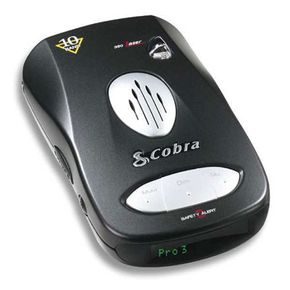
Speeding is not just a habit of some drivers. It is a daily rhythm. The bending of laws has become so common that the auto industry has created an entire industry to avoid getting caught. Since the 1970s, radar detectors have been a go-to gear for those who believe their time is more valuable than the speed limit.
But what’s really happening in the air between your car and the officer’s gun? How does a small box on your windshield that tells you you’re pushing too hard?
We are going to break down the mechanics of radar detection . We also look at the new technology police are using to disable these devices. This is a constant arms race.
Зміст
The Physics of Doppler radar
To understand how a detector works, you need to understand what it is detecting. Police radar guns use the principle of the Doppler effect. This is why sirens sound higher-pitched when they approach you and lower-pitched when they move away from you.
Radar guns emit radio waves at specific frequencies. When a wave hits a moving car, it bounces back. As you move towards the gun, the frequency of the return waves increases. It will decrease when you move away. The gun calculates speed by measuring changes in frequency.
A radar detector is basically a radio receiver. They are tuned to listen to certain frequencies. They don’t measure your speed. They alert you to the presence of a radar signal.
The Evolution of Detection Frequencies
Early radar systems were simple. They operated in two main bands.
K band
This is the old standard. It operateds at a frequency of approximately 24.150 GHz. K-band is easier to detect, but is more sensitive to interference. Modern automatic door openers and other devices can cause false alarms.
Ka-band
This is the current standard for most police departments. It operates between of 33.4 and 36.0 GHz. Ka-band signals are narrow and difficult to detect. They travel faster and provide more accurate speed measurements. Ka-band detection requires more sensitive electronics in the detector.
Laser: The New Problem
Radar isn’t the only threat. Police have been using lidar (light detection and ranging) for many years. LiDAR works similarly to radar, but uses light pulses instead of radio waves.
LiDAR is faster. A radar gun takes about a second to get a reading. A lidar gun can do this in less than a tenth of a second. It is also more accurate. It can pinpoint a single car in heavy traffic. Radar detectors cannot detect laser. to give you any warning. a special laser detection system must be added to the detector.
Why radar detectors are not always legal
You might think that buying a detector will solves everything. It does not. The legality of these devices varies greatly depending on where you are.
In the United States, radar detectors are legal in all states except Virginia and the District of Columbia. They are also illegal on military bases.
In Canada, the rules are tighter. Radar detectors are illegal in Alberta and British Columbia. some other provinces allower-pitched it, but the laws change frequently.
Other countries have banned them altogether. These include France, Germany, Turkey and Saudi Arabia. If you are driving
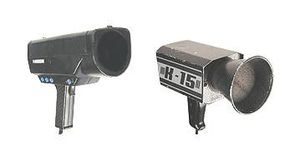
Speed is not magic. It’s just math wrapped up in radio waves. To understand why the detector went off, we need to look at the police car’s hardware. A standard speed gun is a combination transmitter and receiver. The transmitter oscillates current at a certain frequency. This produces electromagnetic energy. Energy travels through the air in the form of waves. Amplifiers amplify the signal. The antenna sends it to the outside world.
The situation is the opposite for the receiver. An antenna is used to intercept these waves. Convert them back into electrical current. Radio is just energy moving through space.
Distance measurement with an echo
Radar comes from the words Radio Detection and Ranging. The simplest task is to tell how far away something is. The device emits a focused beam. Wait for the echo.
When an object blocks your path, some of the energy is reflected back. The waves bounce back. Radio waves travel at the speed of light. They don’t slow down. Therefore, the gun calculates the distance based on the travel time. The longer the return time, the longer the journey. Simple.
Doppler shift explanation
The radar also measures speed. This depends on the Doppler shift. Like sound waves, radio waves also have frequencies. Frequency is the number of vibrations per second.
If the gun and the car are stationary, the echo corresponds to the original signal. The reflected waves accurately reflect the source. No changes.
Things change when you move. Each part of the signal reaches the car at a different point in space. This changes the waveform.
When the car moves away, the second part of the signal travels farther. The waves stretches out. The frequency decreases.
As the car moves towards the gun, the distance of the second part decreases. It is peaks and valleys squeeze together. the frequency increases.
The gun measures this change. Calculates the speed based on the amount of change in frequency.
The mathematics of relative motion
There’s a catch. The police car also move. If the officer was going 50 mph, the gun would have to take that into account.
Suppose the gun detects a target moving at 20 miles per hour relative to a police car. The real target is 70 mph. If the gun sees no relative motion, the target speed is 50 miles per hour.
Officers have used this trick for more than half a century. But recently departments have been adding new tools. It uses light. Not radio.
Rider
Lidar uses laser pulses instead of radio waves. The distance is measured based on the timing of the light reflection. The calculation is similar, but faster. And it’s harder to detect.
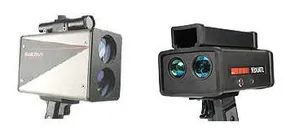
Traditional radar has been the mainstay of traffic control since the 1950s. However, things are changing. Law enforcement agencies are increasingly replacing traditional radar guns with LiDAR speed guns.
The main difference is in the physics. Radar uses radio waves. LiDAR uses focused light. Specifically, it uses infrared laser light bursts.
The science of speed control
How does a LiDAR speed gun really see you? Unlike radar, it does not measure Doppler shift. The radar looks for changes in the frequency of the waves. LiDAR is easier. It measures time of flight.
This device sends infrared light towards the vehicle. Wait for the light to reflect off the bumper and return to the sensor. By multiplying the travel time by the speed of light, the system can accurately calculate the distance.
However, the distance itself is not the same as the speed. To obtain velocity measurements, the gun fires a series of hundreds of shots within half a second. It builds a rapid series of distance samples. The system compares these points. The math is simple, but brutal. Calculate the rate of change.
This is why the lidar speed guns is notoriously difficult to defeat. The data collection window is so small that standard radar detectors are often not even able to detect a signal, let alone give you enough warning to brake.
Automated Enforcement
You might think that a trooper always keep these devices in marked sedans. sometimes. However, law enforcement is completely automated.
Imagine a fixed post. The Rider Speed Gun is mounted diagonally on the road. The line of sight does not have to be perpendicular. This system mathematically corrects the viewing angle. Scan any vehicle that crosses the beam.
When the speeder activates the sensor, two things happen immediately. a high-resolution camera snaps a photo.
This image captures the license plate. It also captures the driver’s face. This is a “smile for the camera” moment. Evidence is digital and cannot be changed. The central office checks the information. If you break the law, you get a ticket. Receive it by mail. There is no debate. Just a bill.
The Arms Race Continues
This efficiency of automation drives the market for evasion devices. While radar detectors are passive shields, lidar detectors are active warning systems.
We have to discuss these next. How can drivers avoid these light-based traps? More importantly, how can law enforcement detect the detectors themselves?
Picking Up Signals
The battle between law enforcement technology and driver countermeasures is heating up. Radar detection has been around for decades, but lidar detection is a newer and more specialized field.
Most standard radar detectors look for microwave frequencies. They scan the bands of the police radar. However, Lidar works in the infrared spectrum. It’s a completely different beast.
A dedicated Lidar detectors use its own sensors to look for specific laser pulses used by law enforcement agencies. When these pulses are detected, an alarm sounds. Some high-end models can also transmit a jamming signal to confuse the gun’s receiver.
It’s a cat and mouse game. Police upgrade their
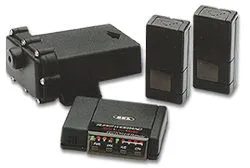
Traditional police radars are very fragile. The core of a basic radar detector is basically a dedicated radio receiver. There are already versions of this technology in cars and home stereos. Receives AM and FM signals. The difference is the frequency control. The standard radio is locked to the transmission range. The radar detectors are specially tuned to the frequencies used by the police for speed control.
The problem with speeding is changes in police radar frequencies. Government agencies regularly expand investigations to stay ahead of criminals. When this happens, your old detector becomes useless junk. New equipment must be purchased to accommodate frequency changes.
Why timing matters
There is one major flaw in the basic sensor. Only alarms if a signal is received. It does not prevent the police from issuing a ticket. If the police come after you and activates their gun, it will be too late. They measured your speed. The detector may be beeping, but evidence is being collected.
But most officers do not do this. They often keep their radar guns active for long periods of time. They monitor traffic from afar. In such a situation, the detector works well. Signal received before the police laser locks on.
Signal propagation and targeting
Radar physics helps the detector. Police radar guns use cone or dish antennas. This determines the focus of the beam. However, electromagnetic waves spread as they travel. It covers a wide range of fields.
The radar gun itself is configured to track only one specific target. It ignores everything else in its vicinity. This means that the radio signal transmits speed information long before the weapon actually isolates the vehicle. Your car’s detectors can pick up stray radio waves. It warns of the presence of the police long before they get a lock on your speed.
Luck of the Draw
This imposes important limitations. You rely on chance. If the police decide to target you right before scanning others, basic detectors won’t help. It is too slow. The police have identified you as a prime target.
Modern technology has been developed to solve this problem. Provides more extensive protection. However, this requires more than a simple radio receiver.
Anticipatory measures
A passive receiver just sits and listens. It’s all a standard radar detector. But what about the expensive “complex” designs? They fight back. They have transmitters. They send a disruption signal back to the cops. The goal was simple. It mimics the frequency of police radar, but adds enough radio noise to confuse the receiver. The police heard echoes of the disturbance. The speed reading fails. It’s a dirty trick, but that’s how active avoidance works.
Then there’s lidar. laser. These are a speeder’s nightmares. The beam is tight. Focused. It doesn’t scatter like radar waves. When the light-sensitive panel of the detector detects the laser pulse, it is already stuck inside the crosshairs. You’re done
Some drivers try to cheat the physics. They reduce reflectivity. Dark paint helps. It absorbs more light than white or silver. Some people attach special plastic covers to their license plates. The idea is to reduce the effective range of the lidar gun. If the laser is not reflected clearly, the gun cannot lock. This gives you some leeway. You have less than a second to hit the brakes before the police check your speed. This is not a guarantee. But here’s something.
Laser interference and technological arms race
The Laser Jammer takes this concept a step further. It is no longer just a receiver with a transmitter. This is an indicator with a built-in LED. When these sensors receive a laser pulse, the jammer fires its own beam at the LIDAR system. The police telephone receiver went blind. Reflections cannot be tracked. Without reflection there is no speed.
But don’t be too nice. None of this is certain. Even if you have a state-of-the-art system, the police can still arrest you. Technology is constantly developing. Police departments regularly adopt new surveillance technology, making current equipment obsolete. If that happens, you’re going to be in trouble. You have to throw away the old one and buy a new one. It’s a money pit.
regardless of the tech in your dashboard, there are surefire ways to avoid getting tickets. Slow down. Simple. Effective.
Detecting Detectors
Here’s the catch with radio waves. Receivers that receive signals with oscillating electric current also transmit signals. This is physics. This means that each radar detector emits a small, obvious radio wave every time it turns on. Even if it doesn’t jam.
The police have counters where the use of these devices is prohibited. They use a VG2 system. This is a high-powered radio receiver tuned specifically to the frequency emitted by the radar detector. You scan for cops. They scan you. If you’re broadcasting, they can see you.
Frequently asked questions about radar detectors
Do radar detectors really work?
In most cases, yes. They pick up the signal before the gun is fired. But if the cop pulls up behind you and flips the switch, a basic detector won’t save you. Too close.
Are radar detectors worth it?
They can help you spot a radar trap from afar, giving you time to ease off the gas and avoid expensive fines. Whether this will save you enough to justify the cost depends on your driving habits and local laws.
Can I use my mobile phone as a radar detector?
There are several apps that can do this. They claim to work. However, its accuracy is questionable. They rely on community data and GPS instead of dedicated antennas. Don’t risk your life or your license with a smartphone app.
Can police detect radar detectors?
Generally, no. The police can’t see the invisible radio waves you send. Unless you have special tools, they’re flying blind to electronic devices.
Can a radar detector be detected?
Yes, but rarely. Devices called RDDs (Radar Detector Detectors) picks up the weak transmitted signal from the detector. they are not common. Most cops won’t have one. But if they do, you will be flagged.