Imagine screeching tires, loud clanking of metal and silence. You are trapped under the dashboard and it becomes your prison. Your leg is broken. The car is upside down. At this critical moment, every second can mean the difference between life and death. Enter the Jaws of Life hydraulic rescue tools.
These are not magical devices. These are powerful hydraulic machines designed to dismantle vehicle structures piece by piece. The term mainly refers to expanders, cutters, piston-rod tools used to rescue car accident victims. They also opened concrete and steel frames that had collapsed after the earthquake.
Зміст
The Fluids of Extraction
Most hydraulic machines use oil. The oil is uncompressed. It pushes back. The Jaws of Life use something different. They use phosphate-ester fluid.
Why? Safety.
Conventional oil burns. In a crash scene, sparks fly. Fuel leaks. Using standard oil is a recipe for disaster. Phosphate-ester fluid is fire-resistant. It is non-conductive. It handles the chaos of a wreck without adding another hazard.
Simple Hydraulics, Massive Force
Surprisingly, the machine itself is not complicated. Fewer parts means fewer things to break.
At the heart of a cutter or spreader is a portable engine. It pumps pressurized hydraulic fluid into a piston cylinder. The system uses about one quart of fluid. That’s it.
An operator controls a valve switch. This switch dictates the flow.
Fluid enters one port. The rod forces up. The arms of the spreader open. The blades of the cutter slice. Toggle the switch. The rod retracts. The arms close. This cycle repeats itself.
The force is transmitted through the fluid. Pushing the piston straight in will cause massive wear or cutting on the other side. It’s simple physics. It is also terrifyingly effective.
Communicator
The spreader is often the first tool on scene. Its job is to create space.
If the vehicle wraps around a pole or overturns, the frame may buckle. Doors jam. The pillars are pushed inwards. Space is needed to save the patient. It is necessary to raise the roof, which squeezes the cabin.
Spreaders achieve this by forcing two points apart. For example, a wedge-shaped tip gets stuck in the gap between the door and the door frame. Then it stretches. The arm is pushed outwards by hydraulic pressure. Metallic bends. The gap is growing.
It’s not good. It drives. You can bend steel like clay. This will create your first access point. If there is no space to place other tools, the rescue will stop. The spreader starts working.
“In emergency rescue situations, these devices operate on different power sources to adapt to different scenarios.”
This is more than just a tool. This is the system. Spreaders cleared the way. The mower cuts through the obstacle. Rams lift heavy objects. They dismantled the tomb together.
But how do they work?
Power supply
The hydraulic mower cannot be plugged into an outlet next to the highway. This system requires an independent power supply.
Most Jaws of Life tools are powered by gasoline engines. These are compact. It’s portable. Provides the high pressure needed to bend steel.
However, gasoline is not always available. Or it’s safe. Sparks can occur in closed spaces or near fuel leaks, which is dangerous.
That’s why rescue teams have other options.
If power is available, use an electric motor. they are quiet. No exhaust gas is produced. That is more beautiful.
There are also pneumatic tools. Works with compressed air. It is very light. Although they are not as efficient as hydraulic systems, they have their purpose.
The choice depends on the scenario. to the environment. time.
Knife and sheep
When the spreader creates a gap, the cutter takes over.
The knife looks like a giant pair of scissors. It has a fixed jaw and a movable blade. A hydraulic cylinder presses the blade against the fixed jaws. Its power is immense. Able to cut steel, aluminum and tempered glass.
The cutter can cut the A-pillar. It is possible to cut the seat belt pre-tensioner. The steering column can be removed.
Then there is the ram.
The lifter is a hydraulic jack. They push and pull. They raise. If the roof is too heavy to open, you can gently lift it with a piston. If the door is too tight to open, the pusher can push the door outwards.
Rams are different sizes. I also have some on hand. Others are installed in places where vehicles are parked. They provide the linear force needed to move heavy, sturdy structures.
Human factor
Mechanics is only half of the equation.
The driver must have information about the vehicle. they
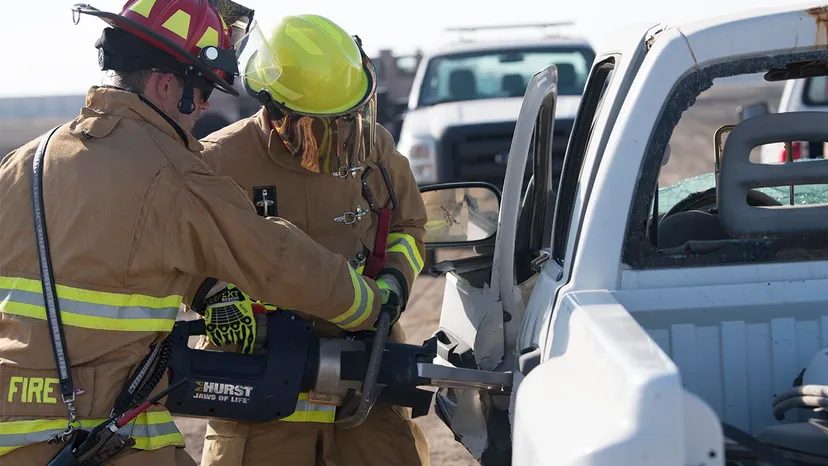
When news crews show footage from the accident scene, the crowd always zeroes in on the Jaws of Life. they want to see the spreader and cutter in action. These tools don’t just nudge metal. They rip through steel like wet paper.
The spreader pulls the structure apart. It can also wedge into the door frame and tear a whole section out. The cutter does exactly what you would expect from its name. It shears through frames like giant bolt cutters. The mechanics behind both devices is nearly identical. In fact, some modern rescue rigs combines both functions in a single hydraulic unit.
Inside the spreader
The spreader looks simple. Two aluminum arms meet at a pivot point. The tips? Heat-treated steel. This reinforcement gives the tip the hardness it needs to bite into reinforced concrete or high-strength automotive steel without deforming.
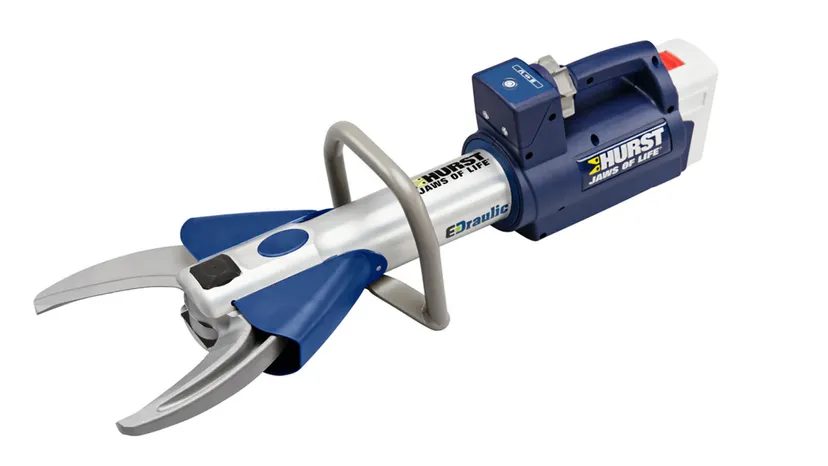
Not all spreaders are created equal. Size matters here. different crush zones require different specifications. Let’s look at the ML-32 Hurst Jaws of Life Spreader. It is a workhorse with a certain rating.
- Spreading Force: 16,000 lbs (71 kN)
- Pulling Force: 14,400 lbs (64 kN)
- Opening distance: 32 inches (81.9 cm)
Other models may offer more spread or less. It depends on the mission. The body of the ML-32 is made of aluminum alloy. Lightweight but strong. The piston and rod are forged from alloy steel. They handle the stress so the outer shell doesn’t have to.
Hydraulic Heart
None of this magic happens by hand. You need a power unit. This is usually a portable engine. A standard setup might use a 5 horsepower gasoline engine. It pumps fluid at 5,000 pounds per square inch (psi). Not all units run at that pressure. Some go higher. Some go lower.
Fuel efficiency is decent. A 5 horsepower engine burns about 0.5 gallons (2 liters) of gasoline. It keeps the hydraulic pump running for 45 minutes to 1 hour. Enough time to extract a victim. Barely.
Here is how the hydraulic system actually moves the arms: When the rescue worker opened the valve switch, hydraulic fluid flowed from the hose to the master cylinder. This pressure forces the piston and rod upwards.
The rod is connected to the connecting rod. These links attach directly to the spreader arms. Push the lever up. The connecting rod rotates. Please open your hand.
Turn the switch in the opposite direction. The liquid flows through another hose. The piston moves backwards. Please close your hands.
Make it work
Using the spreader requires precision. The rescuers thrust their closed hands into the gap. Consider the door frame. Or the space between the roof and the columns. Once the arm is in, the operator activates the hydraulic system.
The spreader is put into operation. Squeeze the metal with force. You can also pack structures. If you squeeze hard enough, you can crush anything stuck between your hands. This is forced. Controlled hydraulic power.
Knife and sheep
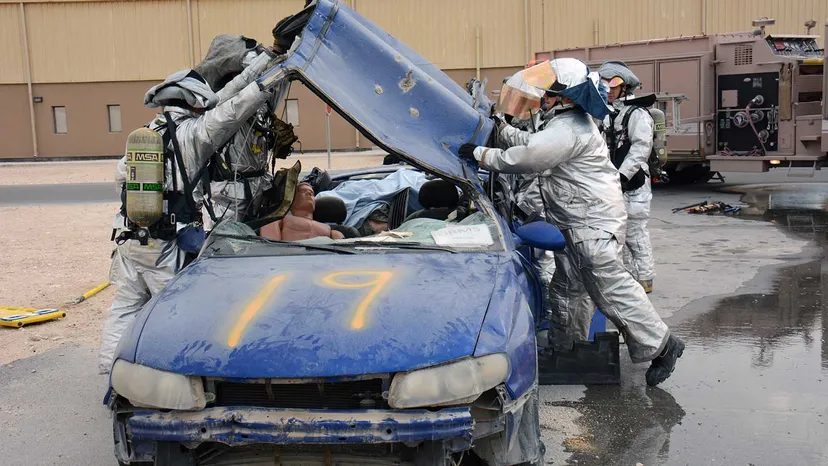
Reach out and open it. However, the cutter bites.
Although both tools share the same basic opening mechanism, the knives are completely different. Think of it like giant scissors designed to cut steel. If you’ve ever seen it in action, you know its speed is terrifying. I didn’t sharpen it. It’s broken. Thick, reinforced door pillars chew through in seconds. The pressure increases, the metal retreats and the structure collapses.
Inside of the jaw
Build quality matters when you’re fighting a broken platform. The clippers are usually made with an aluminum alloy coated casing to reduce weight, but they are used for serious business purposes. Forged, heat-treated steel blade. Piston and piston rod? Heat-treated alloy steel. This is not a decorative thing. This tool can be used to cut sheet metal, plastic and high-strength steel used in modern vehicle bodies.
Like spreaders, these greedy compactors are usually powered by a gasoline-powered power unit. But it doesn’t have to be. Jaw of Life systems can be electrically, pneumatically or hydraulically operated, depending on the device and the task.
Cutting principle
Forget the straight arms of the spreader. The knife has a curved claw-like extension that tapers towards the tip. Physics is simpler than you think. Hydraulic oil flows into the cylinder and pushes the piston.
Push to the other side to open the claw.
If you force it on someone else, they will shut down.
Lifting the piston rod separates the jaws. When it lands, the claws connect. They just don’t squeeze. It bites into structures like the roof of a car and cuts through metal with tremendous force. It is very beautiful. It is very fast. it is necessary.
Hearst Jaws of Life ML-40
Knives come in different sizes, but let’s take a look at the Hearst Jaws of Life ML-40. This is a workhorse with tangible and memorable numbers.
- 12,358 lbs (60 kilonewtons) cutting force at the center of the blade
- 22,455 lbs (99.9 kilonewtons) at Notch
- 4.25 inches (10.8 cm) cutting width
These powers are not theoretical. They are applied directly to the metal.
Ram: Simple hydraulic system
Thanks to the spreader and cutter, working with rams is much easier. It’s basically a hydraulic scissor. There are no Complicated leverage ratios. The fluid simply moves the piston head inside the cylinder, causing the rod to extend and retract.
See backhoe loaders. It’s the same principle. The boom moves when the hydraulic fluid presses against the piston. Passes do the same on a smaller, more precise scale. Push, pull, or stretch with linear force.
Complicated? No, is it effective? completely.
This is hardware only. The real trick is knowing where to bite.
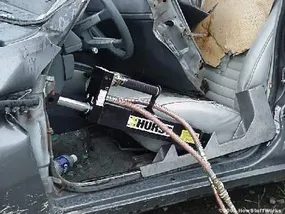
Ram’s job is very simple. It takes things away. The rescue worker slid the tool into the door frame, extended the plunger and suddenly the dashboard rose. There will be enough space. Trapped victims still have a chance.
This is where hydraulic systems come into play. They power the machines we rely on every day, but few are as important as the “jaws of life.” These tools have saved thousands of people from the rubble. At that moment, every second will determine your survival. The difference between a funeral and a hospital visit is often determined by how quickly these tools work.
Rescue mechanism
Rescuers don’t just guess the place of rescue. They use hydraulic jacks and cylinders to manipulate the shape of the vehicle. The pressure inside the line is enormous. This allows one operator to lift large amounts of steel with little effort.
When the car breaks down, the cab retracts. The Rams opened up space. It’s not just about violence. Accurate placement is important. If it is installed at the wrong angle, there is a risk of further injury to passengers. When handled correctly, it can provide a lifeline.
Maintenance and service life
These tools take a big hit. Every start-up puts stress on the hydraulic seals and blades. Ignoring it is not an option.
How often does Jaws of Life require maintenance?
Regular maintenance is required. The technician checks the hydraulic system for leaks or pressure losses. To maintain cutting efficiency, the blade must be sharpened. A dull blade can shatter metal instead of cutting through it, delaying rescue and increasing danger.
What is the average lifespan of a Jaws of Life tool?
With proper care, you can significantly extend their lifespan. With regular maintenance, these tools can last more than 10 years. Repeated use in harsh conditions can cause wear and tear, but quality equipment can withstand bad weather conditions. It’s an investment in readiness.
Why hydraulics is becoming mainstream in the rescue industry
Pneumatic tools exist. There are electric clippers. However, hydraulic systems achieve a power-to-weight ratio that is difficult for other systems to achieve. Provides stable power without overheating. In chaotic scenarios, reliability is everything. You don’t want your tools to malfunction because they are too hot or out of breath.
The hydraulic pump is the heart of the operation. Feed high pressure fluid into the tool. This tool converts pressure into mechanical movement. This is a direct and efficient energy chain.
A look into the future
The development of rescue technology continues. The light materials of vehicles pose new challenges. Aluminum and strong steel are more difficult to cut. The instruments must adapt.
But the basic principles remain. Push. cut. To elaborate. Human factors remain the most variable factor. A calm crew with good equipment can beat a panicked crew with the best equipment.
For more detailed technical information and manufacturer’s instructions, the resources on the following pages include detailed diagrams. Understanding the technical principles behind rescue helps rescuers make faster and safer decisions in the field.
There is more content on the next page.