The clock is ticking.
Europe wants internal combustion engines dead by 2035. Ford says hurry up and you’ll mess everything up.
There was a time Ford promised to quit selling gas cars by that same deadline. Not anymore. They looked at the data. They looked at reality. EV adoption is moving at a glacial pace. The Blue Oval adjusted. Now they’re telling regulators that forcing an all-electric switch could make emissions worse, not better.
Here’s why they’re pushing back.
Зміст
The Counter-Intuitive Trap
The logic runs like this: force people to buy EVs, and they won’t buy anything at all. Instead of trading their aging clunker for a modern, efficient hybrid or diesel, drivers keep the rusting bucket on the road until it falls apart.
Old cars pollute. Lots.
Keeping them longer means keeping those emissions high.
Ford’s president, Jim Baumbick, puts it bluntly:
CO2 targets must reflect actual consumer demand. Forcing a transition risks slowing the vehicle renewal rate.
The numbers don’t lie either. Across the EU and nearby territories, purely electric cars captured just 19.5% of sales last year. That bumped to 20.6% in Q1 of 2026?
It’s progress. Sure. It’s also proof that most people still want gas.
Fines Are No Fun
It isn’t just Ford. Everyone is sweating.
The EU isn’t waiting until 2035 to crack the whip. By 2030? Fleet emissions need to be down 55% compared to 2021. Fail that, and you write a massive check.
Volkswagen Group is looking at potential fines of €1.5 billion just for the 2025–2027 window. They’re trying to offset the damage by pushing EVs even when natural demand doesn’t support the volume.
Then there’s the Euro 7 standard adding complexity to the mix. It’s a tangled mess of regulations.
Ford wants out. Or rather, they want a different path. They’re begging Brussels to allow plug-in hybrids and extended-range electric vehicles (EREVs) to count more heavily. In an EREV? The gas engine is just a generator. No mechanical link to the wheels. Just pure electric drive with a backup power plant in the trunk.
It’s the bridge Ford thinks Europe is too eager to burn.
New Cars. Old Tech.
Ford isn’t sitting still while they argue policy.
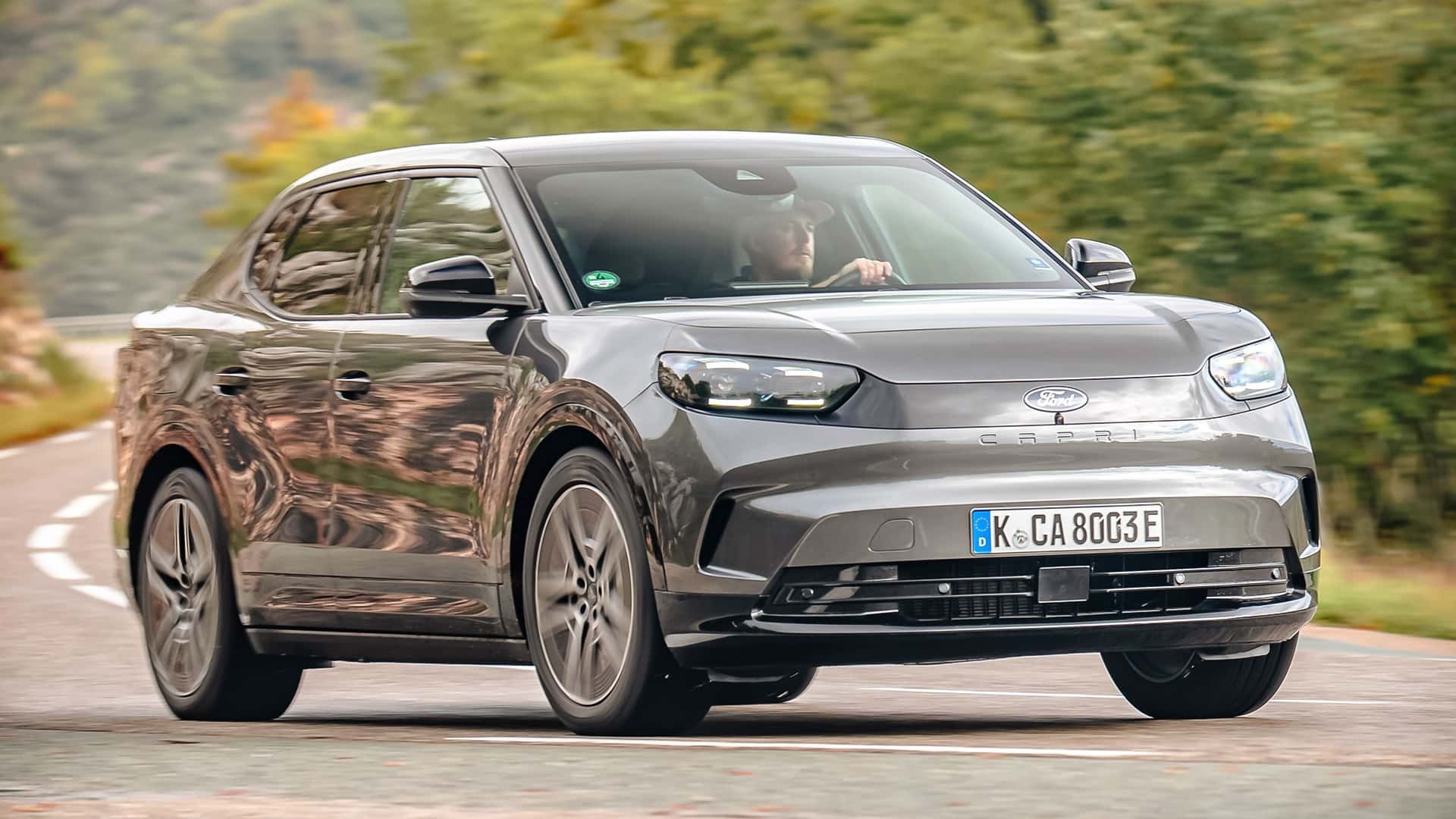
They’re dropping five new models in Europe before 2029. Three of them? They’ll burn fuel.
- A Europe-specific Bronco.
- Two “rally-bred” crossovers.
- Both with multi-energy powertrains? Yep. Gas involved.
The other two are pure EVs. A new electric Fiesta? Maybe. A small electric SUV? Definitely. Renault is helping build them. Ford is too stretched thin to do it alone right now.
This rollout is a lifeline. Ford’s market share in European passenger cars dropped to a humiliating 2.8% in early 2026. Registrations fell nearly 15% quarter-over-quarter. They are barely keeping ahead of Fiat. The old heroes—the Focus, the Mondeo—are gone. Ford needs new blood. Even if that blood has gasoline in its veins.
Who’s Right?
Prices are narrowing. Charging infrastructure? Spotty.
Most of us can relate to the anxiety. You see a fast charger at the station but it’s broken. You buy a car because it fits your budget and your range.
If the EU makes life hard for hybrid owners or gas buyers, what happens?
People keep their 2015 diesel. The emissions stay high.
Does making things easier help the transition? Maybe not overnight. But it keeps money in the auto industry’s pocket. Money that can be poured back into EV development. The long game remains zero carbon. Everyone agrees on the end goal.
They just can’t agree on how fast the runners have to sprint.
Some automakers are already begging for more wiggle room. Suppliers want it too. Will Brussels fold? Who knows. But if the goal is actually cleaning the air, holding onto a rigid mandate might be the very thing stopping you. 🏁