The piles of broken cars left in junkyards are coming to an end. The industry is heading towards deconstruction. It’s not just recycling. It’s about revalorizing parts and materials from end-of-life vehicles (ELVs) used in the production of new vehicles. The pressure is real. The supply chain for new spare parts is tight. Raw material costs have risen. If we want to survive this transition, we need to stop extracting raw materials.
France is a pioneer in this matter. From 2024, new legislation requires manufacturers to take full responsibility for the management of end-of-life vehicles. This is in line with the European mandates. The goal? The collection and recycling rate is 95%. This includes metals, plastics and all other materials extracted from scrap cars.
Зміст
From car to car
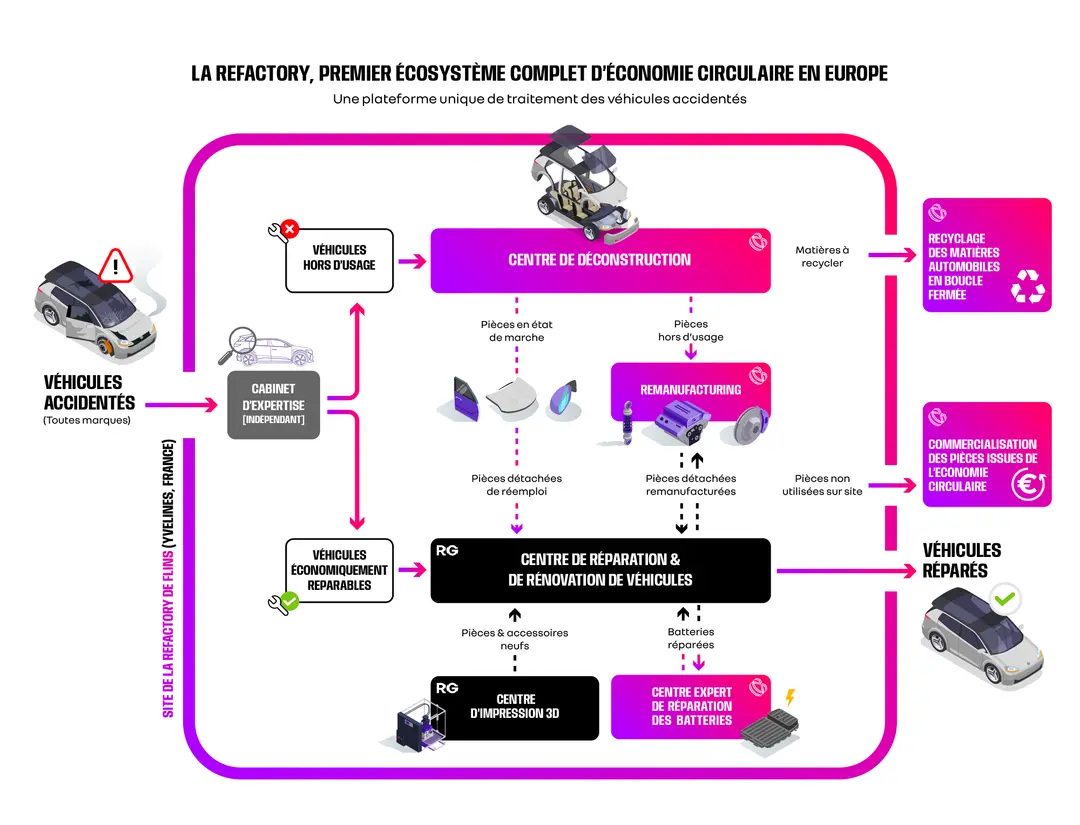
Enter The Future Is NEUTRAL. The company has just opened a new deconstruction site at the Refactory in Flins, Yvelines. This is a big step towards a closed loop system. Our mission is simple. Collect, process and value scrap vehicles based on the circular economy model.
“We focus on car-to-car. We can reuse everything from old cars to new cars that are already on the road.”
Xavier Kaufman Chief Business Officer Xavier Kaufman puts it bluntly. The logic is circular. You take the old one. You make it useful for the new.
The Future Is NEUTRAL was created by Renault, but it serves the entire European automotive industry. The company is currently the only company specializing in the circular economy of this scale in Europe. The Flins Center is not a small workshop. This is an industrialized operation.
The facility has a seven-station disassembly line. It can process 7,000 scrap vehicles per year. This number is important. Turn waste into supply chain assets.
The output is divided into two different buckets. First, there are reusable parts. These parts are taken from crashed vehicles and installed directly on other vehicles on the road. The second is remanufactured parts. These is dismantled and rebuilt to the original equipment quality, but sold at a reduced price. This addresses the immediate shortage of affordable spare parts.
Everything that cannot be reused or recycled is recycled. The materials are processed and reused to build new cars. The Flins site is designed to remove over 25 different parts from each vehicle. More than 14 types of materials can be recycled.
Close the loop
This model changes the way vehicle ownership is calculated. If you buy a replacement part, the part may come from a dead car. Reduces the need for new plastic resin. It reduces steel mining. This will stabilize the market for mechanics who are currently scrambling for inventory.
French legislation requires more than just recycling. It requires responsibility. Once the product leaves the showroom, manufacturers can no longer wash their hands. They need to manage the end game. This pressure drives innovation. This requires companies like The Future Is NEUTRAL to build infrastructure that makes both economic and environmental sense.
The Refactory in Flins is physical evidence of this change. This is not a pilot project. This is an industrial machine that processes 7,000 ELVs a year. This proves that the “junkyard” of the past are being replaced by advanced material bank. Cars are no longer junk. They are a treasure trove of value waiting to be tapped.
The advantages of a 24/7 vehicle intake
It’s not just scale that sets Refactory apart. This is rhythm. Xavier Kaufman referred to the actual reception of the vehicles around the clock. 7 days a week. There are no gaps. This continuous supply feeds directly into the circular economy ecosystem established for accident vehicles. This center does more than just dismantle cars. It strengthens neighboring businesses.
Feeding the Repair and Remanufacturing Engine
新的解构中心为其他活动提供零件。 再制造。 闭环回收。 车辆维修。 仅维修部门每年就处理 45,000 辆汽车。 这是欧洲同类产能中最大的。 High volume。 高效率。 目标是让材料尽可能长时间地发挥作用。
Wider network: Indra’s influence
The Flins center collaborates with Indra. The company is another subsidiary of The Future Is NEUTRAL. Indra manages more than 400,000 used vehicles every year. They operate through a network of 350 approved dismantling centers. The results are significant. 8 million reusable parts available. More than 3 million tons of materials are recycled every year. The infrastructure is already there. The Refactory will be connected to it.
Designing for the End of the Line
私たちの目標は、既存の廃棄物を処理することだけではありません。 メーカーと協力してエコ設計に取り組むことも含まれます。 このアイデアは理論的には単純です。 実践では厳しい。エンジニアは、初期設計段階で修理可能性、再利用可能性、リサイクル可能性を考慮する必要があります。 ルノーはすでにこの移行に取り組んでいます。 2028年までに新車に最大50%のリサイクル部品を使用する計画だ。 新しいモデルは、循環経済の原則に徹底的に従うことになります。
Close the loop
It’s not just metal recycling. This keeps the value inside the loop. The Refactory is located at the intersection of handling, processing and design. This connects the end of life of one vehicle with the start of repairs on another vehicle. Or as material after his death. The system works because it is integrated. 24/7 intake. The scale is huge. Cooperation between manufacturers. The pieces fit together.
Does the industry move fast enough to achieve this goal? Renault’s 2028 goal is just the beginning. Flins’ infrastructure and the entire Indra network form the backbone. It remains to be seen whether other manufacturers follow suit with similar commitments. The model is very clear. The implementation is variable.