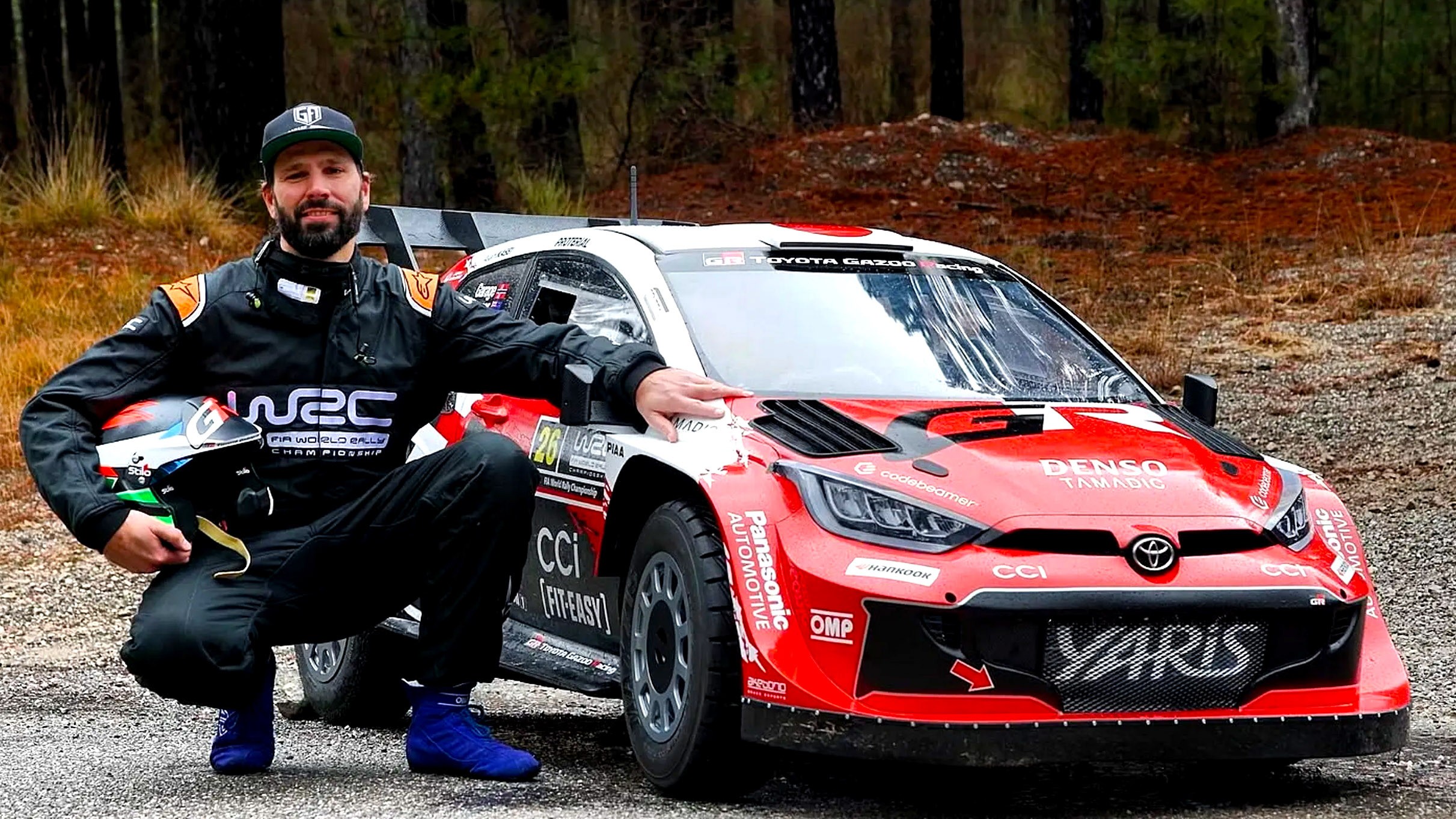
Most ambitious garage projects end in frustration or half-finished components. However, for Australian enthusiast Justin White, a 13-month obsession with automotive engineering resulted in something far more significant than a hobby: an official invitation from Toyota Gazoo Racing.
White, who documents his builds on his YouTube channel Garage Avenger, has successfully constructed a functional, half-scale replica of the Toyota GR Yaris Rally1. The project was so impressive that Toyota flew White and his creation to Monte Carlo to be exhibited alongside the actual WRC machines.
The Engineering Behind the Build
Building a miniature rally car is a far cry from assembling a standard kit car. To achieve the aggressive, wide-body aesthetic of the professional WRC contender, White utilized advanced fabrication techniques:
- 3D-Printed Bodywork: The shell was meticulously constructed from 123 individual 3D-printed parts, which were then glued and sanded to create a smooth, cohesive surface.
- Custom Chassis: To maintain the correct proportions of the full-sized car, White utilized a cross-kart chassis and extended its wheelbase by 580 mm (22.8 inches).
- Powertrain: The vehicle is powered by a high-revving motorcycle engine, delivering approximately 118 hp (88 kW) to the rear wheels.
- Lightweight Design: Despite the power, the car’s extremely low weight allows for surprising performance; while early tests clocked speeds of 94 km/h (58 mph), White estimates the car is capable of reaching 150 km/h (93 mph).
Overcoming Technical Hurdles
The transition from a static model to a high-performance machine required significant troubleshooting. Engineering a car that is both small and fast presents unique handling challenges.
When White encountered excessive mechanical grip that compromised handling, he had to pivot. He swapped high-performance rubber for trailer tires and reworked the roll cage to allow for necessary chassis flex. These adjustments transformed the vehicle from a rigid, difficult-to-drive shell into a more balanced, functional machine.
A Professional Finish
The project’s legitimacy was cemented by the level of detail in its final presentation. The mini-Yaris features:
– Sliding plexiglass windows.
– Fully functional headlights and taillights.
– A professional vinyl wrap in the official 2026 Toyota Gazoo Racing livery, provided directly by the manufacturer.
This attention to detail is likely what bridged the gap between a “hobbyist project” and a “professional tribute.” By mimicking the exact visual identity of the factory team, White created a product that Toyota could proudly display at the season opener in the French Alps.
This project highlights a growing trend where high-end consumer technology, such as 3D printing, allows individual creators to bridge the gap between amateur tinkering and professional-grade automotive prototyping.
The mini GR Yaris has evolved from a backyard experiment into a legitimate WRC tribute, proving that with enough technical precision, DIY enthusiasts can command the attention of the world’s largest automotive manufacturers.