Remember when Euro 7 regulations were supposed to kill off the petrol small car? Skoda looked done for. The end was near. But it didn’t happen. Not for the Fabia, not for the Kamiq, not even for the Scala. Skoda confirmed last year it was sticking around. Keeping the lights on. Keeping the engines turning.
The only problem? It looks old.
Last updated in 2023. Before new Renault Clios. Before fresh Vauxhall Corsas. It’s going to stay on sale past 2030. That’s a long time for a car to look like it hasn’t changed since the pandemic. Klaus Zellmer, Skoda’s boss, didn’t mince words. You can’t just leave a car in showrooms forever and hope nobody notices it’s getting grey in the mawths. It makes money. Nearly a third of global sales come from this trio. Can’t ignore that.
Style update
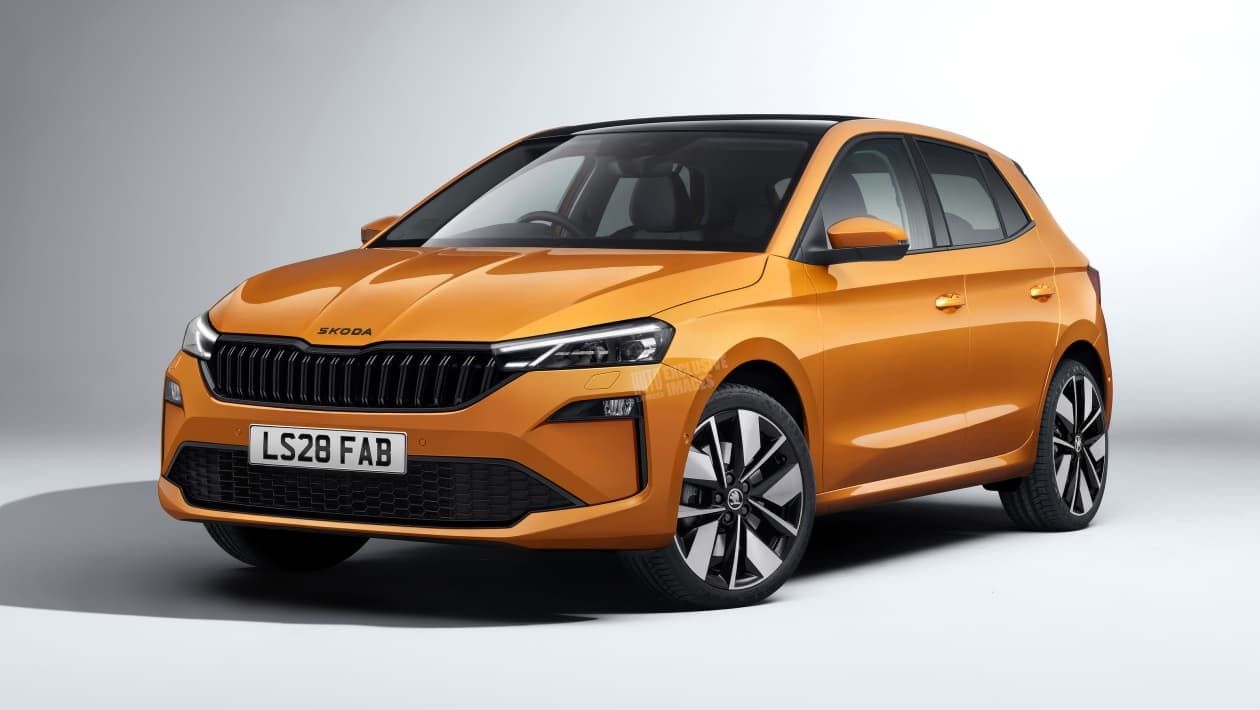
What will the new Facelift look like? Nothing radical. Don’t expect a spaceship. Expect polish. Skoda wants to graft its “Modern Solid” language onto the little guy. We saw it work on the Enyaq last year. Slimmer grilles. Bumpers with a bit more muscle. Sharp LED lights.
They’re even swapping the winged arrow badge. Going back to just writing “Skoda” on the hood. Minimalist. Clean. Inside gets better tech too. Driver assists. Screens. The usual kit. But the boring bits on the surface mask the real change. It’s under the metal now.
Hybrid but barely
No full hybrids here. Skoda is choosing the mild-hybrid route. Simple. Cheap. Effective. Johannes Neft, their tech lead, says the mild-hybrid helps fuel efficiency and smoothes out the ride. No pure electric driving though. That’s not how mild-hybrids work. It’s just a tiny battery helping the engine along.
Why bother? Cities. Southern Europe especially. In places like Italy and Spain, you almost need a hybrid badge just to enter town centres during peak hours. It’s a regulatory hack, basically. But also a money saver. Complex full hybrids cost more. Mild-hybrids? They’re affordable entry-level tech.
The car already gets 50 mpg easily. This won’t skyrocket the figures. But drivers will feel the difference in stop-start traffic. A tiny boost. A softer idle. Neft promised we’ll feel it on the commute.
How long does it last?
No one knows exactly. Emissions rules in the EU are a moving target. Will they ban petrol in 2035? Will they soften the stance? Skoda is waiting.
“We try to keep every door open,” Neft said. Ambiguous. Deliberately so. Marketing chief Martin Jahn said the same thing. As long as it’s legal. As long as customers buy it. As long as they make profit on it. The MQB platform stays alive. They will patch it. Upgrade it. Drag it through the fire of changing legislation for as long as physics and law allow.
So when does this car land? Not yet. The new hybrid system isn’t ready until late next year. So expect the update then. At the earliest. Maybe later.
Skoda has its hands full in 2026 anyway. Launching the Epiq. Electric SUV. Rivals the Renault 4. Pricey around £25,00. The electric future is coming. But for now the small petrol car limps along with a bit more hybrid tech and a sharper look.
“We are working very hard on our ICE in order to keep it competitive.”
Is that enough? Maybe. For now it is.