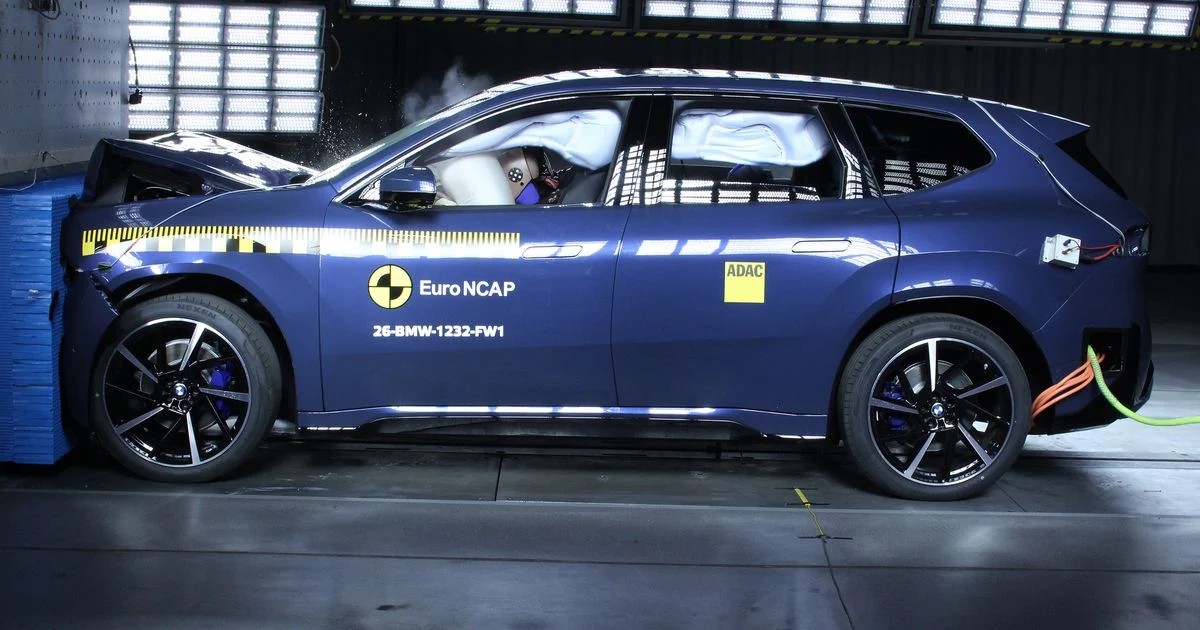
It happens in Germany first. The BMW iX3 sits in a crash rig. Euro NCAP pulls the trigger. And when the smoke clears the verdict is final. Five stars.
It’s the first car ever rated under the tightened 2026 rules. The joint venture between ANCAP and Euro NCAP updated the criteria recently. Procedures change every three years. Technology moves faster. The standards have to keep up.
The iX3 isn’t just safe. It is the first Neue Klasse BMW. That matters for the brand’s future direction. But for now the headline is safety. Specifically the new, stricter kind.
“Our 2026 requirements encourage better protection for a broader range… through restraint systems… that cater for people of different sizes.”
Carla Hoorweg says it straight. No fluff. The rules now look at more bodies more types of bodies. Fuel leakage? Checked. Battery integrity? Also checked. Electric vehicles are everywhere. Fire risks can’t wait for a later patch note.
ANCAP uses Euro NCAP data here. They tested two grades in Australia. The iX3 40 starts at $89,990. The iX3 50 x drive is $109,990. Neither price includes the on-road nonsense. Just the car.
The testing breaks down into four pillars. Or stages if you prefer. Safe driving. Crash avoidance. Crash protection. Post-crash.
Safe Driving and Avoidance
The first pillar looks at controls. Layouts matter. Buried menus distract drivers. Distracted drivers crash.
The iX3 got 71 per cent. It wasn’t perfect. Phone call operations scored poorly. So did climate control buttons. But adaptive cruise control? Excellent. Speed assistance? Good. Fatigue monitoring works.
Then comes avoiding the crash altogether. 83 per cent here.
Lane departure systems earned a ‘Good’. ANCAP called it a standout. Most systems just beep. This one intervenes.
What about when the brakes fail?
Protection
The big hits. 86 per cent total score.
Let’s look at the perfect tens. 100 per cent in rear passengers. 100 per cent driver survival in an oblique pole test. 100 in side impacts at 60 km/h. The cabin holds together. Metal bends people survive.
Vulnerable users tell a different story. Only 64 per cent there. Pedestrians are hard to save. Children get a 61. Adults cyclists both 62. There’s a limit to what sensors can do with flesh and bone.
Post Crash
95 per cent.
Emergency notifications must last six years. BMW meets this. Manual door releases? Yes. If you have electronic locks you better have a physical override. Electricity fails after impact. People don’t want to be trapped in boxes that are suddenly very heavy and possibly on fire. Battery safety checks confirmed no post-fire risk.
ANCAP plans to test cars on Australian soil soon. Local dirt. Local speeds.
The BYD Sealion 5 is on the hit list. Launched in 2025? Yes. Did it send a sample to ANCAP? No. It sent the seven-seater Sealion 8 instead.
Skim the surface? Maybe. Or just waiting for the net to widen.
The rules are set now. The first blood is shed. Others will follow. Some will fail.
“Fuel leakage and EV battery integrity are… particularly relevant… given the increasing number of EVs.”
That part stays. Always will.
Do we care enough to read the small print on the spec sheet? We look at screens. We ignore buttons. We drive into walls at night. The iX3 survives. It is well built. But survival isn’t everything. Sometimes the best test is just not crashing.
Easy to say. Harder to do. The data says the BMW is ready. The rest of us are still figuring out the climate controls.