Cars cost a fortune. Unless you are buying a home, very few purchases hit your wallet that hard. But there is a hidden cost to ownership. The risk of theft is real. In some quiet neighborhoods, locking the doors is enough. In most places, you need better armor for your vehicle.
The good news is the situation is improving. Car thefts have been dropping steadily. In 2009, fewer than 1 million cars were stolen in the US. That is the lowest number in twenty years. Security technology has evolved rapidly to achieve this drop.
General Motors is a prime example. More than 30 GM models come with OnStar. This is not just a fancy satellite radio. It is a full safety package. You get turn-by-turn navigation. You get stolen vehicle tracking. You can even block the ignition remotely. But OnStar is just the tip of the iceberg. Many other high-tech systems use GPS or radio signals to track cars and kill engines from afar.
These systems range from simple pre-installed helpers to military-grade gear like LoJack. We are looking at ten amazing car security solutions. Some are affordable everyday fixes. Others are DNA-recognition systems that look like science fiction.
Зміст
10: OnStar
OnStar remains a standard-bearer for connected car security. General Motors integrated this system into over 30 of its vehicle models. It provides a layered approach to defense.
The core function is tracking. If your car goes missing, OnStar can pinpoint its location. This is not passive monitoring. It is active intervention. Dealers and owners can request remote ignition blocking. This prevents the thief from driving the vehicle away, even if they have bypassed the alarm.
Beyond theft recovery, OnStar offers turn-by-turn navigation. This utility makes the system useful daily, not just in emergencies. The data connection allows for real-time updates on traffic and road conditions. It turns your car into a networked device.
Is this enough to stop a determined thief? Maybe not alone. But it raises the difficulty level significantly. Thieves want easy targets. A tracked car with remote kill switches is a hassle. It reduces the resale value of stolen parts. It lowers the profit margin. That is why systems like OnStar are so effective at reducing overall theft numbers. They change the risk/reward calculation for criminals.
OnStar dominates the ad space for automotive security. GM’s marketing machine has trained drivers to expect a lifeline. The commercials show calm operators stepping in right after a crash. It mirrors the home security spots where agents stand ready for burglary victims. But the real question isn’t just about the ads. It’s about the mechanics. How does the system actually function when the chips are down?
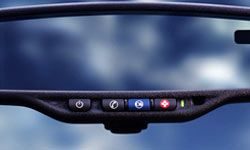
The infrastructure relies on digital cellular networks across the US. Drivers access it via a dedicated button cluster. No dialing required. You push a button. You get help.
The Three-Button Logic
OnStar’s interface is deceptively simple. It’s a three-button system.
- Navigation: Get lost on a rural backroad? Press the first button. An advisor guides you home with turn-by-turn directions. This requires a connected plan or prepaid minutes.
- Hands-Free Calling: Press the second button. It routes your call through the vehicle’s internal modem. No phone in hand.
- Emergency Response: Press the third. This connects directly to an OnStar Advisor.
In a collision, the system becomes passive. Airbag sensors or other impact detectors trigger an automatic alert. The operator knows you’re in trouble. They know your location. They direct first responders to your exact coordinates.
Beyond the Crash
Security is the other pillar. If you lock your keys inside the cabin, OnStar unlocks the door. If you wander into a concrete parking garage maze, they honk the horn to help you find your car.
Theft recovery is where it gets aggressive. GPS tracking lets operators monitor a stolen vehicle in real-time. For newer models, they can disable the ignition remotely. In high-speed chase scenarios, they can slow the engine down. It’s not just a tracker. It’s a remote control for your vehicle’s fate.
“OnStar is far more than just a security system — it’s more of a comprehensive service system.”
The mobile apps for iPhone and Android have streamlined these features. Remote unlocking is now a tap away. But convenience has a price tag.
- Safe & Sound Plan: $199/year. Basic security and emergency assistance.
- Directions & Connections Plan: $299/year. Adds the turn-by-turn navigation described earlier.
Enter LoJack: The RF Alternative
LoJack operates on a different frequency—literally. While GPS satellites struggle with line-of-sight blocks, LoJack uses radio frequency (RF) tracking. Small transceivers hide inside the car. Police units tune into the specific frequency. The car doesn’t need to see the sky to be found. It needs to be within range of a police receiver.
This technology has deep roots in law enforcement infrastructure. The LoJack unit is tied to the vehicle’s VIN. When you report a theft, the VIN goes into the state police crime computer. That entry automatically activates the LoJack signal in the car.
The guarantee is blunt. If they don’t recover your car within 24 hours, you get your money back. For the LoJack device, not your car.
There are catches. Coverage is limited to specific counties in the US. Not every jurisdiction has the necessary police hardware. The upfront cost is steep. The basic unit runs $695. That’s a lot to spend on a tracker. However, some insurers offer up to 35% off premiums for having it installed. It’s a gamble on coverage area versus potential theft loss.
BMW’s Countermove
With OnStar’s cellular ubiquity and LoJack’s police-backed RF network established, the field opens up. BMW doesn’t just copy. They compete. They have to. The German automaker has built its own ecosystem to challenge GM’s dominance.
8: BMW Assist and Security Plus
BMW’s Take on Connected Safety
BMW didn’t just watch from the sidelines when OnStar took over the automotive tech space. They launched their own rival, BMW Assist, with the 2007 model year lineup. It’s not a clone, but it covers the same high-stakes ground: automatic collision detection, direct lines to BMW response specialists, and the ability to unlock doors remotely if you lock your keys inside. There’s even a promise of police cooperation for stolen vehicle recovery. Since it relies on GPS and cellular networks, just like its GM counterpart, BMW can theoretically hand over tracking data to law enforcement when a car goes missing.
The pricing model shifts after the honeymoon period. While many 2007-era models get BMW Assist free for the first four years, the bill comes due at $199 annually thereafter. It’s also not standard across the board. If you’re looking at a 2011 128i Coupe, you won’t get the system unless you check the box for the premium package.
The Armored X5
For those who find standard security features a bit too cozy, BMW offers the X5 Security Plus. It’s the only mass-produced vehicle from a major manufacturer that boasts Class 6 bulletproof body and glass. Outwardly, it looks like any other X5. Underneath, it’s a fortress. The armor plating can take hits from an AK-47 without blinking. You also get practical additions like sirens and front-and-rear cameras that make this SUV far less vulnerable than the average family hauler.
But armor is expensive. And unnecessary for most people. If you don’t have a secret agent budget or a genuine threat to your life, you might want to look at telematics systems that track your car rather than shield it from gunfire.
Aftermarket Tracking: CarShield
Enter CarShield. It strips away the bulletproof glass and focuses on what most drivers actually need: diagnostics and tracking. It’s a small adapter you plug into the OBD-II port of any car made since 1996. The device taps into the vehicle’s computer, monitoring battery health, engine heat, oil pressure, and even signs of tampering. It uses cellular technology to send this data to your phone or a web interface.
The real selling point is the GPS tracking. You can set up alerts via email or SMS if the car moves unexpectedly. It’s a budget-friendly entry into telematics—the long-range communication of vehicle data. The unit costs $349 upfront, with a $159 annual fee covering wireless service and roadside assistance. Like OnStar, it has human advisers to call in an emergency. It was even a finalist for the 2010 Best Aftermarket Device Telematics Award. Not bad for a dongle.
Military Grade: Smartruck III
Then there’s the Smartruck III. Developed for the U.S. Army, this isn’t a consumer product. It’s a mobile command center on wheels. Run-flat tires let it keep moving even after a puncture. Surveillance systems scan for everything from snipers to biological threats. It comes armed with a .50-caliber machine gun for offensive support. The interior is packed with touch-screen computers in the rear seats to control all that security complexity. It’s armor designed to withstand weapon fire and explosives.
It’s the ultimate example of a vehicle that doesn’t just protect its occupants but actively defends them. You can’t buy it at the dealership. But for those who can, it raises the question: when does protection stop being a feature and start being a weapon?
Commando FM-870
The Commando FM-870 steps into that gray area between security and surveillance.
Why the Viper 1002 Might Be the Sweet Spot for Remote Start
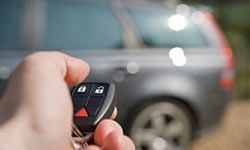
If the Commando’s LCD remote caught your eye, the Viper 1002 deserves a serious look. It’s a solid mid-tier option for drivers who want convenience without breaking the bank. The package includes two four-button remotes that communicate via radio frequencies up to 1,320 feet (402 meters). That range is shorter than the Commando’s 2,500-foot reach, but it covers most parking lots and driveways just fine.
The real differentiator here is the Stinger impact sensor. Unlike basic systems that blast a six-tone siren for any touch, the Stinger can distinguish between a casual lean and a violent break-in. Someone leaning against your car on the street triggers a light alarm chirp. They try to smash a window, and the full siren goes off. It’s a nuanced approach that keeps your neighbors from calling the cops just because you parked next to a drunk driver.
For engine security, Viper uses a Failsafe Starter Kill. Once you park and exit, you activate this feature. It prevents the engine from restarting, even if you leave the key inside. This is crucial for preventing “hot start” thefts, where a thief jumps in a running car and drives off.
You get the standard multi-function perks: remote engine start, keyless entry, and trunk release. The Manufacturer’s Suggested Retail Price (MSRP) sits at $299.99, but you can often find it on Amazon for around $112. That price drop makes it one of the most cost-effective ways to add remote start to an older vehicle.
How the Cobra 8510 Stops Hotwiring Attempts
While the Viper focuses on convenience, the Cobra 8510 focuses on one thing: making sure the engine stays cold. This U.K.-based brand makes everything from headrest DVD players to parking sensors, but their immobilizer is where they shine.
Immobilizers don’t just scare thieves away with noise. They physically disable the components needed to start the car. By cutting the ignition system, they render hotwiring attempts useless. The Cobra 8510 is accredited by Thatcham, a British organization that tests and rates vehicle security systems. If you see that accreditation, it means the device has passed rigorous testing standards.
The system comes with two keys. As long as you keep them safe, your car won’t move without you. The device arms itself automatically when you leave. There’s no fumbling with switches or remote codes. If a thief breaks in, they find a car that literally won’t turn over.
Compared to GPS tracking or complex alarm systems, immobilizers are cheap. You can grab the Cobra 8510 on Amazon.co.uk for about $65. It’s not flashy. It doesn’t have an LCD screen or a smartphone app. But for the price of a tank of gas, it stops the most common form of auto theft.
The CobraTrak 5: A High-Stakes Security Bundle
If you need recovery as much as prevention, the CobraTrak 5 is in a different league. It bundles tracking, immobilization, and impact detection into one package. This combination earned it a Category 5 placement in the Thatcham system. Category 5 is the highest rating, meaning the system is designed to effectively help police recover a stolen vehicle.
The core feature here is Automatic Driver Recognition (ADR). This isn’t just a passive key fob. The ADR system links your car to a card you carry on your person. If the card is outside the vehicle, the system arms. If the car is moved without the card, Cobra’s operating center gets an instant alert.
This creates a huge hurdle for thieves. Even if they steal your keys, they can’t steal the ADR card. Without the card, the system knows something is wrong. Cobra can then initiate remote engine immobilization. Once the car is shut down remotely, it won’t restart. This is especially effective against organized theft rings that rely on hotwiring or relay attacks.
This isn’t a DIY project. The CobraTrak 5 costs £649 (about $1,050) upfront, plus a £199 ($322) annual monitoring fee. It’s a premium solution for owners in Europe who want maximum protection.
Is It Worth the Hype?
These systems cover a wide range of needs and budgets. The Cobra 8510 is for the budget-conscious driver who wants to stop hotwiring. The Viper 1002 is for the commuter who wants remote start and a smarter alarm. The CobraTrak 5 is for those willing to pay a premium for active recovery services.
But there’s a catch. No system is perfect. Alarm fatigue is real. If your Viper chirps every time a wind gust hits the door, you’ll eventually ignore it. Immobilizers are effective, but they don’t help if the whole car is towed away. GPS tracking is great, but it only works if the thief doesn’t cut the power or remove the antenna.
The market is saturated with these devices. You have to decide what you’re actually afraid of. Is it the casual smash-and-grab? The skilled hotwiring attempt? Or the organized theft ring? The right answer depends on where you live and what car you drive.
How VIN Etching Stops Chop Shops
Thieves love a blank slate. A stolen car’s greatest asset is its anonymity. Once it hits a chop shop, the engine is out, the interior stripped, and the body cut apart for scrap. The original Vehicle Identification Number (VIN) is usually on the dashboard, visible through the windshield from the outside. Easy to paint over. Easy to replace. Hard to trace.
VIN etching changes the math.
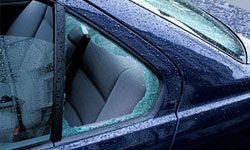
By etching the VIN onto every window, you make the car significantly harder to sell as a parts vehicle. If a thief can’t sell the windows, the car is less valuable to the black market. It’s not a tracker. It doesn’t beep. It doesn’t lock the doors. It just makes the car a pain to dispose of.
VINshield is the dominant player in this DIY space. For about $19.95, you get a kit that includes stencils cut to your specific VIN and a chemical etching agent. You stick the stencil to the glass, apply the solution, and wait. The mark is permanent. You also get two warning stickers to put on the windows.
“VIN etching can’t track your car by GPS, or immobilize the engine or set off a blaring warning siren, but it can discourage carjackers and make your car more difficult to sell illicitly.”
The stickers might actually work better than the etching. They signal to thieves that you’ve taken precautions. Most thieves are opportunists. They want a quick, easy score. A car that looks like it’s been etched is a riskier investment. Is $20 enough to stop a determined thief? Probably not. But it might stop the ones looking for the path of least resistance.
Nissan’s Sober Car Concept
Nissan’s Vision 2015 project wasn’t just about styling. It was about survival. The goal was to use technology to kill people and injuries on the road by 2015. Specifically, they wanted to tackle drunk driving before it happened.
The concept car featured sensors in the seat and gearshift. These sensors analyzed the driver’s perspiration for alcohol. If the system detected intoxication, the car wouldn’t start. It didn’t ask nicely. It just refused to move.
There was also a camera pointed at the driver’s eyes. This system monitored for drowsiness or drunkenness. If it saw signs of fatigue, two things happened:
1. A voice alert woke the driver up.
2. The seatbelt tightened. A physical jolt. Hard to ignore.
If the driver drifted out of the lane, the car assumed they were asleep or impaired. Same response. Voice alert. Seatbelt tuck. It was aggressive. It was proactive.
Nissan didn’t wait for the concept car to go into production. They already integrated drunk driving warnings into current navigation systems. The hardware was coming later. The software was here.
Lexus and the Future of ID
Lexus went further. In partnership with Steven Spielberg for the 2002 film Minority Report, they created a keyless entry system based on DNA recognition. The idea was simple. You touch the car. The car knows it’s you.
No fob. No button. No key.
The system relied on physical contact to verify identity. If you weren’t the owner, the car wouldn’t open. It was sci-fi at the time. In 2002, it was pure fiction. But the underlying technology was real. Capacitive sensors. Biometric data. It was just a matter of time before it made its way into consumer vehicles.
The concept car also included advanced collision avoidance. Automatic parking. Cruise control that actually worked. Sensors everywhere. The car knew its surroundings. It knew its driver. It was a glimpse of what a vehicle could be when it stopped being a tool and started being a partner.
We’re still a decade or two away from widespread biometric entry. But the trajectory is clear. Security is moving from external barriers to internal verification. From keeping people out to knowing who is inside.
The VIN etching you do today is cheap insurance. The DNA scanner in your car tomorrow will be seamless. One stops theft. The other prevents identity theft. Both assume you’re the target.
Do you trust a sensor to know you’re sober? Or do you trust the sticker on your window to scare off the break-in? The technology is advancing. The criminals are adapting. The gap between them is closing. Or widening. Depends on who you ask.
The car is getting smarter. Are you keeping up?