


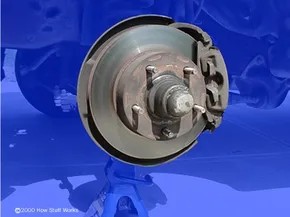
You hit the pedal. The car slows down. Simple, right? The reality is a bit more mechanical. Most modern vehicles rely on disc brakes at the front axle. Some push it further and put them on all four corners. This is the hardware that generates the friction needed to kill momentum. If you want to know how that stopping power is distributed, you need to look at the caliper. Specifically, the single-piston floating type. It is the workhorse of the braking world. We are going to break down exactly how this design functions and why it remains the industry standard.
The Mechanics Behind the Stop
Disc brakes operate on a straightforward principle. A rotor spins with the wheel. A caliper squeezes a pair of brake pads against it. Friction converts kinetic energy into heat. The car stops. But not all calipers are built the same. The single-piston floating caliper is the most common configuration you will encounter on sedans, crossovers, and even some sports cars.
This design features a single piston housed inside one side of the caliper body. When you press the brake pedal, hydraulic pressure pushes that piston. The piston drives the inner brake pad against the rotor. But here is the clever part. The caliper itself is not fixed rigidly in place. It “floats” on guide pins or slides within a bracket.
As the inner pad presses against the rotor, the reaction force pushes the entire caliper body in the opposite direction. This movement drags the outer pad against the other side of the rotor. Both pads clamp the disc. The single piston does the work for two pads. It is an elegant solution that minimizes complexity and cost.
Why Floating Calipers Dominate the Market
You might wonder why manufacturers stick with this older design when more complex options exist. The answer lies in efficiency and maintenance. Floating calipers have fewer parts than fixed calipers. Fixed designs use multiple pistons on both sides of the rotor. They are heavier. They cost more to produce. They are prone to seizing if the lubrication fails.
The floating design is lighter. It is cheaper to manufacture. It is easier to service. When the brake pads wear down, the caliper retracts slightly to make room for the new set. The single piston retracts. The caliper slides back. The system self-adjusts. This simplicity reduces the chance of mechanical failure. It also keeps unsprung weight down, which improves handling.
However, there are trade-offs. Because the piston only pushes one side, the braking force can be slightly uneven. The inner pad often wears faster than the outer one. This is not a defect. It is a characteristic of the design. Mechanics check this during routine service. They replace pads in pairs. They ensure the guide pins are clean and lubricated. If the pins bind, the caliper cannot float. The brakes drag. The fuel economy drops. The rotor warps.
Comparing Floating to Fixed Systems
To understand the floating caliper, you have to look at what it replaces. Fixed calipers use pistons on both sides of the rotor. They apply pressure simultaneously. The braking force is more balanced. The pedal feel is firmer. This is why you see them on high-performance vehicles. They handle heat better. They resist fade during hard cornering.
But for


