November 6, 1936. The air in Detroit was thick with anticipation. The automotive world rarely saw a debut this charged. Ford was about to shake the dust off tradition with the 1937 models.
Sales Manager William C. Cowling orchestrated the launch with precision. He knew the stakes. The industry was shifting. Competitors were gaining ground. Ford needed to make a statement.
Cowling spared no effort. He poured resources into the rollout. Marketing teams worked around the clock. Dealers were prepped to handle the influx of interest. The goal was simple: get the new models off the ground with maximum impact.
The result? An extravaganza. Critics later called it a landmark moment. Enthusiasts still talk about it. The energy was palpable. Showrooms buzzed. Waitlists formed.
Ford had reinvented its image. The 1937 lineup wasn’t just an update. It was a declaration. American manufacturing was entering a new era. Cowling had ensured the wheels were turning before the first engine started.
Detroit watched. And it loved every second of it.
Зміст
Ford’s High-Stakes Comeback: The 1937 Lineup Reveal
The atmosphere inside the Detroit Coliseum wasn’t just loud. It was theatrical. Some 41 special trains rolled in, dumping off 8,000 dealers from across the United States and Canada. They weren’t there for a boring briefing. They were there for spectacle.
Walter Dorwin Teague had redecorated the venue. Fred Waring and his Pennsylvanians provided the soundtrack. The music was popular then, but the real star was the stagecraft.
Company officials spoke briefly. Lights dimmed. A single, bright shaft of light hit center stage.
An elevator rose slowly. On it sat a massive V-8 emblem.
Then a girl appeared. She was twelve years old with golden curls. She untwined herself from the metal logo. Running to the side, she summoned elves and gnomes who burst from hidden entrances.
It was absurd. It was genius.
A giant cauldron boiled at the center. One by one, oversized replicas of 1937 Ford parts dropped in. A front fender. An instrument panel. Engine components. A radiator grille. A seat cushion.
Spotlights hit the steam. Then colored lights flashed. The fumes vanished. The elves disappeared.
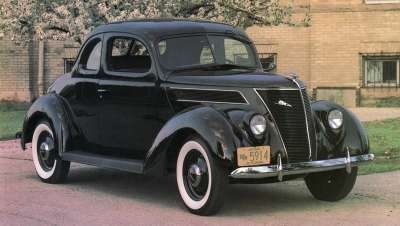
A shiny new Club Coupe rose up. It was a brand-new model for 1937. It circled the stage before driving down a ramp to the floor.
This wasn’t just a launch. It was a revolution in merchandising.
Why Ford Needed a Flashy Comeback
There was a reason for the fairy tale. The truth is, Ford needed attention.
1936 had been kind to no one. Production had increased, but sales had plummeted. In 1935, Ford had beaten Chevrolet handily. That dominance vanished the next year.
By the 1936 model year, Ford slipped behind its arch rival. Sales fell more than 23 percent.
Chevrolet had taken the crown. Ford had to fight for it back.
The 1937 Model 74 and the V-8 Legacy
The event showcased the 1937 Ford lineup. This included the Model 74. The presentation highlighted specific features of these new models.
The V-8 engine remained the heart of the brand. It was the symbol on the stage. It was the reason the car worked. But the styling was changing. The Club Coupe represented a shift in design philosophy.
Ford wasn’t just selling transportation. They were selling an experience. The dealers understood this. They had traveled thousands of miles to see it.
The 1937 models arrived with a bang. It was a desperate bid to regain market share. It worked enough to keep Ford in the race.
But was it enough? The market was shifting. Buyers wanted more than just power. They wanted style. The 1937 Ford offered both, wrapped in a theatrical package that no one could forget.
The competition was still fierce. Chevrolet was waiting. Ford had to deliver on the promise of the show.
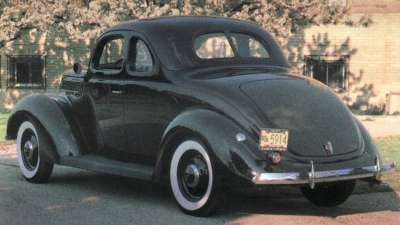

The rear three-quarter view of a 1937 Ford Model 74 tells a story of missed timing. That sharply sloping trunk lid looks jarring today. It feels wrong against the rounded, cohesive shapes collectors expect. But look at the market data. The 1936 Ford, especially the open styles and those iconic three-window coupes, commands a premium. They sell for roughly 50% more than comparable 1936 Chevrolets. The irony is thick enough to cut with a wrench.
So why did Ford lag in 1936? The answer lies in steel and suspension geometry.
Chevrolet had already deployed a seamless steel “Turret Top” across its entire 1936 lineup. The only exception was the Standard cabriolet. It was a continuous metal sheet from windshield to decklid. Ford stuck with separate roof sections. Then there was the ride. Chevy’s Master series included independent front suspension as standard. Ford called it “Knee-Action.” It cost nothing extra. Ford clung to the old solid I-beam axle. It used a transverse leaf spring. It was the same setup from the Model T days.
But these weren’t new inventions for 1936. Chevrolet introduced the Turret Top in 1935. Knee-Action appeared in 1934. What actually shifted the market in 1936 was the braking system.
The Hydraulic Brake Gap
Hydraulic “juice” brakes were becoming the norm. Plymouth’s aggressive advertising blitz woke the public up to the advantages of fluid-based stopping power. By 1936, nearly every American automaker had switched over.
Except for a stubborn few.
Pierce-Arrow. Willys. Lincoln. And Ford.
Ford still offered mechanical brakes. It was a major competitive disadvantage in a market that had largely standardized on hydraulic systems. That gap in technology hurt sales more than any styling cue could.
Regaining The Lead
The 1937 Ford lineup was a direct response to this failure. The company was determined to take back the sales lead. This time, they adopted a “New all-steel top.” It swept back in an unbroken line. Ford couldn’t call it a “Turret Top” due to copyright issues. But the visual effect was identical.
The styling was completely revised. Ford boasted about a “Brilliant new design that strikes the modern note in streamlined beauty.” They emphasized a wide, roomy cabin. A low center of gravity. Curves flowing fast from front to back.
It was a cleaner look. A faster look. But the damage from the 1936 hydraulic brake omission had already been done. The market had moved on.
1937 Ford Lineup
For more on the 1937 Ford lineup, continue on to the next page.
For more information on cars, see:
-
Muscle Cars
-
Sports Cars
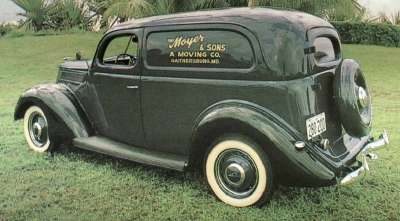

The 1937 Ford lineup shifted gears significantly. It wasn’t just an update. It was a facelift. And a mechanical overhaul.
Take the 1937 Ford delivery sedan. Or any closed body style for that matter. The flat single-pane windshield? Gone. In its place sat a slanting two-piece “V-type” windshield. It opened up. It looked modern.
Chevrolet kept free-standing lamps until 1940. Plymouth didn’t catch up until 1939. Ford was ahead of the curve here. Almond-shaped headlights merged into the front fender aprons. Sleek. Integrated.
The grille screamed influence. Sharp V-shape. It was a direct copy of the Lincoln Zephyr. That car had dropped just a year prior. The hood opened “alligator” style. Hinged at the rear.
The Brake War: Cables vs. Rods
Mechanical advances existed beyond aesthetics. Henry Ford was 74. He was stubborn. He refused hydraulic brakes. “Safety of steel from pedal to wheel.” His words.
Ford stuck with mechanical binders. But they were new. Self-energizing. Car momentum helped apply the brakes. Tests claimed one-third less pedal pressure needed to stop.
There was a catch. The brakes used steel cables in flexible conduits.
Squeaking. Juddering. Unpleasant sounds. Severe weather caused corrosion. Corrosion meant dicey stopping power.
Yet, when maintained properly, these cable brakes outperformed the rod-controlled mechanicals of the 1936 model. Better efficiency. More noise. Less reliability in rain. A trade-off Henry Ford accepted.
Under the Hood: V-8 Refinements
The 85-horsepower V-8 remained exclusive in the low-priced field. Improvements were subtle but vital.
Water-pump capacity jumped by nearly one-third. 45 gallons per minute. The pump moved to the upper front of the block. It pushed water through the jacketing. Didn’t suck it.
Main bearings grew to 2.4 inches. Insert bearings replaced poured-babbitt types. Stronger. More durable.
Quietness and Comfort
Ford pushed comfort hard. “Engineered and built throughout for the quiet you expect.”
New springs. Pressure lubricated. Quieter operation. New mounting methods for body and engine. Body insulation. Improved exhaust piping. Muffler mounts. Rear axle tweaks. Drive shaft adjustments. All contributed to a quieter ride.
The Center-Poise Ride smoothed out. Long-tapering springs acted smoother.
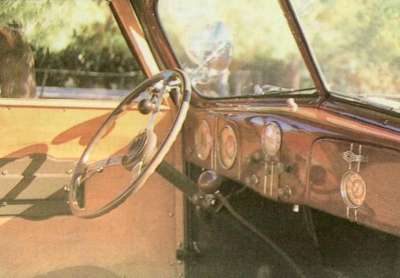
The instrument panel got a facelift. Smart. Practical. Gauges grouped for rapid reading. Starter button relocated to the dash. Parking brake lever tucked under the panel. Adjustable driver’s seat. It rose as it slid.
“Examine it in detail,” Ford urged buyers. “See how The Quality Car in the Low-Price Field is more than ever The Universal Car.”
The Lineup: Standard vs. DeLuxe
Seventeen models. Two trim levels. The tradition continued.
The base series became the Standard line in 1938. Three-passenger coupe. Tudor and Fordor “flatback” sedans. Tudor and Fordor Touring Sedans with built-in trunks.
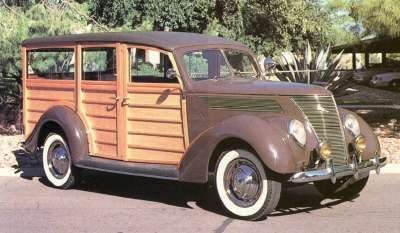
DeLuxe added more. Club Coupe. Woody station wagon. Five open types: Cabriolet. Club Cabriolet. Four-door Convertible Sedan. Phaeton. Roadster.
The Roadster vanished after 1937. The Phaeton left a year later.
DeLuxe trim meant extras. Dual tail-lamps. Dual wipers. Walnut woodgraining on window moldings and dash. Chrome-plated grille. Chrome windshield frame. Rear armrests. Twin electric air horns. “Banjo” steering wheel. Locking glove compartment. Clock.
Interior choices mattered. Closed models used mohair or broadcloth. Convertibles offered Bedford cord or antique-finished leather. Phaetons and roadsters got leather. Rumble seats throughout used imitation leather.
Who Actually Designed It?
Credit often goes to Bob Gregorie. He disclaimed it. He was busy with the 1938 Lincoln-Zephyr.
The real work happened at Briggs Manufacturing Company. John Tjaarda led the crew. Alex Tremulis. Bob Koto. Phil Wright.
Stylists of considerable stature. They did the job. Gregorie just didn’t want the blame. Or the credit.

The Proportion Problem and The Profit Paradox
Some people think the 1937 Ford was a masterpiece. Historians David L. Lewis, Mike McCarville, and Lorin Sorensen still argue it’s one of the handsomest cars of the decade. Other observers disagree violently. They group it with the 1938 line as the ugliest Fords ever built.
The root cause wasn’t bad artistry. It was micromanagement. Henry Ford hated leaving his subordinates alone. He personally ordered the overall length chopped from 182.75 inches down to 179.5 inches.
That’s a loss of 3.25 inches. Sounds small. It wasn’t.
The stylists had envisioned specific proportions. The new length spoiled them. Flatback sedans looked stubby. Badly shortened.
“Good design is largely a matter of proportion.”
— Gordon Buehrig, Chief Stylist at Duesenberg
Buehrig knew this. He said it. He wasn’t just talking about Fords. He was talking about reality. The 1937 Ford failed because the boss interfered with the math.
The economy was recovering in 1936. Slowly. It kept moving into 1937. Ford noticed. They cranked out production.
By year’s end, they had built almost 57,000 cars. That’s 7.2 percent more than in 1936.
So why did the bottom line suffer?
Profits hit $6.76 million. It was barely one-third of the previous year’s figure.
Irony. They made more cars. They made less money.
Why? Tooling costs.
The seamless steel top. The new 60-horsepower engine. Other innovations. All of it required expensive new tooling. Bringing the 1937 Ford into production was costly. The margin disappeared.
You can have beautiful lines. You can have massive sales volume. If your tooling costs eat your margin, you’re just moving metal at a loss.
Henry wanted a shorter car. He got one. The market bought it. The accountant did not.

The 1937 Ford DeLuxes: A Market in Transition
The interior of the 1937 Ford Model 74 station wagon wasn’t just about utility. Ford packed it with comfort features that blurred the line between workhorse and passenger car. But the engineering improvements were only half the story.
Behind the scenes, Ford was getting serious about data. They opened a dedicated dynamometer room. They bought an axle-testing machine. The wind tunnel, constructed the year before, got an upgrade: hot and cold air capabilities. This allowed for more precise aerodynamic testing across varying temperatures.
The numbers told a strange story. Chevrolet production dipped by roughly 11 percent. Ford closed the gap, coming within just 20,000 units of matching Chevy’s sales volume. It was a near-miss that felt like a victory until you looked at the broader picture.
The real gainers were the medium-priced competitors. Buick sales surged 26 percent. Pontiac jumped 32 percent. Chrysler climbed 51 percent. Nash was the standout, up a massive 62 percent. These brands were eating into Ford’s traditional market share while the company focused on its own internal upgrades.
Then the ground gave way.
Late that summer, the nation slipped into a sharp recession. Auto sales tumbled. The timing was brutal. Dealerships were sitting on huge inventories of used cars taken in trade during the spring. New car buyers vanished. The showrooms were crowded with the very vehicles people were trading in, creating a paradox of supply and demand that crushed dealer margins.
Ford’s 1937 Ford DeLuxes suffered alongside the rest of the industry. Sales dropped. The market was saturated.
But the downturn wasn’t permanent. Help was on the way.
Ford’s 1938 Pivot: Cleaning Stock and Splitting Personalities
Jack Davis wasn’t just filling a seat. When Edsel Ford appointed him general sales manager on December 22, 1937, the industry held its breath. Davis replaced William Cowling, a man who could charm the pants off a crowd but lacked the gritty instincts of a closer. Dealers, who had spent years polishing their PR skills under Cowling, suddenly found themselves working with a “salesman’s salesman.”
The lot was clogged. Every dealership in America was sitting on a mountain of rusting iron. It didn’t matter if you sold Fords, Chevrolets, or Chryslers—the used car glut was universal. Davis didn’t want to wait for the market to correct itself. He went straight to the top. He approached Alvan Macauley, Packard president and head of the Automobile Manufacturers Association, with a radical proposal.
They agreed. March became Used Car Week.
“The result… was salutary. By agreement, the poorest cars were burned.”
Those burnings weren’t just waste management. They were theater. The conflagrations of those clunker cars drew crowds. They created spectacle. Ford’s dealers, already trained on how to handle the secondary market, led the pack. They sold over 57,000 vehicles in that single week. Their inventory shrank by 22,804 units overnight.
It was a victory. But it wasn’t salvation.
1938 arrived with a heavy heart. Production at Ford, and across the industry, was cut by more than half. The Great Depression had not forgiven the auto makers for their optimism. New car sales stagnated. The used car cleanup helped, but it couldn’t stop the bleeding.
So Ford changed its approach to the new models. Mechanics stayed the same. There were no revolutionary engines or transmissions to speak of. But styling? That became a two-track policy. Ford decided it needed to widen its appeal by splitting the lineup into distinct personalities.
The Standard Series: Stripped Back
The 1938 Standard series retained the 1937 sheetmetal. It was a conservative choice. The only visual update was the grille, which was revised to sweep the horizontal upper bars into the hood side-vents. It looked tidy. Functional.
The rear ended the era of free-standing taillights. They were replaced by neat, teardrop-shaped units. Inside, the dashboard featured a mahogany-look finish that tried to elevate the cheap materials beneath it.
But the Standard models were spartan. Seriously.
– One windshield wiper.
– One taillight.
– A single sun visor.
– A single armrest.
It was too bare for many buyers. In January, Ford panicked slightly and added chrome bars to the grille to soften the look. It was a band-aid on a bullet hole.
The DeLuxe Series: The Big Statement
Then there was the 1938 Ford DeLuxe.
Brochures claimed it was “entirely new in appearance.” And it was. It looked big. It was big. Ford designers had stretched the wheelbase and widened the body, creating more room in the closed sedans. Passengers got comfort. The luggage space expanded significantly.
The front end was refreshingly modern. The hood was longer, giving the car a predatory stance that the Standard series lacked. It was the car for those who wanted to be seen.
“It looks big and is big — with more room in the closed sedans, more comfort for passengers and much larger luggage space.”
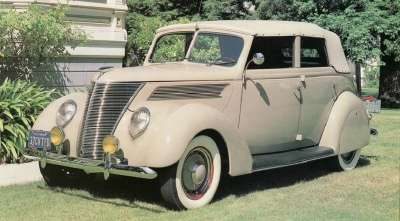
The Deluxe models, like the 1937 Ford DeLuxe convertible sedan, had already proven that extra features could be offered for a reasonable price. The 1938 DeLuxe doubled down on that promise. It didn’t just offer chrome; it offered presence.
But presence doesn’t sell cars when people have no money. The split strategy—offering a bare-bones Standard

The 1937 DeLuxe: Why It Outsold the Standard
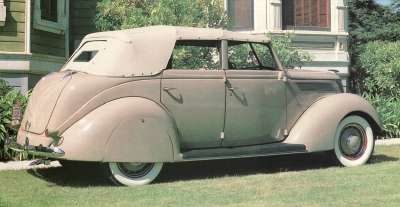
The side profile of the 1937 Ford DeLuxe convertible sedan told you everything you needed to know about the new direction Ford was taking. That softly curved “heart-shaped” grille with horizontal bars wasn’t just a styling cue; it was heavier. More impressive. It looked substantial in a way the Standard series simply didn’t.
Inside, the cabin had changed. You got fine mohair or broadcloth upholstery. Rear passengers got big armrests, each with its own ashtray. The instrument panel was finished in walnut with ivory plastic fittings. It felt expensive.
But the real story was in the dollar value.
The DeLuxe Ford was hard to beat on price-to-feature ratio. For just $60 more than the Standard counterpart, you got a roomier car. Better equipped. Better trimmed. More impressive to look at. The result? It outsold the cheaper Standard model by a three-to-one margin. People paid extra for the look and the space.
1938 Ford Lineup: The Station Wagon Gets Smarter
The 1938 Ford lineup brought heavy changes to the station wagon. This wasn’t just a refresh. It was a functional overhaul.
Sliding glass in the rear doors and rear quarters became standard. In 1937, that feature cost an extra $20. Now it was included. Ford also deleted the screen-side variation with side curtains. Gone.
The spare tire moved. It used to live on the tailgate. Now it sat inside, in a special storage area behind the driver’s seat. Cleaner look. Easier access.
Ford’s Iron Mountain, Michigan plant started producing the wood bodies. They shipped them directly to various Ford assembly plants. Before this, the Upper Peninsula facility cut and trimmed the wood components. Then they shipped them to Murray Body Company’s Detroit plant for assembly. The new setup streamlined the process.
Wood paneling was new. The entire supply chain shifted. Ford took control of more steps. Less middlemen. More efficiency.
Why the 1937 DeLuxe Dominated Sales
The three-to-one sales ratio wasn’t an accident. It was a reflection of buyer priorities. Shoppers in 1937 wanted more than just transportation. They wanted presence. The DeLuxe offered that.
The $60 premium? It bought comfort. It bought style. It bought status.
The interior details mattered. Walnut trim. Ivory fittings. Rear armrests. These weren’t just accessories. They were signals. Signals that you had made the right choice.
The Standard series didn’t offer this. It was cheaper. But it wasn’t as complete.
1938 Station Wagon: Efficiency Over Variety
The deletion of the screen-side variation with side curtains in 1938 cut options. It also cut complexity. Sliding glass was easier to maintain. It was more durable. It was what buyers actually wanted.
Moving the spare tire inside changed the rear profile. It removed a visual clutter. It improved aerodynamics, marginally. It also protected the tire from the elements.
The shift in wood body production was strategic. Iron Mountain became the hub. Murray Body Company stepped back from the wood assembly role. This vertical integration reduced
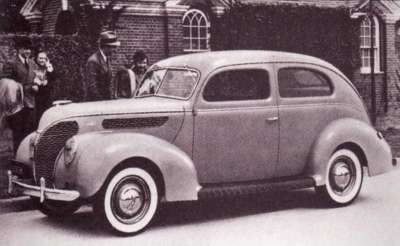

The 1938 Ford Tudor sedan marked a shift in Ford’s lineup strategy. The 1938 Ford Tudor sedan was no longer offered in a DeLuxe model. This change streamlined the options but didn’t stop Ford from pushing accessories hard.
Two items stood out as particularly interesting for that year. The first was the rear fender shield, or skirt. These cost $9 for a pair. They changed the car’s profile. The second was the rustless-steel wheel hub and spoke cover. A set of four ran $15. These added a bright touch to wheels that otherwise looked dull.
Comfort and maintenance accessories filled the rest of the catalog.
Summer Comfort and Maintenance Parts
Ford pushed a $3 Kool Kushion for summer driving. It was designed for driver comfort during hot months. The radiator cover cost $1.25. This simple addition helped with aerodynamics and engine temperature management.
Safety and appearance items filled the rest of the list. The center bumper guard priced at $1.75. It offered a bit of protection for the front end. A road light cost $5. This was essential for night driving before modern lighting became standard.
The DeLuxe steering wheel remained an option at $7.50. It gave the interior a slightly upscale feel. Maintenance was also available. The oil filter cost $3.25. The air cleaner went for $3.75. These items kept the engine running smoothly.
Low-Cost Maintenance Solutions
One item grabbed attention for its low price. The tire repair kit sold for only $.20. This was a significant saving for owners who might otherwise need professional help for minor punctures.
The list of other safety and appearance items continued to grow. Ford wanted owners to customize their cars. They wanted them to look new longer.
These accessories show how Ford engaged with its customers. They provided solutions for comfort, style, and maintenance. The market responded.
The Tudor sedan may have lost its DeLuxe trim, but the accessories kept it fresh. Owners could still make their cars stand out.
What did you add to your car? Did you get the fender shields? Or stick with the stock look? The choices varied. The options remained.
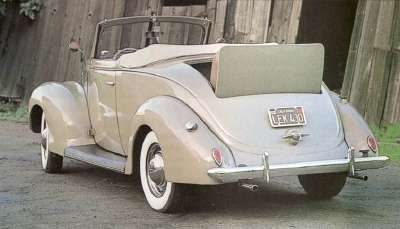

The 1938 Ford DeLuxe Convertible Coupe: A Fading Lineup
The 1938 Ford DeLuxe convertible coupe wasn’t just a car. It was a symptom. By this year, Ford had slashed its body styles by three. The flatback Tudor and Fordor sedans vanished from the Standard and DeLuxe lines. They were unpopular. The DeLuxe group lost the Roadster too. It was an attractive body. It just didn’t sell.
This was only the beginning of the purge. By 1939, the Club Coupe, Club Convertible, and Phaeton were gone. The Convertible Sedan followed in 1940. The lineup was shrinking.
Edsel Ford wanted a different path. If he had his way, the 1937 and 1938 Fords would have been modern. He pushed for hydraulic brakes. He wanted independent front suspension. He advocated for Hotchkiss Drive instead of the heavy torque tube. These were features competitors already had.
Henry Ford said no. His intransigence doomed the company to trouble. You can debate how much that hurt sales. The anachronisms didn’t stop production records.
Ford hit five million V-8s in May 1938. November saw the 26-millionth Ford roll off the line. These cars were serviceable. They lasted. The 85-horsepower V-8 made them performance champions for the era.
Specs follow.
1937-1938 Ford Models, Price, and Production
The 1937 debut splashed but failed to save the giant. The 1937 and 1938 Fords are collectible now. Below is the data.
1937 Model 74
| Model | Weight (lbs.) | Price | Production |
|---|---|---|---|
| Coupe, 5W, 2P | 2,275 | $529 | 43,866 |
| Tudor sedan, 5P | 2,405 | $579 | 148,467 |
| Tudor T/B sedan, 5P | 2,415 | $604 | 51,322 |
| Fordor sedan, 5P | 2,435 | $639 | 18,541 |
| Fordor T/B sedan, 5P | 2,445 | $664 | 13,976 |
| 4d wagon, side curtains | 2,691 | $744 | 193 |
| 4d wagon, glass windows | 2,776 | $764 | 193 |
| Total Model 74 | 276,365 |
1937 Model 78 Standard
| Model | Weight | Price | Production |
|---|---|---|---|
| Coupe, 5W 2P | 2,496 | $586 | 46,481 |
| Tudor sedan, 5P | 2,616 | $611 | 147,794 |
| Tudor T/B sedan, 5P | 2,648 | $638 | 78,895 |
| Fordor sedan, 5P | 2,649 | $671 | 30,521 |
| Fordor T/B sedan 5p | 2,666 | $696 | 31,555 |
| Total Model 78 | 335,246 |
1937 Model 78 DeLuxe
| Model | Weight | Price | Production |
|---|---|---|---|
| Roadster, 2/4P | 2,576 | $694 | 1,250 |
| Phaeton, 5P | 2,691 | $749 | 3,723 |
| Coupe, 5W, 2P | 2,506 | $659 | 26,738 |
| Club Coupe, 5W, 5P | 2,616 | $719 | 16,992 |
| Cabriolet, 2/4P | 2,616 | $719 | 10,148 |
| Club Cabriolet, 4P | 2,636 | $759 | 8,001 |
| Tudor sedan, 5P | 2,656 | $674 | 33,683 |
| Tudor T/B sedan, 5P | 2,679 | $699 | 73,690 |
| Fordor sedan, 5P | 2,671 | $734 | 22,885 |
| Fordor T/B sedan, 5P | 2,696 | $759 | 98,687 |
| Convertible Sedan, 5P | 2,861 | $859 | 4,378 |
| 4d wagon, side curtains | 2,906 | $754 | 9,111 |
| 4d wagon, glass windows | 2,991 | $775 | 9,111 |
| 4d sedan, 7P | — | — | 521 |
| Total Model 78 DeLuxe | 309,807 |
Total 1937 Ford: 921,418
1938 Model 82A
| Model | Weight | Price | Production |
|---|---|---|---|
| Coupe, 5W, 2P | 2,354 | $595 | 13,712 |
| Tudor sedan, 5P | 2,455 | $640 | 30,850 |
| Fordor sedan, 5P | 2,481 | $685 | 5,878 |
| ** |