Installing ceramic tile on a hatchback is a physics lesson that you don’t need a degree to understand. Stack the boxes. Rear tire compression. The front pops out. This is obvious. The car buckled when it stretched beyond its design limit. Please stop. Remove some boxes. The problem is clear and pressing.
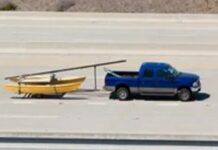
Pickup trucks and SUVs are subjected to even more abuse. It has a heavier frame and stiffer suspension. The rear bumper can carry more weight before it hits the road. But there are limits. If you press too hard, there is a risk of vibration and damage to the leaf spring. Geometry failed.
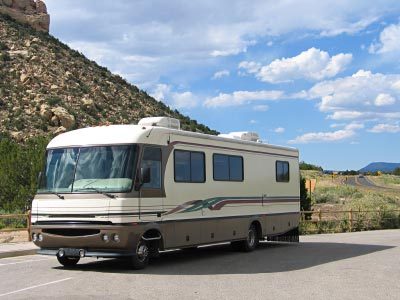
Next is a large motorhome. You can load all your furniture, household appliances and your passenger list into your motorhome. The suspension remains firm. The position remains horizontal. This is a lie. The sense of mass is negligible because the vehicle is designed to absorb mass. But just because you don’t “feel” the pressure doesn’t mean you won’t reach your limits.
How do you know when you’ve crossed the line? You can’t stare at it like a fully loaded sedan. The margin of error is very large, and exceeding it has catastrophic consequences. We need clear numbers. In particular, you need to calculate the cargo capacity of your motorhome.
This is not a guess. This is a subtraction game. If done incorrectly, you risk structural failure, brake failure, or worse. This way you can analyze the numbers and find your true limits.
Зміст
Mathematics beyond borders
Calculating cargo capacity is easy. Any content that is not “content” that you have added will be removed. It starts with the strict limitations of the manufacturer, which eliminate not only the weight of the equipment itself, but also the weight of the necessary fluids and personnel.
- Start with Gross Vehicle Weight (GVWR). This is the maximum total mass that the vehicle is designed to support. Think of it like a roof.
- Reduce vehicle curb weight (UVW). Not just shells. This includes the chassis, frame, engine and all standard equipment. The most important thing is that it is full of fuel, coolant and oil.
- **Minus sleeping capacity weight rating (SCWR). ** The manufacturer specifies the maximum passenger weight. Typically calculated at £154 per sleeping position.
- **Reduce propane (LPG) weight. ** Propane weighs approximately 4.2 pounds per gallon. The weight of a full LPG tank must be reduced.
- **Reduce fresh water weight. ** Water is heavy. It weighs 8.3 pounds per gallon. Reduce the weight of the entire fresh water tank.
The result is cargo capacity. This is a number that cannot be exceeded.
Actual example
Let’s look at a hypothetical Motorhome and see how the numbers stack up. This is not an abstract theory. Here’s a breakdown of how much “stuff” you need to play.
- GVWR: 20,000 lbs. This is a hard cap.
- UVW: 14,500 lbs. The device itself is filled with liquid.
- SCWR: 924 lbs. Based on 6 sleeping positions (6 x 154 lbs).
- LPG: 50.4 lbs. Assume a propane capacity of 12 gallons.
- Fresh water: 207.5 lbs. Let’s say you have a 25 gallon tank.
After UVW, SCWR, propane and water are subtracted from GVWR, the cargo carrying capacity is 4,318.1 lbs.
This is your budget. It can carry 4,318 pounds of clothing, food, equipment and additional fuel. Exceeding this number can compromise safety. Brakes don’t stop you. The break is at the bottom. The frame may be distorted. Manufacturers have these restrictions for a reason.
Where can I find these numbers? Check your owner’s manual. Look for the certification sticker on the driver’s side door frame. Or search the manufacturer’s website online. Most brands publicly publish their GVWR and UVW information. If you can’t find it, call your dealer. Don’t guess.
Volume and weight of the vehicle
Cargo space and cargo capacity are often confused. In the previously given article, the cargo volume is also stated in cubic feet. This helps you plan where things will fit, but it doesn’t tell you anything about weight.
For example, the 2006 Acura MDX has 81.5 cubic feet of cargo space. It looks like there are a lot of them. However, the vehicle’s load carrying capacity (payload) can be much lower in terms of gross weight, especially compared to a motorhome. You can fill those cubic feet with styrofoam and not destroy the GVWR. You can fill it with lead ingots and immediately blow the shaft out.
Volumes are related to geometry. Skills are related to physics.
Manufacturer information (according to brand)
The logic is similar if you drive a car or truck instead of an RV. GVWR and vehicle weight (as well as UVW) are still there. The difference is that SCWR and fluid weight vary less. The payload is tighter.
Here’s how some popular models stand out from a pure volume standpoint: This helps you visualize the space available for your gear.
Acura Cargo Capacity
| Year | Model | Crate capacity (ft3) |
|---|---|---|
| 2006 | MDX | 81.5 |
| 2006 | RL | 13.1 |
| 2006 | RSX | 25.3 |
| 2006 | TL | 12.5 |
| 2006 | TSX | 13.2 |
| 2007 | MDX | 83.5 |
| 2007 | RL | 13.1 |
| 2007 | RDX | 60.6 |
| 2007 | TL | 12.5 |
| 2007 | TSX | 13.2 |
| 2008 | MDX | 83.5 |
| 2008 | RL | 13.1 |
| 2008 | RSX | 60.6 |
| 2008 | TL | 12.5 |
| 2008 | TSX | 13.2 |
| 2009 | MDX | 83.5 |
| 2009 | RL | 13.1 |
| 2009 | RSX | 60.6 |
| 2009 | TSX | 12.6 |
Audi cargo capacity
m8cy4xpj0nqt2wnyxpnz
Buick and Cadillac Accessories: Cars, SUVs and Luxury Trucks
When you look at the cargo capacity of the 2006-2009 Buick, you’ll find a wide range of options, from compact luxury sedans to large family haulers. La Crosse and Lucerne have had solid performances over the years. Both offer 16 cubic feet of space in La Crosse and 17 cubic feet in Lucerne. There is a small difference in the cargo space, but both are tight for transporting large items.
The real sales come from SUVs. The Rainier has a cargo capacity of 80.1 cubic feet. “The Rendezvous” bumped that number up to 108.9. But Terraza is the king of the class. It delivered 136.5 cubic feet. That was a huge number for a crossover at the time.
In 2008, Buick changed its product line. Rendezvous and Terraza are gone. They have been replaced by new Enclaves. The first-generation Enclave started with 116.2 cubic feet. By 2009, the number had dropped slightly to 115 cubic feet. It remains a strong contender for families who need space to store gear, strollers and camping gear.
“The Buick Terraza has 136.5 cubic feet of space, making it one of the roomiest crossovers of the late 2000s.”
Cadillac takes a different tack. Luxury does not necessarily mean practicality. The CTS sedan’s trunk is small at 12.5 cubic feet. CTS-V is also the same 12.5. The STS and STS-V are slightly larger at 13.8 cubic feet. The DTS offers more space at 18.8 cubic feet.
However, if you need volume, go for the Escalade. The standard Escalade began production in 2006 and has a capacity of 104.6 cubic feet. It rose to 108.9 cubic feet by 2007 and has remained at that level ever since. ESV (Extended Wheelbase) is a serious trim option. In 2006 it was 131.6 and in 2007 it was 137.4. In 2009, the number remained unchanged at 137.4.
The Escalade EXT is a hybrid pick-up truck and SUV. There’s trunk space in the trunk, but looking at the info, it there is a discrepancy. Why? The rear seats fold flat, but the bed itself isn’t measured on the same cubic foot scale as the cab. This is unique.
XLR and XLR-V Roadsters are small. 11.6 cubic feet each. Not for groceries. The SRX SUV is somewhere in between. From 2006 to 2008, it was 69.5 cubic feet. Then it dropped. The new 2009 SRX has just 13.8 cubic feet. It’s just a trunk. The table lists the rear luggage space, although the total volume can be even larger when the seats are folded down. Model year changes represent a redesign that changes how space is measured and used.
Chevrolet Range: from wagon to suburbia
Chevrolet dominates the sales charts. If I have to move, I’ll buy a Chevrolet.
Express vans are monsters. The capacity is 225.1 cubic feet. From 2006 to 2009, this figure remained unchanged. Whether you buy 1500, 2500 or 3500, the space is the same. It was a van on wheels.
HHR is unique In 2006, the number was 63.1 cubic feet. By 2007, the number had dropped to 57.7. HHR maintained its figure of 57.7 in 2009. This is a retro station wagon with amazing practicality.
SUVs tell a different story. The cargo capacity of the 2006 equinox was 68.6 cubic feet. In 2007, its volume was reduced to 67.1 cubic feet and has remained the same ever since. The TrailBlazer offers 80.1 cubic feet of space. In 2006, the number was 107.4, but in the following years it rose to 80.1. With a volume of 120.1 cubic feet, the Uplander minivan is very spacious.
The main attraction is Suburban and its siblings. As of 2007, the Suburban 1500 and 2500 now have a capacity of 137.4 cubic feet. Previous data indicated that the Suburban 1500 was not listed in 2006. This indicates that this particular configuration is not available or there is a lack of standardized reporting. The Tahoe comes in at 108.9 cubic feet. This figure remained stable in 2009. The Tahoe Hybrid also scored 108.9.
In 2009, Chevrolet launched the Traverse. The capacity is 117.5 cubic feet. That covers the difference between an Equinox and an large Suburban.
The sedan is ordinary. The Impala has a capacity of 18.6 cubic feet. In 2006, the Malibu had a cargo capacity of 15.4 and dropped slightly to 15.1 in 2008. The 2006 Malibu MAX Wagon has a cargo capacity of 41 cubic feet, a significant addition to the sedan platform. A Corvette is a sports car. In 2006 and 2009 it had a capacity of 22.4 cubic feet, while in 2007 and 2008 it was only 11 cubic feet. Body style changes in 2007 significantly reduced the luggage space.
“Chevrolet Express Wagon has 225.1 cubic feet of cargo space, unchanged from 2006 to 2009 regardless of cargo capacity rating.”
Chrysler vs. Dodge: Minivan utility vs. truck practicality
Chrysler dominates the minivan market. The best seller is “Town & Country”. In 2006, it had a capacity of 146.7 cubic feet. By 2008, it slowly fell to 143.8 and remained there until 2009. The Pacifica replaces it in some markets, offering 62.7 to 92.2 cubic feet of capacity, depending on model year and configuration. The PT Cruiser is a retro station wagon. In 2006, it was 92.2 cubic feet, which dropped to 62.7 cubic feet in 2007. Until 2009, it remained at 62.7 cubic feet.
The 300 Sedan and 300C Sedan are identical. In 2006 and 2007, it was 15.6 cubic feet. It went up a bit to 17.2 in 2008, but returned to 15.6 in 2009. The Sebring is smaller. In 2006 it was 11.3, rose to 13.6 in 2007 and has remained at this level since then. The Crossfire Roadster is small. It went from 6.5 cubic feet in 2006 and 2007 to 7.6 cubic feet in 2008.
Dodge copied Chrysler but added trucks and vans. Caravans are king. In 2006 and 2007, it was 167.9 cubic feet. In 2008, it dropped to 144.3 cubic feet and stayed there. The Caravan minivan offers 142.3 cubic feet of space with seats folded.
Sprinter vans are commercial beasts. The Sprinter Van 2500 offered 247 cubic feet of space in 2006, which jumped to 318 cubic feet in 2007 and stayed there. Sprinter Van 3500 sales started with 247 units and reached 371 units in 2007. For a passenger car, this number is impressive. This is the passenger version of the Sprinter Cargo 2500. The starting price is 321
Why Ford’s 2009 F-Series Trunk Is Still a Mystery (And What to Buy)
Specifications for the 2009 Ford F-Series are blank. The F-150, F-250 or F-350 models have no reported cubic feet of cargo space. This is not a typo. Gaps in data have led team managers and researchers to make assumptions. If you’re looking for Ford pickup truck payload, you’re better off looking at the Ranger or relying on sidewall measurements instead of closed data points.
E-series trucks are stable. The 2009 E-150, E-250 and E-350 Super Duty all have 230.6 cubic feet of cargo space. That number is down from the 2006 peak of 256.5 cubic feet. Changes in body style can reduce available volume. Or the measurement method may have changed. Either way, full-size vans are still Ford’s king of vans.
The Escape Hybrid offers a slight increase in capacity to 66.1 cubic feet. The non-hybrid Escape stayed at 66.3. The differences are minimal. fusion? Only 15.8 cubic feet. Small sedans rarely have many features. Taurus carrying capacity has increased slightly from 17 cubic feet in 2006 to 21.2 cubic feet. This is a welcome improvement for family drivers.
Blank entries for 2009 F-series trucks keep highlighting old vehicle databases.
Fight for compact SUV supremacy with GMC’s Savana Van
GMC approaches Savana with caution. From 2006 to 2009, the 1500, 2500 and 3500 models had a capacity of 225.1 cubic feet. No changes. No improvement. Flat, box-like size. If you want to move furniture or pallets, Savana is a logical choice. It’s not luxurious, but it has room.
Introduced in 2007, the Acadia has a capacity of 19.7 cubic feet. By 2008, the figure had risen to 25.5 cubic feet. This is a significant improvement for a mid-size crossover. The Yukon Hybrid debuted in 2008 with just 16.9 cubic feet of space. The battery went into the trunk. The standard Yukon model offers 60.3 cubic feet. Improving cargo efficiency brings with it high storage costs.
The Yukon XL’s volume stays around 45.7-45.8 cubic feet. Large families need additional rows. The Sierra model is still an empty set. Again the data is empty. If you’re checking out GMC Sierra Cargo Room, you probably want to get a quote or wait for data. Envoy had 43.7 cubic feet of space for many years before being retired. Discontinued models are easy to track. Empty fields are frustrating.
Honda Civic sales fluctuations and Odyssey reliability
Honda’s sales figures tell the story of the changes. The 2006 Civic has 72 cubic feet including the rear seats. By 2009, that amount had dropped to 11.5 cubic feet. This is a big drop. The 2008 Civic has 35.7 cubic feet of space. The 2006 update may have changed the shape of the rear seats. The coupe/sedan architecture of the new Civic sacrifices the folding space in the rear.
The Odyssey is still a solid choice. From 2006 to 2009, 147.4 cubic feet. no change. It doesn’t have to be that way. The Ridgeline settles for 41.4 cubic feet. The volume of the Pilot is slightly reduced from 87.6 cubic feet to 87 cubic feet. Small difference. The CR-V has stayed at 10.4 cubic feet for years. It’s small but useful.
From 2006 to 2009, the Accord Hybrid’s cargo space was 11.2 cubic feet. Standard Accord volume drops to 11.9 cubic feet in 2008 and 2009. The 2006 model has 12.8 cubic feet. The redesign sacrificed space. element? 74.6 cubic feet of cubic feet and lasts 4 years. Ugly but functional. Fit increased from 41.9 in 2007 to 57.3 in 2009. The second generation Fit is a winner in city driving.
Is Hummer still relevant in 2009?
Hummer hasn’t changed much. From 2006 to 2009, the H2 offered 30.7 cubic feet of space. The H3 offers 29.5 cubic feet of space. It’s the same number. It’s the same shape. The capacity of the H3T pickup has not been announced. Another empty. Brands die. Sales are declining. But the status remains the same. You can pack your gear in the trunk, but you have to worry about gas costs.
The H1 Alpha was still empty in 2006. Military derivatives are rarely offered in consumer transport specifications. H2 and H3 are retail options. It is very heavy. they are very thirsty. Numerically, however, they were right. If you need 30 cubic feet of fixed space, the Hummer is your choice. He is not only a smart choice.
Modern Entourage and Genesis Primer
Hyundai Motor has expanded its product range. The Entourage was introduced in 2007 and has a capacity of 32.2 cubic feet. It disappeared in 2009. It was a short-lived minivan competitor. There was a slight increase in Santa Fe from 30.5 in 2006 to 34.2 in 2007 and 2008. The increase was small. Tucson can store 22.7 cubic feet of cargo over four years. Consistent but unremarkable.
The Accent trunk dropped from 12.4 in 2006 to 15.9 in 2007 and has remained the same since then. The Elantra went from 13 to 14.2 and stayed there. The Azera has a capacity of 16.6 cubic feet. The Sonata has a volume of 16.3 cubic feet. small car, small box. Introduced in 2009, Genesis has a capacity of 15.9 cubic feet. This is a good start for a newbie. Veracruz was empty. Also empty.
Stability of the Infiniti QX56 and FX lineup
Infiniti’s luxury SUV continues to sell well. From 2006 to 2009, the QX56 offered 91.7 cubic feet of capacity. Large cargo space. Prior to 2009, the FX35 and FX45 each had a capacity of 64.5 cubic feet. In 2009, the capacity of the FX35 and the new FX50 drops to 62 cubic feet. A slight decrease. Redesigning may result in shortening the rear end.
From 2006 to 2007, the G35 had a capacity of 7.8 cubic feet, which increased to 13.5 cubic feet in 2008. The G37 dropped to 7.4 cubic feet in 2009. The G-Series was not a truck. The M35 and M45 have a capacity of 14.9 cubic feet. The 2006 Q45 had a capacity of 13.6 cubic feet. Production was stopped in the same year. Luxury sedans rarely compete in sales. They compete on ride quality.
Isuzu Ascender and the end of an era
Isuzu is on the decline. From 2006 to 2008, the Ascender had a capacity of 80.1 cubic feet. This situation has not changed. i-280 and i-350 were empty in 2006. i-290 and i-370 were empty in 2007 and 2008. No data. No volume. It is only slowly withdrawing from the US market. Ascender is a redesigned version of the Chevrolet TrailBlazer EXT. There is a bed in the truck. However, cargo volume information is not listed. Researchers are missing out.
Jaguar XF introduction and XK body reduction
Jaguar is refreshing its lineup. The XF has a capacity of 28.6 cubic feet. The X-type holds 16 cubic feet. The XJ8 and XJR have a capacity of 16.4 cubic feet. The 2006 XK8 and XKR have a capacity of 11.5 cubic feet. By 2007, the XK and XKR
Jeep and Kia: Off-road utility meets compact practicality
If you’re thinking about mid-2000s Jeep cargo space, those numbers speak for rugged performance, not luxurious comfort. The 2006 Commander comes in at 68.7 cubic feet, while the Grand Cherokee is a little behind at 67.4 cubic feet. With a standard cargo volume of 45.8 cubic feet, space is limited in the Wrangler, but that changed dramatically with the introduction of the Unlimited model in 2008.
Why is Wrangler Unlimited important? Its volume jumps to 86.8 cubic feet, making it a strong candidate for towing equipment. By 2007, the Patriot and Compass filled the small SUV gap with 62.7 cubic feet and 53.6 cubic feet, respectively. The Liberty’s volume held steady at around 69 cubic feet until 2008, when it dropped slightly to 64.2 cubic feet.
Kia takes a different approach. Their sedans don’t have much cargo space. Optima and Amanti are about 15 cubic feet. The Rio’s storage capacity is a tight 11.9 cubic feet. But look at the Rio 5 or the Spectra 5. These hatchbacks have nearly 50 cubic feet of space. The Rondo made waves in 2007, offering 74.4 cubic feet of space for families looking for minivan practicality without the minivan footprint. Sedona is a huge vehicle that began construction in 2006 and has a capacity of 141.5 cubic feet. So did they lose space? Yes. By 2008, the Sedona’s volume had dropped to 121.3 cubic feet. Introduced in 2009, the Borrego bridges the gap between compact SUVs and full-size trucks with 97.6 cubic feet of cargo capacity.
Land Rover and Lexus: Luxury models and engine changes
Things get weird when you look at Land Rover’s numbers. From 2006 to 2009, the cargo volume of the Range Rover Sport remained at 71 cubic feet. The cargo volume of the original Range Rover was reduced from 74.9 cubic feet to 74.2 cubic feet. But what about the LR3? It varies wildly. In 2006 and 2007 it was 90.3. It then dropped significantly to 9.9 in 2008. It then returned to 90.3 in 2009. The LR2 was introduced in 2009 with a capacity of 58.9 cubic feet.
Lexus caters to users who need quiet cargo space. The sedans is compact. The ES 350 has a capacity of 14.7 cubic feet. Whether you buy a 350, 430 or 450h, the volume remains the same in the GS series at 12.7 cubic feet. The IS series is similar, measuring 13 cubic feet. However, the real stars are hybrids and SUVs. The RX 400h and RX 350 offer 84.7-85 cubic feet of space. The GX 470 has a capacity of 77.5 cubic feet. Starting with the LX 470, the LX 570 is spacious, with the 2009 570 measuring 83.1 cubic feet. The SC 430 Coupe is small, measuring just 8.8 cubic feet. If you drive it, there is not much space for your luggage.
Lincoln, Mazda, Mercedes: The difference between premium comfort and design
Lincoln doubled in size. The navigator is a beast. 2006 starts at 104.8 cubic feet. It dropped to 103.5 in 2007 and 2008, but returned to 104.7 in 2009. The MKX makes do with 69 cubic feet. Sedans like the MKZ and Town Car are practical, but they don’t offer a lot of room, around 15.8 to 21.1 cubic feet. The Mark LT Pickup has 47.9 cubic feet of cargo space.
Mazda’s strategies are wide-ranging. The Mazda 3 hatchback has more room than the sedans at 43.8 cubic feet compared to the 2009 sedans’ 16.6 cubic feet. With a volume of 44.4 cubic feet, the Mazda5 minivan is versatile. The CX-7 and CX-9 are large SUVs. The CX-9 has a ride height of 100.7 cubic feet. The Tribute dropped significantly from 66.8 in 2006 to 29.2 in 2008 before rebounding to 66.2 in 2009. The RX-8 coupe is small at 7.6 cubic feet.
The technical quirks of Mercedes-Benz are also visible here. The ML class is still 72.4 cubic feet. The GL grade (if available) offers 83.3 cubic feet. The R-Class is an 85 cubic foot grand tourer. The SLK and SL Roadsters are very compact at about 10 cubic feet. The CLS and E-Class offer a reasonable 15.9 cubic feet of luggage space. The comfort of the S-Class is 16.3-19.8 cubic feet, depending on the model year.
Mercury: The Last Chapter of the Ford Deluxe
Mercury is descending. The Monterey minivan is huge at 134.3 cubic feet. The Mountaineer SUV has a volume of 84-85.8 cubic feet. Mazda3 are inconsistent. In 2007, it dropped to 29.3 cubic feet. It then returned to 66.3 cubic feet in 2008 and 2009. A hybrid version will follow. The Grand Marquis and Milan sedans have predictable capacities of 20.6 cubic feet and 15.8 cubic feet, respectively. The Montego and Sable have a volume of about 21 cubic feet.
“Cargo capacity is not only about cubic feet, but also the shape and accessibility of the space are important.”
There are changes in the data for 2006 and 2009. SUV sales have become even more important. The sedans is still small. Hatchbacks and minivans offer flexibility that pure trunk measurements don’t necessarily reflect. The Wrangler Unlimited and CX-9 prove that you can hide a lot of storage solutions in a compact-looking vehicle. Lexus and Lincoln numbers remind us that luxury doesn’t always mean a big trunk. In some cases, it may simply lead to a better outcome.
The figures from Mercedes and Land Rover emphasize the impact of the design changes. One-year model upgrades can reduce storage capacity by half or double. That’s why the comparison of annual models is important. It is unlikely that the 2009 LR3 will match the 2006 model. We need to examine certain generational transitions.
Kia and Mazda show that value-driven brands are taking the lead in space efficiency. Rondo and Mazda5 offer family-friendly practicality without a hefty price tag. Rio 5 and Spectra 5 show that even small cars can carry a surprising amount of stuff with the seats folded.
What does this leave for enthusiasts? If you’re looking for a daily driver these days, cargo data is more important than horsepower for weekend trips. The Wrangler Unlimited, CX-9 and Navigator have huge sales numbers. Rondo and Mazda 5 are viable alternatives. The sedans is suitable for people who don’t bring a lot of luggage. The numbers don’t lie. They’re just waiting for you to explain it to them.
MINI charging capacity
Mini is more than just a sign on your grill. It’s about packing life into a smaller space than a compact pickup truck. If you follow the Mini Cargo Capacity figure, you’ll notice that the numbers change depending on whether you fold or unfold the seats.
From 2006 to 2008, Cooper convertible capacity remained stable at 21.4 cubic feet. Practical? No, fashion? completely. Hardtops were better, starting at 25 cubic feet in 2006 and dropping slightly to 24 cubic feet in 2007 and 2008. And there are Clubman, too. It was commissioned in 2008 and has a capacity of 32.8 cubic feet. The John Cooper Works version follows suit and adapts to this practicality without compromising its aggressive stance.
- 2006 Cooper Hardtop : 25’3
- 2008 Clubman : 32.8 ft 3
- 2009 John Cooper Works Clubman : 32.8 ft 3
For those daring MINI GVWR or MINI Payload, you should remember that every kilogram brings you closer to the limit. MINI vehicle weight is very good for a compact car. Add a full load of luggage and passengers and you have a physics game.
Mitsubishi Freight Transport Capacity
From 2006 to 2009, Mitsubishi tried to cover all bases. The company’s sedans can barely fit a laptop bag, while its SUVs can swallow boxes from a moving truck.
The number of seats folded is small. 15.7 cubic feet for 4 consecutive years. Not enough for a weekend trip. The Galant is even worse, with only 13.3 cubic feet. The Lancer has a volume of 11-11.6 cubic feet. These are commuter vehicles, not transport vehicles.
Then there are the big boys. The 2006 Montero offers a whopping 91.7 cubic feet of space. The Endeavor was a close second in 2006 with 76.4, but design changes led to a drop to 40.7 in 2007 and 2008. The Outlander is spotty but powerful, going from 36.2 cubic feet to a whopping 72.6 in 2008. 37.1 cubic feet in 2006, which has since disappeared from the numbers.
- 2006 Montero : 91.7 ft³
- 2008 Outlander : 72.6 ft 3
- 2006 Endeavour : 76.4 ft 3
Checking Mitsubishi towing capacity is another story. Cargo space does not necessarily correlate with towing capacity. You should check out Mitsubishi GCWR and Mitsubishi GAWR to see what the platform can really handle.
Nissan cargo capacity
The Nissan lineup of this era combined sports car minimalism with full-size utilitarianism. The Quest minivan is the undisputed king of size. It started in 2006 at 148.7 cubic feet, dropped to 145.7 cubic feet in 2007, but returned to 148.1 cubic feet in 2008 and 2009. That’s enough for a small apartment.
The Armada SUV followed closely behind with a solid 97.1 cubic feet from 2006-2009. This is a heavy lifting machine. Pathfinder and Murano are reminiscent of the 60s and 80s. By 2009, the Murano’s volume had dropped from 81.6 cubic feet to 64 cubic feet. This is likely due to changes in the inner packaging.
Sports cars have a different story. The 350Z only has 4.1 cubic feet of space. The GT-R is fast, but only has 8.8 cubic feet of space. Not very suitable for daily truck loads.
- 2006-2009 Discovery : 145.7 – 148.7 ft3
- 2006-2009 Armada : 97.1 ft³
- 2008 Rogue : 98 ft. 3
Entering the fray in 2008, the Rogue has 98 cubic feet of space, which is a huge amount for a compact crossover. In 2009, the figure dropped to 28.9. Nissan Payload The calculations here should be done with caution. A full tank of gas, 3 people and 100 kg of luggage can exceed the Nissan Vehicle Weight limit for smaller models.
Pontiac cargo capacity
Pontiac is fighting for relevance. The volume of products reflects the brand’s effort to achieve versatility. The Montana SV6 is a camouflaged minivan that offers 136.5 cubic feet of space since 2006. This is huge. However, the boot space of the solstice is only a single digit. It was 3.8 cubic feet in 2006, rose to 7.5 cubic feet in 2007, and stabilized at 5.4 cubic feet in 2008 and 2009.
Torrent is a practical player. It started at 68.6 cubic feet, dropped to 32.2 cubic feet in 2007, but returned to 68.6 cubic feet in the last two years. Built from Toyota Corolla parts, the Vibe held steady at 54.1 cubic feet until 2009, when it dropped slightly to 49.4 cubic feet.
The competition between the G6 and G5 sedans is fierce. 11-14 cubic meters. The G8 has a slightly larger capacity of 17.5 cubic feet.
- 2006 Montana SV6 : 136.5 ft 3
- 2008 Torrent : 68.6 ft³
- 2009 Vibe : 49.4 ft³
Do not confuse Pontiac payload with cargo weight. Pontiac GCWR Traverse and Montana limits are important for towing. Solstice is not designed to be portable.
Porsche cargo capacity
Porsche says there is no one who doesn’t need space. they are wrong. But the numbers support the idea that these cars prioritize driving dynamics over practicality.
Cayenne is an exception. From 2006 to 2009, it offered 62.5 cubic feet of space. Be consistent. it works. Both the Boxster and the Cayman are small. This is 9.9 cubic feet and 14.5 cubic feet. The 2009 911 Carrera displaces just 7.24 cubic feet. A large suitcase could be good.
- 2006-2009 Cayenne : 62.5 ft³
- 2009 911 Carrera : 7.24 ft 3
- 2008 Cayman : 14.5ft 3
If you look at the Porsche Vehicle Weight, know that these cars are heavy. Adding luggage changes the handling balance greatly. Porsche towing capacity is often overlooked. A Cayenne can tow, but what about a sports car? It is certainly not designed for this purpose.
Saab’s cargo capacity
Saab disappears. The 9-2X is a Subaru Impreza with 61.6 cubic feet of cargo space from 2006. The 9-7X is a clone of the GMC Envoy, and volume remained constant at 80.1 cubic feet from 2006-2009. That’s a lot for a truck.
9-3 sedan and 9-5 sedan are tight. The 9-3 started at 14.8 cubic feet, went up to 15 cubic feet in 2007 and 2008, but dropped to 12.4 cubic feet in 2009. The 9-5 held steady at 15.9 cubic feet.
- 2006-2009 9-7X : 80.1 ft³
- 2006 9-2X : 61.6 ft 3
- 3. September 2009 : 12.4 cu.ft
The drop in capacity from 9-3 in 2009 may be due to internal changes or metrics. SAAB Payload The numbers are important here. If you ignore the Saab GAWR, the weight management capabilities of these cars are abysmal.
Saturn’s cargo capacity
Saturn tries to be modern. The Outlook is a clone of the Chevrolet Traverse, sold from 2007 to 2009, and has a capacity of 115.9 cubic feet. This is a family operator area. In 2006 and 2007, the Relay minivan had a volume of 136.5 cubic feet, which is comparable to the Pontiac Montana.
VUE is inconsistent. It started at 30.8 cubic feet in 2006, rose to 63.8 cubic feet in 2007 and 2008, and dropped to 29.2 cubic feet in 2009.
Toyota’s freight numbers don’t lie
Tell me the truth. When most people think of sedans, they probably think of “transportation.” When they see a truck, they think “hauling.” But the real engineering decision is in the actual cubic feet between the B-pillar and the rear window. Toyota’s 2006-2009 lineup introduced a brand that sought to balance practicality with good looks, often sacrificing bulk for style.
2006 Sienna is a beast. 148.9 cubic feet. It wasn’t a minivan. It was a portable storage unit. If you need three surfboards and a kayak, this is the way to go. The Sequoia is a close second with 128.1 cubic feet, making it a viable option for those who don’t want the stigma of a minivan. But look at the Camry Solara. 13.8 cubic feet. It sure is a beautiful car. It’s a shame to wear clothes that are more than a week old.
By 2007, things had changed. The Highlanders grew even bigger. 80.6 cubic feet. The hybrid version is a perfect match. Toyota knows that families want more than just fuel economy. They want space. Increasing volume to 90.8 cubic feet, the Land Cruiser eschews traditional compactness in favor of modern practicality. matrix? Its volume remains unchanged at 53.2 cubic feet, indicating that hatchbacks are becoming the unsung heroes of urban logistics.
The 2008 Highlander has a volume of 95.4 cubic feet. The hybrid’s score dropped slightly to 94.1, but that’s a small trade-off with the battery. The Sequoia loses space, dropping to 120.8 cubic feet. Why? Aerodynamics. efficiency. The usual compromise.
Then came 2009. The Matrix has expanded again to 61.5 cubic feet. The Corolla shrinks to 12.3 cu. cubic feet. If you buy a 2008 Corolla with 13.6 cubic feet and then upgrade to a 2009 model, you’ll lose over 1 cubic foot of space in addition to design tweaks. The Yaris comes in at 25.7 cubic feet, which is a solid number for an unassuming little compact. The Venza crashes into the chat, showing that it has no data or utility compared to the Sienna.
Volkswagen’s practicality in Europe
Volkswagen is playing a different game in this era. Focus on packaging efficiency instead of sheer volume. Rabbits are the kings of the compact world. In 2006, it was 46 cubic feet. By 2008, the number remained the same. It’s not huge, but its small footprint has a lot of potential.
2006 Phaeton? 13 cubic feet. A luxury sedan with the trunk of a Corolla. This is a statement. “No need to carry transportation.” The ride height of the Passat sedan has hovered around 14.2 cubic feet for several years. Predictable. boring. Reliable.
GTI is fun. In 2006, it was 41.8 cubic feet. Then it jumped to 46 cubic feet in 2007 and hasn’t changed since. A practical hot hatch? Yes, it is surprising. If you don’t mind folding the rear seats or turning them off, the Golf GTI is a sleeper.
Both the 2006 and 2007 Touaregs have a volume of 71 cubic feet. The 2008 Touareg 2 retains this number. difficult. But see Eos. retractable hardtop. 10.5 cubic feet. There is enough space inside to place a golf bag. This is a weekend car for two to enjoy drinks. That’s it.
The 2009 Rutan has a capacity of 141 cubic feet. Volkswagen’s answer to the Sienna. It’s a Chrysler minivan with a VW badge, not a Toyota. 141 cubic feet is amazing. This shows that Volkswagen does not design from scratch when it needs to sell. They collaborated. Displacing 56.1 cubic feet, the Tiguan is a compact crossover solution for those who want four-wheel drive without the bulk of the Touareg.
Volvo Safety First Storage
Volvo’s data tells the layer of conservatism. The 2006 S60 sedan has 36.5 cubic feet. By 2007, the capacity had dropped to 13.9 cubic feet. A bold cut. Then in 2008 it went back to 36.5 cubic feet. Typo? A redesign? Or is the reporting just inconsistent from model year to model year? The 2009 S60 still holds 36.5 cubic feet. All 2007 events have been corrected.
The V70 is a viable option. In 2006, it was 71.4 cubic feet. In 2009, it rose to 72.1 cubic feet. Growth is small, but stable. The XC70 reflects this, starting at 71.4 all the way up to 72. Volvo’s station wagon is the backbone of its sales strategy. They are not chasing the minivan market. They are chasing the “active lifestyle” stroller market.
Introduced in 2008, the C30 originally came in at 12.9 cubic feet, growing to 15.3 cubic feet in 2009. This is a nice upgrade for a small hatchback. this