


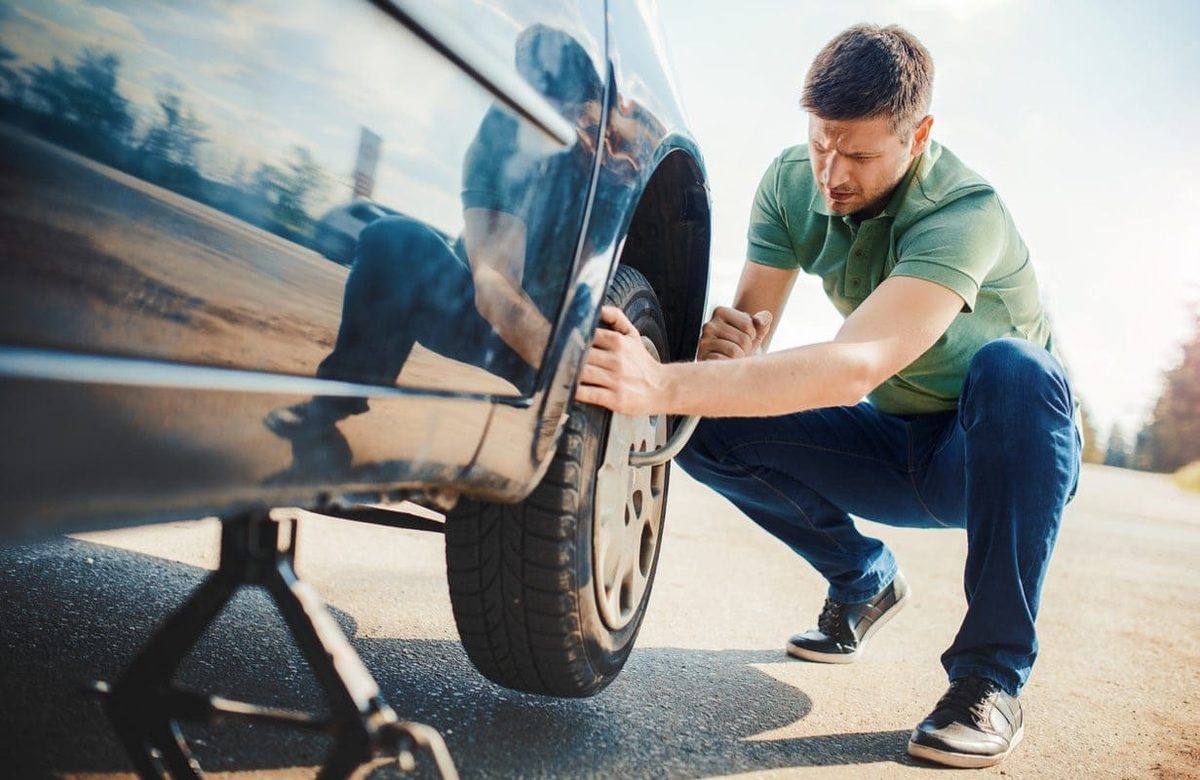
Tell me the truth. you hate it At that moment you hear an unpleasant “click” and feel the steering wheel shaking in your palm. The check engine light doesn’t come on and the radio still plays, but the right front tire suddenly loses a lot of rotation and scratches more. you are trapped. It already looks like a good day when the sun goes down, it starts to rain and there’s a spare tire in the trunk.
Panic is the enemy here. Panic can lead to wrong decisions. Bolts can come off or the car can lift up on loose gravel.
Changing wheels is not a complicated problem. Its shape, leverage and safety. If you do it right, you can be back on the road in 20 minutes. If you do it wrong, you can bend rims, damage suspension components, or in the worst case, cause your car to slide off the jack.
Here’s how you can deal with a flat tire without panicking.
Зміст
Check the conditions before parking
You found an spot. Okay, you can’t just hit the brakes. This is how we go.
Find a safe place. Requires flat ground. Concrete is the best. As long as it’s smooth asphalt, it’s fine. grass? Only if you have a wide enough jack pad. mud? Forget it. you are trapped.
Check the mirror. Send your signal on time. Stay as far away from traffic jams as possible. If you are on the highway, get out of your car and stand behind the guard rail. Not in the car. I wasn’t standing on the side of the road.
“Safety isn’t just about the equipment, it’s also about where you use it.”
Apply the parking brake after stopping. Put the car in Park (automatic) or 1st gear (manual). Turn on the warning light.
If you have reflective triangles or warning lights, remove them. Place it about 50-100 feet behind your vehicle. At night, wear a reflective vest if you have one. To a driver going 105 miles per hour, you are a small, dark object. Visualize yourself.
Gather your tools
No need for a mechanic’s toolbox. You need the basics that come with your car.
- **Jack. ** Usually a scissor lift or a hydraulic bottle support.
- Wrench. L-shaped or cross-shaped metal bar.
- **Spare tire. ** “Donut” or full size matches are best.
- **Wheel wedges. ** If your car does not have a lugs, use a stone or wooden block.
- ** Gloves. ** Your hands get greasy and bruised.
- **Flashlight. ** Even in sunlight, shadows hide details.
If you don’t have these, stop. Do not drive on flat roads. Call roadside assistance. Towing can be expensive, but it’s cheaper than a new suspension.
Step 1: Loosen the nuts
Most people fail here. First they jacked up the car. This is wrong.
With the car on the ground, loosen the nuts on the flat tire with a wrench.
Daily maintenance tool kit: ce qui manque à votre coffre
The law doesn’t care if you’re stuck on the shoulder at 2am. They care about you standing out. You can’t just sit and fiddle with tire inflation. The laws here are very strict. You must put on a visible vest before opening the door. Next, install the safety triangle upstream of the vehicle. You need these tools. every time.
Most cars are equipped with a jack in the trunk. Usually this is a scissor jack. There are also hydraulic types. It’s not important for basic work, but you need it to lift the car. Add a spare tire in good condition. Requires telescopic Phillips key. Hardened bolts that have melted require Penetrating Oil. If your car has an anti-theft nut, don’t forget the special socket wrench. Put it in the glove box or door pocket. If you lose your key, you have to buy a new car.
Ensure the safety of the vehicle before departure
A tick? Don’t panic. Pull. Select flat ground. Do not park on slopes. Gravity is not your friend when lifting a car. Apply the handbrake after parking. Place the transmission in 1st gear (or reverse if you have an automatic transmission). This prevents rolling.
Next, place the safety triangle in the back of your car. Close enough for the traffic to respond. you are safe. you are legal Now I can work.
Loosen the nuts
Take off your gear. If necessary, install it on the sidewalk. If your car has a wheel cover, remove the wheel cover first. It’s blocking the way.
Pick up the cross wrench. Partially tighten the nuts. Don’t take it off yet. It only takes a few rounds. What if they object? Spray penetrating oil. Aim for the nuts. Do not spray on the brake discs. I don’t want to get the brake pad dirty. Wait a few minutes. It takes time for the chemicals to attack the rust. Try again with the wrench.
Raise the vehicle
Once the nut is loose, lift it up. Find Jack. Look under the car near the wheel well. It usually has a reinforced notch or ridge. Jack goes there.
Place the jack directly under this point. Incorrect alignment can damage the jack. Even worse, they might slip out. Use a jack to raise the tire until it lifts off the ground.
Remove the wheel
The car got up. The weight is removed from the tire. Then tighten the nuts by hand. Separate them. Keep it in your pocket or somewhere safe. There is a loud banging inside the trunk.
Pick up the spare tire (or the flat tire you just removed). Pull it straight towards you. It can be heavy. Remove it from the hub.
Installation of spare parts
Check what you have. Some cars have a Compact Spare (‘Donut’). These are temporary. That’s smaller. The speed limit will be lower. Drive to the nearest garage. The others come with the same full size spare as the others.
Place the wheel on the hub. Align the holes. Press.
Return the nuts to their original positions. Tighten by hand first. Let’s start right. We’ll deal with the cross wrench later, but for now we’ll thread through the thread.
Leave your car. Turn the jack handle slowly. Place the weight on the wheels. Remove the jack.
Then tighten the nut with a wrench. Use your body weight. You want them to be safe. If possible, do this with a star pattern. Then put the tool back. Best for storage. Triangle inside the trunk. I go to the store by car.
Don’t go too fast though. The rules are different for smaller tires. Check the user manual. You may need to replace your original tires earlier than usual. The path still exists. Be careful with it.


