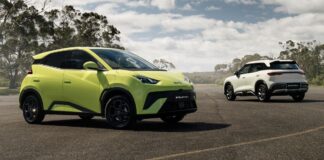
In the late 1980s, a new player entered the automotive market, attempting to bridge the gap between rugged utility and daily drivability. The Geo Tracker —a product of the joint venture between Suzuki and General Motors (via the CAMI assembly plant in Ontario, Canada)—arrives as a more sophisticated, larger, and more capable evolution of the diminutive Suzuki Samurai.
While the Samurai was often criticized for being noisy, cramped, and unrefined, the Tracker seeks to offer a “middle ground” for buyers who need a second vehicle: something more substantial than a basic economy car, but more affordable than a full-sized SUV.
Зміст
Engineering and Performance
The Tracker moves away from the “basic transportation” feel of its predecessors by offering improved dimensions and mechanical upgrades.
- Powertrain: It is powered by a 1.6-liter SOHC four-cylinder engine featuring throttle-body fuel injection. While it produces a modest 80 hp and 94 lb-ft of torque, the vehicle’s relatively light weight (approximately 2,320 lbs for the convertible) allows for spirited, if not rapid, acceleration.
- Handling: Thanks to influence from C-P-C (Chevrolet, Pontiac, and GM of Canada) engineers, the Tracker features an all-coil-spring suspension. This results in a much more composed ride than the Samurai, capable of handling curves with stability, even though the body exhibits some lean.
- On-Road vs. Off-Road: On the highway, the ride is comparable to a modern economy car—stable and reasonably quiet with the top up. Off-road, the Tracker excels due to its 7.9 inches of ground clearance and generous approach/departure angles. However, users should note that the 4WD system requires manual-locking hubs, meaning drivers must exit the vehicle to engage all-wheel drive.
Interior Comfort and Practicality
One of the Tracker’s primary selling points is its improved interior environment. Unlike the Spartan designs of older small 4x4s, the Tracker incorporates:
– Modern Appointments: Cloth upholstery, sculpted dashboards, and even side-window defoggers in higher trims.
– Versatility: Available in both convertible and hardtop configurations, with rear seats that can be folded to increase cargo capacity.
– Refinement: Improved sound damping and vibration control make it a much more hospitable environment for adult passengers compared to its predecessors.
The Market Dilemma: A Divided Perspective
The Geo Tracker sits in a unique, somewhat controversial position in the automotive landscape. Because it is a small-bore off-road vehicle, it raises questions about its intended purpose. Is it a serious tool for wilderness exploration, or a stylish commuter for urban life?
Industry analysts and testers remain divided on its identity:
“It straddles the line between car and truck… those of us who like it feel that it straddles the line well enough to deserve our endorsement.”
However, critics point out several potential drawbacks:
1. Refinement Gaps: While improved, it still lacks the plushness of larger SUVs like the Ford Bronco II.
2. Engine Limitations: The engine can feel “anemic” and buzzy when pushed to higher RPMs.
3. Identity Crisis: Some argue that by adding “luxury” touches like carpets and soft seats, the vehicle loses the rugged, unpretentious charm that made vehicles like the VW Thing or the original Samurai iconic.
Conclusion
The Geo Tracker is a highly versatile “lifestyle” vehicle that successfully upgrades the small 4×4 formula with better comfort and handling. While it may not satisfy those seeking pure off-road ruggedness or high-end luxury, it offers a unique, spirited option for drivers seeking a stylish and capable multi-purpose companion.