2007 was a chaotic year. The Sopranos ended. The iPhone debuted. The subprime market began to rot. But the real story was a Japanese car named Godzilla.
The Nissan GT-R.
473 horsepower. All-wheel drive. A lap time that shocked the Nürburgring world. Most people remember the stats. Few remember why it mattered. The R35 wasn’t just a fast car. It was the first major victory for software over suspension engineering.
Зміст
The End Of Mechanical Tricks
For decades engineers tried to build handling out of metal. They wanted absolute authority over how a car behaved. Before the GT-R they relied on complex geometry. Look at the Porsche multi-link setup or the rear suspension on a Mercedes 190E. These were solutions to dynamic problems.
It was messy work. You have to calculate how parts distort under load. You try to fix bad ride quality with specific handling characteristics. Sometimes you just add stiff springs and solid bushings. The car handles better. It also rides like crap.
There is a limit to what metal can do. By the 2010 mechanical development hit a wall. Engineers could model behaviors in simulations. They built rigid enough chassis to work. They could absorb bumps without compromising structure. But that was the peak of pure mechanics.
Mizuno’s Heavy Gamble
The GT-R got there early. Not because it was clever in the traditional sense but because its boss was nuts.
Kazutoshi Mizuno led the development. He believed weight was good. More weight meant more downward force on tires. More grip. To most engineers that sounded insane.
But there was a logic hidden in the madness. The extra mass required immense structural rigidity. Nissan kept their numbers secret but whispers suggest shear resistance figures above 50000 Nm per degree. That rivals today’s supercars. The GT-R had to be stiff enough to survive its own bulk. So it was stiff.
The base was still cheap. It sat on the FM platform shared with the 350Z and 70Z. Same suspension geometry. The VR38 engine sat on the front axle centerline. Nothing exotic there. Mizuno needed a trump card. Something physics couldn’t stop. Something beyond wide tires and brute power.
He found it in code.
The Black Box Advantage
Software-defined vehicles were new in 2007. BMW was ahead of everyone. But BMW wasn’t trying to win track battles. They were trying to meet emissions rules and make driving smoother.
The E92 M3 arrived with a new engine management system developed with Bosch and Continental. It didn’t just look at throttle position. It created layers between your foot and the combustion chamber. Your request was a suggestion. The car decided the outcome based on metrics.
Why? Emissions. And control.
Modeling torque meant the car knew exactly how much power it could deliver. No surprises. The ECU worked bottom-up. It protected the engine. It tweaked ignition timing by microseconds. It turned variable valve timing from a fixed setting into a fluid exercise.
This data fed into a new brain: the ATE MK6 ABS pump.
This wasn’t your parent’s brake booster. By 2007 it had five pressure sensors. One per wheel. One on the pedal. It could adjust brake bias on the fly. It reacted to yaw. It reacted to sideslip. BMW called this M Dynamic Mode. The GT-R bought this tech and upgraded it. They used the MK61 variant.
Nissan didn’t use their standard Bosch parts. That should tell you everything. They paired the advanced engine mapping with the ATE braking system. They built true torque-vectoring into an all-wheel-drive car that looked like a hatchback on steroids.
The Magic of VDC
Stability control used to be a savior. It saved you when you messed up. The GT-R changed the game. The system was part of the driving.
Call it Vehicle Dynamic Control or VDC. In regular mode it keeps you straight. In R Mode it starts playing games. It senses understeer. It slaps the brakes on the inner rear wheel slightly. Just a hint. The car rotates.
You demand more grip. It brakes the inner front. The car tucks in.
An Italian journal claimed the system added between 0.1 and 0.2 Gs of grip. That number seems small. It isn’t. It happens at the most critical moment: releasing the brake and hitting the apex. The car carries speed through corners where a normal car would slide or stall.
The R35 made amateurs look like heroes. Pros set lap records on a budget platform. It did this by calculating the ideal yaw angle. It found the perfect cornering line. It did the driving for you.
Are You Driving At All?
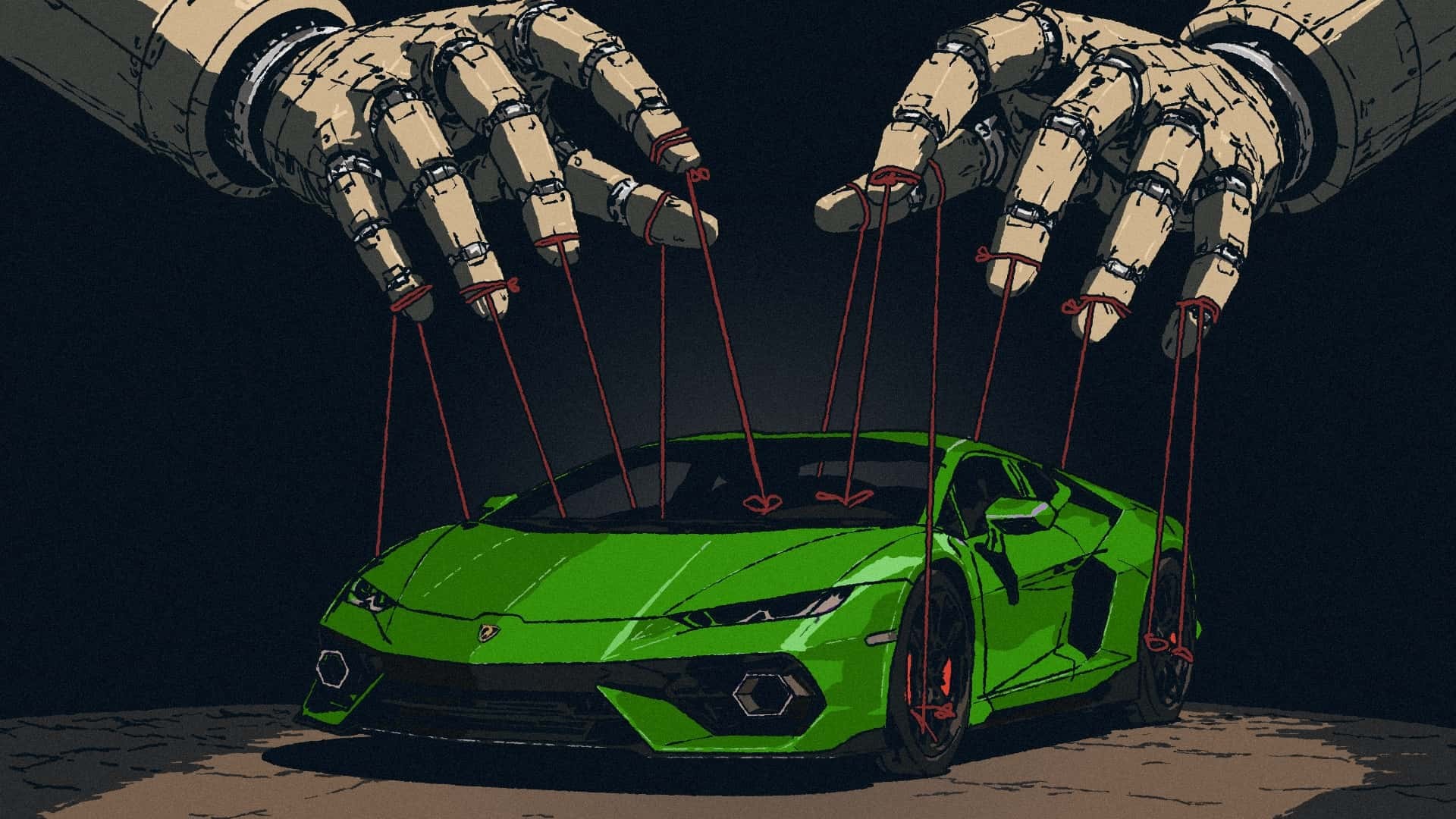
That system is everywhere now. It has evolved past the simple ABS pump. Bosch and Continental sell packaged solutions today. Six-dimensional inertial sensors tie everything together. They talk to rear steering. They talk to electric motors.
The Honda Civic Type R uses it. The M cars use it. Aston Martin buries layers of algorithms under the hood to keep those V12s from turning into missiles.
These systems define cornering capability. They smooth out the chaos.
Is it great engineering? Absolutely. Does it make driving joyless?
Porsche and AMG tune it well. They make the intervention feel natural. Other cars feel disconnected. Supernatural. The tiny joyful wags of mechanical limits are gone. You hit the apex too smoothly.
Trust me. You aren’t actually driving the car anymore. It’s driving you. 🏁