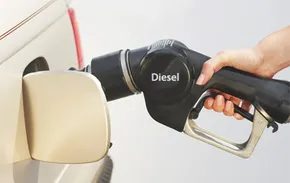
Imagine the chaos. You are hauling three kids and their three screaming friends to the zoo. The demand for ice cream is loud, your focus is fractured, and your muscle memory betrays you. You pull the wrong nozzle. The thick, oily diesel fuel gushes into a tank built for spark-ignited gasoline. What happens next?
Зміст
The Physical Barrier That Saves Most Drivers
First, let’s address the elephant in the room: this scenario is virtually impossible in modern vehicles. If you are driving a car manufactured within the last 25 years, a safety mechanism physically blocks the mistake. Look under your gas cap. There is a plastic plate or collar that restricts the opening. This design was originally implemented to prevent drivers from using the larger nozzles meant for leaded gasoline. When unleaded fuel became standard, the nozzles changed size, but the protective plate remained.
Diesel nozzles are significantly larger than even those old leaded pumps. They simply will not fit into the filler neck of a modern gasoline car. The physics don’t lie; the metal won’t bend. However, this protection is not universal. Motorcycles often lack this plate. Older vehicles, pre-dating widespread safety standardization, are also vulnerable. If you are driving a vintage Mustang or a rugged pickup truck without the modern restrictor, the mistake is physically possible.
The Chemical Mismatch
Let’s assume, for the sake of argument, that you bypassed the safety plate. You have successfully filled a gasoline tank with diesel fuel. How do you know the difference before you turn the key?
The sensory cues are immediate. Diesel has a distinct, heavier odor compared to the sharp, volatile smell of gasoline. If you get a whiff of fuel while pumping, notice the texture. Gasoline evaporates quickly and feels light on the skin. Diesel is oily. It leaves a residue. It is also denser. A gallon of diesel weighs approximately one pound more than a gallon of gasoline.
This density matters. Gasoline is designed to vaporize quickly, creating a mist that explodes in the cylinder to create power. Diesel relies on compression heat to ignite. Pouring diesel into a gas engine disrupts the fundamental combustion cycle. The fuel won’t vaporize correctly. It sits in the chamber as a liquid blob. The spark plug fires, but nothing ignites. Or worse, it ignites poorly, causing unburnt fuel to coat the pistons and spark plugs.
The Immediate Consequences
If you start the engine with diesel in the tank, the results are not instantaneous explosions. They are a slow, expensive failure. The fuel pump, designed to handle the lighter viscosity of gasoline, may struggle or fail as it tries to push the heavier diesel. The injectors will clog. The engine will sputter, run rough, and likely stall.
You won’t hear a bang. You will hear a cough. Then silence.
The damage is mechanical and chemical. The diesel acts as a solvent, potentially washing away the lubricating oil film on the cylinder walls, leading to increased friction and wear. It can also damage the catalytic converter, as unburnt fuel enters the exhaust system and overheats the components. The fix isn’t just a drain job. You might need new injectors, a new fuel pump

You put diesel in a gas tank. The injectors spray it into the cylinders. The spark plugs fire. Nothing happens.
Why? Because diesel fuel doesn’t evaporate easily. It sits there. The spark has nothing to ignite. The engine refuses to start.
You can fix this without panic. Drain the tank. Refill with gasoline. Crank the engine. Keep cranking. You’re flushing the residual diesel out of the lines and injectors. Eventually, the gas takes over. The engine starts. It runs fine. No damage done.
This leads to a natural question. If diesel won’t burn in a gasoline engine, why does it burn in a diesel engine?
Two factors make the difference.
First. No spark plugs in a diesel engine.
Second. Much higher compression ratios.
When a diesel engine compresses air, that air gets extremely hot. The fuel injects directly into this superheated air. The heat alone vaporizes the diesel. It ignites. No spark needed.
Diesel fuel requires higher compression ratios and relies on heat for ignition rather than a spark plug.
Understanding the Combustion Difference
The core issue boils down to how each fuel interacts with heat and pressure. Gasoline engines rely on a precise mix of air and fuel, compressed moderately, then ignited by a spark. Diesel engines compress air to such a degree that it becomes hot enough to ignite fuel on contact. This is why mixing fuels causes a mismatch. The gasoline engine’s spark can’t ignite diesel’s heavy molecules. But a diesel engine’s compression can.
Why Compression Matters
Higher compression ratios in diesel engines aren’t just a design choice. They’re essential. Without that extreme compression, the air wouldn’t get hot enough to ignite the fuel. Gasoline engines can’t handle that level of compression. The fuel would ignite prematurely, causing knock. Diesel engines are built to withstand it.
The Takeaway
Mixing diesel into a gasoline tank is a hassle, but rarely fatal to the engine. Drain, refill, crank. The real lesson lies in how the engines operate. Gasoline needs a spark. Diesel needs heat and pressure. Understanding this distinction prevents future mistakes.
Next time you pump fuel, check the nozzle. Diesel nozzles are larger. Gas nozzles are smaller. A simple physical barrier. Use it.