It started with a collision of needs. By 1952, Donald Healey was scrambling to expand his small British sports car operation. At the same time, Leonard Lord of the British Motor Corporation’s Austin division was desperate to inject some life into his aging lineup. The solution didn’t require reinventing the wheel. It just required looking at what Healey was already doing.
When Lord spotted Healey’s prototype at the London Motor Show, he noticed something specific. The chassis and engineering were rooted in the Austin A90 Atlantic. Instead of walking away, Lord leaned in. That single observation cemented a partnership that would redefine British motorsport. The Austin-Healey name wasn’t just a badge swap. It was a merger of two very different corporate souls.
Зміст
The Genesis of the 100/4
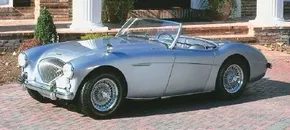
That original A90-based prototype didn’t stay in the shadows. It transformed into the Austin-Healey 100/4. This wasn’t just another sports car. It was a clean, sporty machine that managed to stay affordable. In an era when performance usually came with a luxury price tag, the 100/4 was a breath of fresh air.
American buyers took notice immediately. They flocked to the lively, attractive design. Their support wasn’t just a trend; it established Austin-Healey as a serious player on the global stage. The car offered genuine driving dynamics without bankrupting the enthusiast.
The Heavyweight Experiment: Austin-Healey 100 Six
Evolution isn’t always linear. The natural next step from the 100/4 was the Austin-Healey 100 Six. The logic seemed sound on paper. Swap the four-cylinder engine for a powerful straight-six. More power should equal more performance.
But physics doesn’t care about logic.
The body received updates, retaining some character but losing none of the weight. The straight-six added mass. That extra metal dragged down the handling. Performance actually suffered despite the larger engine. It was a reminder that in sports car design, weight distribution and overall mass matter as much as horsepower.
Enter the Sprite: Zippy and Frog-Eyed
A few years later, Austin-Healey corrected course. They introduced the Austin-Healey Sprite. This wasn’t a scaled-down luxury car. It was a lightweight, agile, and surprisingly responsive machine.
The design story here is almost accidental. A last-minute change in headlight regulations forced the engineers to use protruding, bug-like lamps. Combined with the Sprite’s tiny footprint, the result was unmistakable. It looked like a frog. People loved it.
The Sprite remains a favorite among collectors because it was agile, responsive, and unbelievably inexpensive.
It wasn’t just about looks. The car delivered genuine driving joy at a fraction of the cost of its larger siblings. That combination of charm and capability secured its place in history.
The 3000 Era
Rounding out the classic lineup was the Austin-Healey 3000. It ran for nine years, evolving through several iterations before concluding with the Mk III. Each version refined the formula, but the core appeal remained the same: raw, accessible British performance.
While all good things end, the legacy of these cars persists. They aren’t just static museum pieces. They are active participants in the classic car scene, driven by enthusiasts who understand the nuance of their engineering.
Why the 100/4 Still Matters
If
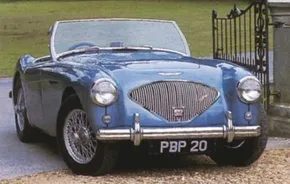
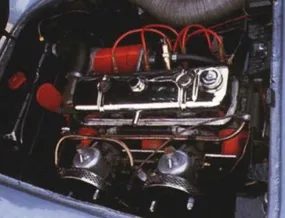
The four-cylinder Austin-Healey didn’t last long in its original form. Just three and a half years. But even in that short window, the model evolved through four distinct variations. The original, built until late 1955, was the BN1. You might know it by that code. Or just as the “Bugeye.”
Then came the BN2. One year later, the car got a new four-speed gearbox. It kept the overdrive option. The chassis stayed largely the same, but the transmission change mattered.
Racing Variants and Limited Runs
While BMC handled production, the Healey company was busy tweaking the BN1 for track duty. Between 1954 and 1955, they developed the 100S. The “S” stood for Sebring. It was a racing version.
Strip the body down. Remove the bumpers. Use aluminum everywhere. That was the 100S. The engine got a serious overhaul, pushing out 132 bhp. Only 50 were built. They were meant for competition. Most stayed in competition.
There was also the 100M. A BN2 conversion. You got 110 bhp from it. Duo-tone paint jobs. Assorted body and chassis mods. 1159 examples rolled out.
American Obsession
The Healey 100 name stuck quickly. A fine reputation. Especially across the Atlantic. American buyers saw something the MG couldn’t offer at the time.
More than 14,000 BN1s and BN2s were built. Most went to the U.S. The result? Austin-Healey became permanent lore in the sports car world.
The Austin-Healey 100 Six
The four-cylinder engine wasn’t enough for everyone. The market wanted more power. More presence. The solution was the six-cylinder.
“The 100 Six wasn’t just a bigger engine. It was a different beast entirely.”
This model changed the dynamic. The chassis had to handle more torque. The styling evolved to accommodate the larger engine bay. It wasn’t just a badge swap. It was a fundamental shift in what the car could do.
The transition from four-cylinder to six-cylinder marked a new era for the brand. Enthusiasts noticed the difference immediately. The sound was deeper. The acceleration was smoother. The top speed increased.
This wasn’t just a minor update. It was a statement. The Austin-Healey was no longer just a small roadster. It was a serious grand tourer.
Why It Matters Today
Collectors look for specific variations. The BN1 is iconic. The BN2 is practical. The 100S is rare. The 100M is a sleeper. But the 100 Six? That’s the one that defined the line’s potential.
Understanding the differences between these models helps you buy smarter. It helps you restore accurately. It helps you appreciate the engineering.
The Austin-Healey legacy isn’t just about speed. It’s about availability. It’s about charm. It’s about that specific blend of British engineering and American appetite for open-top driving
The Austin-Healey 100 Six: A Heavier, Safer Bet?
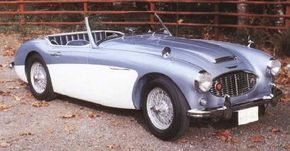
The Austin-Healey 100/4 was done. BMC had its sights set elsewhere, and the aging four-cylinder engine was officially obsolete. The replacement? The 1956 Austin-Healey 100 Six. It wasn’t just a swap of two cylinders for four. It was a complete reshaping of the car’s identity.
Buyers in the US kept asking for more room. BMC listened, but not in the way you might expect. The wheelbase stretched by two inches. The rear tail section was repositioned to squeeze in a pair of tiny bucket seats. They were barely usable for adults—good for parcels, maybe—but they ticked the box for the sales team. Marketing wins. Reality loses.
Styling remained largely familiar. A new oval grille replaced the old one. The windscreen went fixed. You could choose wire-spoke wheels or steel discs. A bulged hood with a small functional air intake added a touch of aggression. But the real story was under the metal.
BMC dropped in its corporate C-Series engine. This was a big, heavy 2.64-liter cast-iron block. Overhead valvegear. Lots of torque. Low-rpm grunt. It shared some design DNA with the B-Series four used in the MGA, but few actual parts. Claimed output jumped to 102 horsepower from the old 90. A four-speed gearbox came standard. Overdrive was optional, which felt like a concession to long highway miles.
The result? Disappointment.
Weight jumped from 2,150 pounds to 2,435 pounds. That’s a significant increase. The car felt sluggish. It didn’t handle as crisply as the 100/4. It lost some of that raw sports car soul. The Austin-Healey 100 Six (BN4) was safer. It was more comfortable. It was also less exciting.
Why did BMC think this was the right move? U.S. feedback demanded space. BMC delivered space. But they also delivered mass. And mass kills agility.
The big four was obsolete. The big six was heavy. Where does that leave the enthusiast?
Maybe nowhere. Maybe exactly where the market wanted it to be.
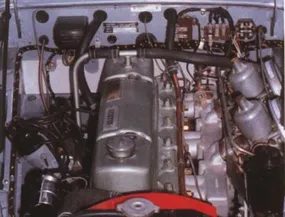
Autumn 1957 changed everything. BMC stopped playing local and went full centralization. All sports car assembly moved south, 50 miles from Longbridge to Abingdon. The MG factory became the new home for Austin-Healey. It wasn’t a clean break. The transition was messy. But the hardware waiting for them at the destination was worth the logistical headache.
A revised engine showed up. The cylinder head got a overhaul. Manifolding improved. Peak power jumped to 117 bhp. Real-world testing told a better story than the spec sheet. Road testers saw an 8 mph increase in top speed. Acceleration snapped back to BN2 levels. The torque curve felt sharper. It didn’t just look faster on paper. It was faster.
The BN6 and Marketing Whiplash
Then came the two-seater. It returned as the BN6. BMC’s marketing team was already having second thoughts. They kept backpedaling. The four-seater BN4? Assembly stopped. Then started again. Once inventory cleared, mostly in the U.S., production resumed. It was a stopgap. A tactical retreat.
These were still thrilling years. The lineup grew. The Sprite arrived in 1958. That little “frogeye” model pushed the marque into high-volume production for the first time. Two models in the showroom. Enthusiasts started calling the 100 Six and its successors the “Big Healey.”
It made sense. You needed a name to distinguish the heavy six-cylinder cars from the lightweight Sprites. The BN4 faded into history. Forgotten. The six-cylinder Healeys kept selling. Reputation climbed. They had character. They had style. They performed. And they made all the right noises.
Building a Tough Act to Follow
BMC knew the Austin-Healey 3000 was next. They knew it would be a hard act to follow. They bet they could pull it off. They did. The successor was ready.
Austin-Healey Sprite
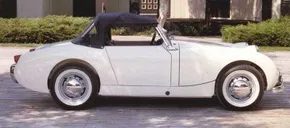
The original Austin-Healey Sprite, known affectionately as the “Bugeye,” wasn’t just lucky. It was perfectly timed. It hit the market right when the gap in the small sports car segment started to widen. By the 1950s, the classic, tiny sports cars from the ’30s and ’40s—the Midgets—had evolved. They were bigger. More expensive. More modern. They were also “mature.” Enter the MGA. It filled that slot. But something was missing. A budget-friendly, back-to-basics option.
Sir Leonard Lord, the chairman of BMC, rarely missed a commercial opportunity. He saw the hole in the road. He invited Donald Healey to fill it. The goal was simple: build a small sports car that complemented the MGA. It shouldn’t compete with it. Lord had already seen the Austin-Healey 100 smash sales records in the U.S. He was convinced the new small Healey would do the same. He was right.
Engineering on a Shoestring
Donald Healey and his sons started the work in Warwick. The final design, however, landed at MG’s Abingdon factory. Production kicked off in mid-1958. The “olde worlde” Berkshire plant was suddenly juggling three distinct projects. The MGA. The Austin-Healey 100 Six. And the new Sprite.
BMC dug through its trademark registry to find a name. They landed on “Sprite.” It had been used on a Riley sports car back in the 1930s. The Nuffield Organisation had bought Riley in 1938. Then joined Austin in 1952 to form BMC. The name stuck.
The Sprite sat on an 80-inch wheelbase. Tiny by any standard. Then or now. It was larger and heavier than those old 1930s Midgets. Alfa Romeo and Fiat had already built unit-construction sports cars. They used shortened sedan platforms. The Sprite was different. It was the first unitized British sports car.
It was a spare two-seat roadster. Nothing more. But the curb weight sat at 1,460 pounds. That isn’t light. Not for its size. Not for its class.
Why the Bugeye Matters Today
People ask how such a small car survived. The answer lies in its construction. Unit construction meant the body and chassis were one piece. Stiffer. Lighter in theory. Though the Sprite didn’t quite nail the weight target. It still managed to deliver driving thrills that larger cars couldn’t match.
The Sprite was the first unitized British sports car.
This design choice influenced everything that followed. It set a precedent for small, agile handling. The Bugeye didn’t just fill a gap. It defined a segment. And it did so with a grin on its face.
The Market Gap Explained
Why did the Sprite work when others failed? The MGA was too expensive for the average enthusiast. It was also too big. There was no affordable entry point into BMC’s world. The Austin-Healey 100 proved the brand’s appeal in America. But it was
Structural Simplicity and the Accidental Look
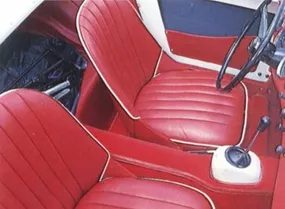
To keep the Austin-Healey Sprite structure as simple and rigid as possible, the engineers didn’t bother with a traditional trunk. You didn’t open a lid; you folded the seats down. Luggage went in through the cockpit. Front sheet metal—the hood, fenders, and surrounding panels—hinged at the firewall to lift up as a single unit. This provided almost unrestricted access to the engine and front suspension. Doors were mere shells, scooped out for storage, to which sliding side curtains attached. Per British tradition, the soft top was a DIY project. An optional bolt-on hardtop arrived soon after introduction.
But what everyone noticed were the protruding headlamps. They gave the Sprite a “bugeye” or “frogeye” look. The nicknames persist to this day. The appearance was quite accidental. Retractable lights were contemplated. Prototypes had them. But they were cancelled at the last minute as too costly. A fold-down windshield faced the same fate. By then, it was too late to change the styling.
Borrowing from the BMC Family
Cost considerations dictated off-the-shelf running gear and chassis components. This was a mixture of items from two small BMC family sedans. The Morris Minor 1000 donated its rack-and-pinion steering. The Sprite’s 4-speed gearbox came from the Austin A35. So did its firmed-up front suspension. The venerable BMC A-series four-cylinder engine also came from the A35.
“Cost considerations dictated off-the-shelf running gear and chassis components.”
The A-series engine contributed its rear suspension too. It used a live axle located by upper radius arms and cantilevered quarter-elliptic leaf springs. Simple. Cheap. Effective.
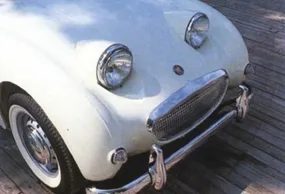
The Bugeye wasn’t just a car. It was a personality. A cheeky, joyful little machine that defied the seriousness of post-war motoring. Its rear end was rudimentary. Simple. This meant it was darty. Prone to oversteer. You could throw it into a slide with ease. But the steering was so responsive it rarely got away from you. Top speed? Only 80 mph. Not exactly a highway threat.
This behavior made it perfect for slaloms. Gymkhanas. Weekend warriors flocked to it. Demand for performance parts skyrocketed. Aftermarket sources rushed to fill the void. Front disc brakes. Heated engines. Smoothed bodywork. These modifications didn’t just make it faster. They made it competitive. Sprites held their own against far larger, more powerful machines at Sebring. And Daytona.
Inherent mechanical sturdiness helped sales. Race-and-ride versatility did too. But price was the real factor. Around $1500 new. That was cheap. $1000 less than an MGA. Less than a Triumph TR3. A whale of a buy. Alas, it wouldn’t last long. Just three years. Near 49,000 units sold.
The successor, the Sprite Mark II of 1961, arrived with extra amenities. More conventional, square-rigged styling. It was cloned for a new MG Midget. But Len Lord’s bargain-basement roadster had done its job. It reestablished a popular market class. It taught an entire generation what real sports-car motoring was all about.
Fewer than half the original Bugeyes survive today. That’s a loss. But it’s almost possible to build a new one from scratch. Reproductions of virtually everything are available. Mechanical parts. Body panels. Trim. The works. That’s insane. That’s a testament to the cult following.
“Cheap wheels” inspiring such long-lived affection is surprising. It shouldn’t be. The Bugeye was much more than the sum of its humble parts. It was pure fun. Pure character.
Austin-Healey 3000
If you want to dig deeper into this era of automotive history, the Austin-Healey 3000 is the logical next step. It represents the evolution of the lightweight sports car philosophy. More power. More speed. But the same spirit.
- How Sports Cars Work
- Sports Cars of the 1950s
- Sports Cars of the 1960s
- New Sports Car Reviews
- Used Sport Car Reviews
- Muscle Cars
- How Ferrari Works
- How the Ford Mustang Works
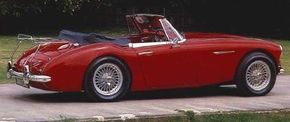
The Austin-Healey 3000 was essentially a 100 Six with a bigger heart and better stopping power. It was a separate family on paper, but in practice? Just an evolution. The real “Big Healey” formula—born in 1956—stayed largely untouched for twelve years. That’s a long time in automotive history.
These weren’t delicate grand tourers. They were rugged sports cars built on a 92-inch wheelbase. The engine was heavy but reliable. The styling was smooth. The personality was hairy-chested and rumbly. From the first 100 Six to the last 3000, that character never really shifted.
The 3000 Launch and Early Specs
When the Austin-Healey 3000 hit the scene in spring 1959, it carried over nearly nine of those dozen years. That’s a significant run. But it started with a clear upgrade path.
The main differences from its predecessor were an enlarged engine at 2912 cc and front-disc brakes. The rear still used drums. Output sat at 124 horsepower. This mirrored changes made that same year to the MG MGA, another Abingdon-built machine.
“Almost all these developments were logical and improved the basic car. We can also be thankful that they didn’t change its character.”
Two body styles remained. The BN7 two-seater and the BT7 2+2 roadster. Simple. Effective.
Mk II: The Carburetor Experiment
Two years later, BMC rolled out the Mk II. The headline change? Three SU carburetors.
Rated output jumped to 132 bhp. Sounds good on paper. Magazine tests showed no real gain in performance. Worse, the setup was a nightmare to keep in tune. BMC killed it a year later.
During the Mk II run, they also swapped in a new gearbox casing and linkage. The selector mechanism became more direct-acting. A small change. But it mattered to the driver.
The 1962 Mk II Convertible
By late summer 1962, the Mk II evolved again. This time, it became the Mk II Convertible.
The body got its first and only re-jig. Overall appearance didn’t change much. But details did. BMC fitted a slightly more curved windshield. Roll-up door windows appeared. They added a proper fold-away soft top.
The two-seater BN7 was gone. All Austin-Healey 3000s were now 2+2s.
The engine underwent further modification. It reverted to twin SU carburetors. No power loss. The result? A more modern and practical package.
“The two-seater was discarded and all Austin-Healey 3000s were now 2 +2s.”
It wasn’t revolutionary. But it was logical. And it kept the Big Healey alive.
Why the 3000 Still Draws Eyes Today
You might wonder why enthusiasts still care about a car with a heavy engine and drum brakes at the rear. The answer lies in the driving experience. These weren’t about lap times. They were about feel.
The 92-inch wheelbase kept them agile. The reliable engine kept them running. The rumbly personality kept them fun.
Did the Mk
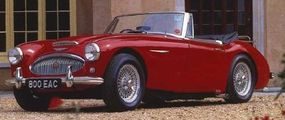
The Final Evolution: Austin-Healey 3000 Mk III
By spring 1964, Donald Healey’s big sports car received its last significant overhaul. The Austin-Healey 3000 Mk III arrived with a punchier engine tune. The same 3.0L inline-six now pushed 148 bhp. It wasn’t just about speed. The interior got a face-lift. Wood paneling graced the dashboard. A center console snuck between the seats, separating driver from passenger in a way that felt distinctly modern for 1964.
Later that year, BMC rolled out the “Phase II” version. This wasn’t just badging. The rear axle location changed. Instead of the old setup, radius arms took over. Chassis modifications allowed for more suspension travel. The car became more composed over bumps.
Abingdon built these until the winter of 1967-68. The Mk III stands out as the definitive Big Healey. It was fast. Top speed hovered around 120 mph. That’s serious pace for a British roadster. It was snug inside. Well-equipped too. Open or closed, it remained comfortable. It didn’t suffer from wind noise or vibration.
Production numbers tell a strange story. Sales dipped in the early 60s, then spiked again. In 1966, 5494 Mk IIIs rolled off the line. That was the highest annual tally since 1960. The original Austin-Healey 3000 had peaked then. But by ’66, the landscape had shifted.
BMC faced mounting pressure. New U.S. safety regulations loomed. Emission standards tightened. Modifying the aging Big Healey architecture to meet these rules cost more than BMC was willing to spend. The math didn’t work. Compliance wasn’t worth the money.
So, the run ended. Except for one single car assembled in 1968, the Big Healey was history by the end of 1967. A 120 mph grand tourer, gone. Just like that. No farewell tour. No successor with the same soul.
Where to go from here
If you’re digging into the mechanics of these classic British roadsters, the engineering roots run deep. Understanding the lineage helps explain why the Mk III handled the way it did.
- How Sports Cars Work
- Sports Cars of the 1950s
- Sports Cars of the 1960s
- New Sports Car Reviews
- Used Sport Car Reviews
- Muscle Cars
- How Ferrari Works
- How the Ford Mustang Works