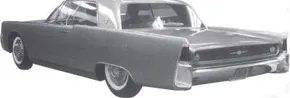
Robert McNamara was impatient. And if he had pushed harder, the 1961 Lincoln Continental—the car that defined luxury for a decade—would never have existed. Lincoln has nearly collapsed three times in its eighty-year history. Each time, it was saved at the last second, followed by models that either won critical acclaim or drove profits. The 1961 Continental was the third salvation.
It started with Henry Ford’s wife, Clara. She disliked Cadillac’s chauffeur-driven cars. By 1922, Lincoln was bankrupt, facing liquidation. Henry Ford bought the company to keep her in a Ford product. He handed operations to his son, Edsel. Edsel was an artist. But the Depression starved sales. Lincoln died again in 1935. The Lincoln-Zephyr, championed by Edsel, pulled it back from the brink.
Then came 1958. McNamara, Ford’s group vice president for vehicle operations, saw red ink. Lincoln was bleeding $60 million between 1958 and 1960. He told management to kill the brand. Product lines that don’t pay, they don’t survive. The 1961 Continental was the last-ditch effort to make Lincoln profitable. It worked. Sales rose. Prestige returned.
Зміст
The Design Study
Before building the car, Lincoln had to figure out why it was failing. In May 1955, Ford hired George Walker as vice president of design. His right-hand men were Joe Oros for Ford lines and Elwood Engel for Lincoln-Mercury. Engel pushed John Najjar to lead the Lincoln studio. Najjar and Engel designed the 1958 Lincoln.
The 1958 model was a disaster. Backlash was immediate. In October 1957, before the car even hit the streets, Najjar was replaced by Don DeLaRossa. DeLaRossa wanted smaller cars. Budget cuts limited him to superficial tweaks for the 1959 and 1960 models.
Ben D. Mills, general manager of the newly independent Lincoln Division, started an internal audit. He formed a committee. DeLaRossa brought in Gene Bordinat from Mercury. Their goal: understand why Cadillac ruled while Lincoln limped.
The answer was simple. Design consistency. Cadillac looked like a Cadillac every year. Lincoln looked like a different car annually. Mills saw deeper issues. He blamed Walker for pushing the 1958 Lincoln without checking its financial viability. Mills and McNamara agreed: Lincolns were too big. They relied on fleeting design clichés.
Mills had a radical idea. Extend the model cycle. Instead of changing cars every three years, stretch it to nine years. It went against industry wisdom. But it would build recognition.
The Shift
Personnel moved. Bordinat took over the consolidated Lincoln-Mercury studio. DeLaRossa became his executive stylist. Rulo Conrad, a key designer on the award-winning 1956 Lincoln, replaced John Reinhart in preproduction. Conrad’s job: finish the next-gen Lincoln Reinhart had started.
Conrad’s team included John Orfe, Merle Adams, Bob Chieda, Howard Payne, and Joe West. He wanted a clean break from the past. Management said no. The new car had to look like the current ones. Continuity was mandatory.
This tension between innovation and conservatism would shape the 1961 Continental. Two distinct proposals emerged from the studio. One would save the brand. The other would have buried it.
The next section details how these conflicting visions merged into a design that balanced tradition with modern luxury, ultimately creating a template for automotive elegance that lasts even today.
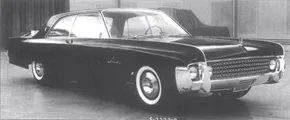
The 1961 Lincoln Continental wasn’t just a car; it was a battleground. The production model we recognize underwent at least three major design pivots before it ever hit the showroom floor. When it finally settled, there were still two competing proposals, each with a radically different roofline.
Those alternatives weren’t just aesthetic preferences. They were the result of deep internal conflict between studio designers and management about the soul of the Lincoln brand.
The Winged Roof That Nobody Wanted
Design chief Gene Bordinat was obsessed with one thing: beating General Motors. Specifically, he wanted to counter GM’s cantilever-roof four-door hardtop introduced in 1959. His solution? A “winged” roof for the upcoming Lincoln.
He brought designer John Orfe in to render the concept. The result was an overhanging roof structure that looked bold on paper. In the studio, however, it was a disaster. Everyone except Bordinat hated it.
Being the studio head didn’t protect Bordinat from reality. Designers Rulo Conrad and clay modeler Doug McCombs spent night after night struggling to make the winged roof work. They couldn’t. It just didn’t fly.
The Rebels Under the Stairs
The tension wasn’t just about aerodynamics or styling. It was about continuity. Many designers felt Lincoln was stuck in the past and needed a fresh start, immediately.
Orfe and Howard Payne, two relatively new designers in the Lincoln Studio, were fed up. They were frustrated with the stagnation and brash enough to say so. In mid-1957, they confronted John Najjar, head of the Lincoln design studio, and designer John Reinhart. They told them plainly that the proposed direction was wrong.
Najjar and Reinhart did something unexpected. Instead of firing them, they gave them a chance. They allowed Orfe and Payne to build a full-sized clay model of their own idea.
They got a makeshift studio under a staircase in a former coffee shop. Balancing this project between their regular assignments, Orfe, Payne, and clay modeler Joe Seibold worked for six months to build their vision of the 1961 Lincoln.
A Gambler’s Proposal
The result was striking. George Walker, design vice president, and Elwood Engel liked it enough to order two full-sized fiberglass models built.
Before the fiberglass went up, designer Ray Slate suggested an addition. He wanted stubby fins added to the top of the front fenders, dropping down over the grille area to split the dual headlights. It was a bold move. It was incorporated into the models, though the fins were later scrapped during a design review.
Here is the thing: Orfe and Payne had only three years of combined experience at Ford. Neither had a champion in the upper management echelons. They were outsiders pushing against the establishment.
The Cologne Connection
Almost immediately after finishing their proposal, Engel shifted his focus. He began work on the alternate 1961 Thunderbird concept, which would eventually evolve into the 1961 Continental.
Meanwhile, internal politics continued to churn. Wes Dahlberg was one of the most vocal dissenters against Bordinat’s vision. He wasn’t directly involved in the next-gen Lincoln development, but his opposition was loud. As a result, he was promoted out of Dearborn and sent to head Ford’s design studio in Cologne, Germany.
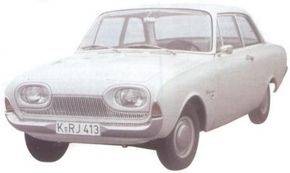
One of his first projects there was the Taunus 17M.
Engel, working as George Walker’s assistant, made frequent overnight trips to Cologne. One trip in June 1958 proved pivotal. Dahlberg’s head clay modeler, Fred Hoadley, was there.
During Engel’s visit, he became strangely fixated on the 3/8-scale theme model of the Taunus 17M. He returned multiple times. He asked endless questions about its lines and proportions.
Did a German Compact Influence a US Landau?
Dahlberg doubts the Taunus 17M had any direct bearing on the 1961 Continental. He sees no evidence that Engel intentionally copied the small European car.
Hoadley disagrees. He believes there was a direct link.
About a year after Engel’s visit to Cologne, Hoadley returned to the US for vacation. While at the Styling Center, he saw the proposed 1961 Continental for the first time. The connection hit him.
The straight-edged fenderline. The ovoid headlamps. It looked like the Taunus 17M scaled up and stretched out. Hoadley still holds that belief today. There was no official statement from Engel confirming the influence, but the visual DNA is hard to ignore.
The development of the 1961 Lincoln Continental—and its tangled relationship with the 1961 Ford Thunderbird story—continues.
The 1961 Continental didn’t just happen. It was the collateral damage of a war within Ford’s styling department, specifically the chaotic attempt to rescue the 1961 Thunderbird.
By 1958, things were already tense. Jim Wright, the new head of Ford Division, had a mandate: the next T-Bird needed to be sportier. Design Vice President George Walker and Joe Oros, who ran the Ford Studio, disagreed. They probably still do. But Wright held the gavel. Oros had to move forward, directing his team to craft a sportier, four-passenger Thunderbird that satisfied the executive mandate without sacrificing the car’s identity.
It was messy.
The Ford Studio churned through renderings and 3/8-scale clay models with no clear direction. Then came the all-nighter. Designers Bill Boyer and Jim Powers stayed up until the sun came up, wrestling a full-sized clay model into submission. They found the lines. They found the direction. And apparently, they found it too late or too messy for Engel to ignore.
Elwood Engel was already chafing.
After returning from an oversight trip to Cologne, Germany, Engel asked George Walker for a space to build his own Thunderbird proposal. He didn’t ask for the main floor. He got a basement room in the Styling Center. A tight one. Barely four feet of clearance on either side of a full-sized clay model.
Colin Neale, a designer on staff, dubbed it the “stiletto” studio. Years later, Neale claimed the name referred to the narrow layout. It probably did. But let’s be real. It was also an irreverent jab at the production studios they were competing with. The name stuck because it fit.
Engel didn’t start from scratch. He built a Frankenstein of Ford’s recent past.
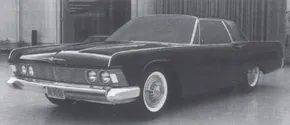
His 1961 Thunderbird proposal was a mashup. He took the recently discontinued Continental Mark II as the base. He borrowed from the Orfe/Payne proposal. He lifted the Quicksilver concept car—a Ford Studio design that eventually evolved into the 1960 full-sized Ford line. He even sprinkled in features from the Taunus 17M. It was a salvage operation, but it was Engel’s salvage.
He handpicked his team. John Najjar. Colin Neale. Orfe. Bob Thomas, the design analyst. These were the core. As the car neared completion, others drifted in. Dick Avery. Gale Halderman. Phil Payne—Howard Payne’s younger brother. They didn’t do much. They just watched.
Orfe supervised the clay work. Harry Strickler was the lead modeler. Strickler would become the key figure in the car’s transformation. He worked on the 1961 Thunderbird proposal, but he also worked on every subsequent change as the project evolved into the 1961 Continental.
The clay pit was busy. Seibold. Cecil Perkins. Ross McLean. Art Rockall. Wolfgang Konietzko. Ray Trombley. Rolland McDonald. Toby Melone. They all touched the clay. And Engel? He wasn’t just directing from the sidelines. He was in the room. Hands-on. Digging into the clay.
The package layout for the 1961 Lincoln Continental was a nightmare. The constraints of that basement room forced a specific geometry. The “stiletto” shape wasn’t just a nickname. It was a structural necessity.
Engel’s proposal was competing for the same spot as Oros’ T-Bird. But the Continental needed something different. Something more substantial. The T-Bird was shrinking, getting sportier, losing its luxury edge. The Continental needed to hold its ground. It needed to justify its price tag.
The clay models started to diverge. The T-Bird lines were tightening, curving in to emphasize the sporty stance. The Continental proposal, built on the Mark II’s wider, more formal architecture, began to assert a different character. It was less about cornering grip and more about presence.
Strickler and his team spent hours refining the sheet metal. The fenders widened. The roofline adjusted. The rear window geometry changed to accommodate a larger trunk, a critical requirement for the Continental buyer. The T-Bird was getting a fastback rear; the Continental needed a more traditional, albeit sleek, sedan profile. Or was it a hardtop? The lines were getting blurry.
Engel pushed for a cleaner side profile. Less chrome, more body. The “stiletto” nickname started to feel less like an insult and more like a description of the car’s intent. Sharp. Narrow at the waist. Pointed at the front.
But the Ford Studio wasn’t going to give up without a fight. Oros’ designers were still refining their all-nighter creation. They had momentum. They had Wright’s backing. Engel had a basement and a hodgepodge of rejected ideas.
Who wins?
The clay models sat side-by-side in the Styling Center. One sporty, compact, and aggressive. The other wider, more formal, and oddly familiar. The decision wasn’t just about aesthetics. It was about brand hierarchy. If the Continental looked too much like the T-Bird, it lost its soul. If the T-Bird looked too much like
The Night the Design Was Saved
John Najjar’s career didn’t end when he was shuffled out of the Lincoln studio. The demotion to the truck division looked like a death sentence for his Ford tenure until Elwood Engel took over and asked him to be his executive designer. It was a second chance. The two men had cut their teeth on the 1958 Lincoln, and now they were looking at the 1961 Thunderbird. Their directive was simple. Clean lines. No visual clutter. No garbage.
Engel’s vision was aggressive. He wanted a Thunderbird that felt like a Continental Mark II taken to an extreme. The goal was a design language that screamed luxury but lived in a sports car body. To get there, design analyst Bob Thomas had to build the package layout. He sketched out blade sides and a greenhouse that mirrored the Mark II’s curved glass, sitting atop those signature body blades.
Thomas went to Engineering to get the hard numbers. The guy in the Ford studio told him the only measurement that truly mattered was the cowl area. So, Thomas grabbed a large blackboard and started drawing. He laid out the roof, the tumblehome, the wheel cutouts, and the side windows. He even traced the original Mark II windshield shape, removing the dogleg that Engel felt blocked entry and exit.
The initial concept was a wedge. Wide at the cowl to emphasize the greenhouse. Engel liked it. Thomas agreed. The problem was the C-pillar. It ended up wider than Engineering’s package limits allowed.
Thomas didn’t realize it at the time. The measurements he used were five inches too wide at the cowl. The actual specs were strict: an 113-inch wheelbase, a 75.4-inch cowl width, and a 205-inch overall length. The design had ballooned.
Walker and others checked the layout. They asked if it fit. Thomas said yes. It had to fit. But on the night before the reveal, he did a final check. The error was there.
They worked through the night. Thomas, Engel, and the clay modelers scraped down the full-size models. They shaved off inches. They rebuilt the shape until the cowl width hit exactly 75.4 inches. Engel wasn’t happy about the mistake. Thomas remembers the yelling. It was a long, expensive night.
Refining the Proposals
The clay models were corrected. The package was legal. But the design wasn’t finished. The team had to refine the proposals before they walked into the Lincoln Product Planning Committee. Changes were made to the details. The proportions were tweaked. The team prepared to sell the vision.
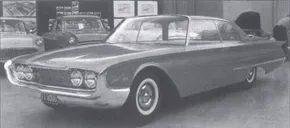
By late June 1958, the clay models were ready. Two full-sized proposals for the 1961 Thunderbird sat in the Elwood Engel Lincoln design studio, each representing a different philosophy on how Ford should handle its flagship personal luxury car. The decision that followed would not only define the Thunderbird but also reshape Lincoln’s identity for the decade.
The Conservative Proposal
One path was safe. This was the proposal that would eventually become the 1961 Continental. Designer Colin Neale handled the rear end, opting for large, round taillights that bore a striking resemblance to the Ford brand’s existing vocabulary. It was a look that played it safe, borrowing heavily from established design cues rather than forging new ground.
John Najjar pushed for a grille, asking John Orfe to execute the design. The result was a face Najjar had been refining for months, commonly dubbed the “Schick razor front end” due to its sharp, horizontal lines. To keep the car from looking like an oversized electric shaver, Najjar inserted a horizontal bar down the middle and added grille blocks. It was a distinctive attempt to separate the Lincoln from the Ford crowd.
Engel insisted on capping the beltline and fender edges with a narrow band of brightwork. He credited the idea to the Quicksilver, a study completed just months earlier in the Ford Preproduction Studio. The intent was clarity. Clean lines. A sense of order.
The Pointed Fender Alternative
Orfe disagreed with the blunt front end of the conservative proposal. To him, it looked chopped off. Unfinished. He drew new front ends that tapered to a point, giving the car a more aggressive, purposeful stance. These weren’t just sketches; they were detailed renderings meant to convey motion even at a standstill.
George Walker, the design chief, walked into the studio looking for inspiration for the Ford Studio’s own Thunderbird proposal. He saw Orfe’s rendering. He liked the grille. He liked the pointed fenders. He took the drawing.
That single act changed everything. Orfe’s ideas, originally meant to support Engel’s conservative approach, became the foundation for the Ford Studio’s competing Thunderbird front end. Meanwhile, Engel vetoed all of Orfe’s pointed-fender concepts for the Lincoln side. He stuck with squared-off fenders. The ones that made it into production for the 1961 Continental.
The split was clear. Engel wanted refinement. Walker wanted momentum.
The Internal Conflict
With two distinct directions for the 1961 Thunderbird, the Product Planning Committee would have to choose. Before the meeting, Walker called on designer Joe Oros to back Engel’s proposal. It was a request born of politics, not just aesthetics. Walker favored Engel to succeed him when he retired. Loyalty was expected.
Oros knew this. He wanted to support his friend. But he couldn’t lie.
He told Walker that, honestly, the Ford Studio’s proposal was better. The pointed fenders. The sharper grille. It felt more modern. More aligned with where the market was heading.
Under pressure, Oros modified his stance. He wouldn’t actively vote against Engel. He wouldn’t speak up for the Ford Studio design either. He would remain silent.
A silent vote is still a vote, but it leaves the outcome to chance. The committee had two strong candidates. One rooted in tradition and safety. The other in aggression and style.
Who would they pick? The answer lies in the minutes of that meeting.
1961 Lincoln Continental Product Planning Meetings
The Continental That Wasn’t
The meeting in late July 1958 was a pressure cooker. Two design proposals sat on the table, both vying for the soul of the 1961 Lincoln Continental. One came from Elwood Engel’s desk, the other from the broader Ford Studio. The stakes? Which one got the badge, and which one got tossed.
Engel’s concept was restrained. Elegant. Some might even call it too polite for a performance-oriented roadster. William Clay Ford saw it immediately. He didn’t look at it as a Thunderbird candidate. He looked at it as a Lincoln. “Too nice for a Thunderbird,” he said. “It should be the new Continental.”
George Walker, the design vice president, fought hard for Engel’s proposal to be the next Thunderbird. He saw potential. Jim Wright, the Ford Division general manager, countered with equal force for the Studio’s version. The room was split. The decision hung in the balance.
Henry Ford II was stuck. He turned to Joe Oros, the studio chief, expecting a tie-breaker. Oros hesitated. HFII pressed him. “Give me a straight answer.”
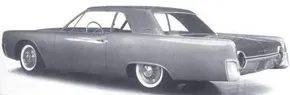
Cornered, Oros admitted Engel’s design was formal—perfect for Lincoln, but wrong for the T-Bird. He backed the Studio’s proposal because it kept the Thunderbird’s sporty edge. Ford agreed. The vote was cast. Engel’s clay model took the freight elevator back down. It was over.
Ben Mills, another committee member, had a different agenda. He loved Engel’s design. He hated the “shovel-nosed” Studio concept. But he played the long game. If the Studio design won, Mills planned to requisition Engel’s rejected model and repurpose it for Lincoln. He voted for Engel, knowing it wouldn’t stick. When the Studio’s car won, Mills walked straight to Engel’s studio.
“I want that car,” Mills said.
Upstairs, the mood was electric. Engel wasn’t angry. He was thrilled. He told his team that Bill Ford and Ben Mills believed their design was too beautiful to waste on a Thunderbird. It had to be the new Lincoln.
Engel didn’t stop at praise. He gave immediate, specific instructions to the modelers. They needed to scrap the big, round Ford taillights. In their place? Large chrome caps sitting at the ends of the rear-fender blades. They needed to sculpt a squashed horizontal tube between those blades. And they needed a separate grille mounted at the back of the decklid.
The car sat there. Waiting. For destruction? Or for rediscovery?
Robert McNamara was absent from the final vote. As VP in charge of all car and truck programs, he missed the debate. Ben Mills isn’t sure if he briefed McNamara on Engel’s rejected proposal. It doesn’t matter. Within a week, McNamara drove to the Styling Center. George Walker gave him the tour, showing him the selections the committee had already made.
When they reached Engel’s studio, the rear end had already been modified. The Ford taillights were gone. The capped blades were in. The rear grille nacelle was taking shape.
McNamara stared at the clay model for several minutes. He asked Walker and Engel questions. One stood out.
“Can this be made into a four-door Lincoln?”
Engel didn’t hesitate. “It can,” he said. “But it will take about two weeks.”
The clock started ticking. The question now wasn’t just about styling. It was about survival. McNamara’s focus had shifted from aesthetics to the bottom line. Lincoln’s profits were bleeding. And the man who could stop the bleeding was looking at a four-door sedan that looked dangerously like a luxury coupe.
If the margins didn’t work, the project would die. Not quietly. But with a cancellation notice that would have erased a legend before it hit the streets.
How a styling debate turned into a financial near-death experience for Lincoln is the next chapter in this story.
For more on the era that defined American luxury, explore:
-
Classic Cars
-
Muscle Cars
-
Sports Cars
-
Consumer Guide New Car Search
-
Consumer Guide Used Car Search
1961 Lincoln Continental Almost Discontinued
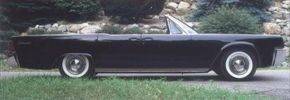
The 1961 Lincoln Continental hung by a thread.
Robert McNamara was still new to the job. He had recently replaced Lewis Crusoe, who retired in 1957 due to ill health. McNamara held the post of vice president in charge of all car and truck programs. He knew Ford Division plans well. He wanted a full explanation of what was brewing for Lincoln. So he instituted a series of biweekly meetings with Lincoln’s management.
Ben D. Mills, general manager, attended. Harold MacDonald, chief engineer, was there too. Emmett Judge, chief product planner, joined the ranks. Support staff filled out the room. No one from Styling was included.
MacDonald expected questions about future features. He asked Harold Johnson, his executive engineer for advanced projects, to attend. The first meeting covered sales, finance, and projections. The second dealt with new products and planned technical features.
Johnson remembers being very involved in the second meeting presentations. They discussed proposed suspension advances. They talked about how to install curved glass in future production Lincolns. By the third and fourth sessions, things had changed. They became presentations with little discussion. McNamara asked questions. That was it.
Clearing the Deck
Partway through the fourth meeting, everything shifted. McNamara stopped the presenter. He said it was time to “clear the deck and put all the cards on the table.”
Everyone except Mills, MacDonald, and Johnson was asked to leave. Then McNamara announced his decision. Based on Lincoln’s dismal financial projections, he recommended terminating the car line. He did not like the direction Lincoln was heading. He noted Lincoln had never made a profit. He had heard nothing from management that changed his mind.
For a few seconds, you could have heard a pin drop. Everyone took McNamara seriously. He was not known for his sense of humor. Mills had come to Ford in 1946 with McNamara as one of the “Whiz Kids.” Mills asked, “Bob, you can’t really do that, can you?”
McNamara responded, “You bet I can do it.”
A heated discussion followed. Everyone argued against the recommendation. None of the arguments made a dent. McNamara gave no sign of changing his mind.
After what seemed like an eternity, Mills persuaded McNamara to back off. This rarely happened. Mills argued the Ford family wouldn’t agree to discontinue Lincoln. The Continental Division had been dissolved only a year and a half earlier. The Edsel was likely the next to go. Besides, Mills argued, it was unfair to employees, dealers, and customers to stop making Lincolns “cold turkey.”
The Clay Model Condition
McNamara reluctantly agreed to one more Lincoln production cycle. He imposed specific conditions. One condition was clear: the next Lincoln had to be a lot smaller.
Recalling the events more than 40 years later, McNamara emphasized his biggest concern. Future Lincolns had to make a profit. He told Mills, MacDonald, and Johnson he had recently seen a clay model. It was a formal Continental-like Thunderbird downstairs in Engel’s studio. It had been rejected in favor of a sportier T-Bird proposal.
McNamara told them if that design could be made into a four-door and profitably built as the new Lincoln, “without significantly increasing its size,” he would “go with the program.”
According to Johnson, no one else in the room except Mills knew anything about the clay model. As the meeting broke up, Mills turned to MacDonald and Johnson. He said, “You’d better get down there ASAP. Your jobs are cut out for you!”
It was late when the meeting ended. Early the next morning, Johnson and one of his assistants, Bill Davis, hurried to the Styling Center. They went to look at the clay model. When they saw it, they decided they really didn’t know what McNamara meant about not making it significantly bigger.
They picked up the package drawings for the car. They returned to Lincoln advanced engineering to study them. Ultimately, they decided not to take a chance. They chose to lengthen the car the bare minimum needed to make it a four-door.
Johnson and Davis then returned to the Styling Center. They asked Engel to lengthen the car by 10 inches. They asked him to add two more doors. They also asked for a separate seating buck based on their hastily modified package drawings.
More work would have to be done to ensure McNamara’s approval. The next section has the full story.
For more information on cars, see:
-
Classic Cars
-
Muscle Cars
-
Sports Cars
-
Consumer Guide New Car Search
-
Consumer Guide Used Car Search
1961 Lincoln Continental Prototype Approved
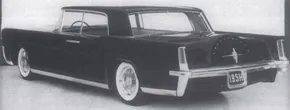
The Door Dilemma and the Birth of the “Suicide” Configuration
The timeline for the 1961 Lincoln Continental’s development was tight, and the engineering implications of a simple aesthetic change rippled through the entire chassis design. One week after the executive decision to stretch the clay model into a four-door vehicle, Harold Johnson received a call from Elwood Engel’s studio—likely from John Najjar. The message was brief: the seating buck was finished. The job was done.
Johnson and his assistant, Bill Davis, crossed the lot to the Styling Center that afternoon. The immediate visual cue was subtle but telling. In the clay model’s beltline, just ahead of where the rear door would terminate, a distinct “hop-up” had been added. It looked like a styling flourish. Johnson knew better. He knew it was a structural necessity.
They moved to the seating buck to test reality against the clay. The front seat was adequate. The rear seat was not. When Johnson climbed into the back, he found himself trapped. To exit, he would have to kick the door panel. The door thickness was blocking his leg. The realization hit both men simultaneously: a Lincoln with a wheelbase short enough to satisfy VP Robert McNamara’s demand for a smaller car could not support conventionally hinged front-opening rear doors. The geometry simply didn’t work.
Johnson had seen this problem before. During his tenure as chief engineer at Continental Division, he had overseen the Mark III Berline proposal. That car featured rear doors hinged at the back. The thickness of the door didn’t obstruct entry or exit; the door swung outward and away, clearing the opening entirely. He proposed the same “suicide door” configuration for the 1961 Lincoln.
The engineering logic was sound. Johnson also suggested removing the B-pillars entirely. On the Mark III, he had locked the doors to the floor and to each other, creating a rigid frame without the central pillar. It was a radical approach. It maximized open space.
Johnson ultimately compromised. He retained the B-pillars for the 1961 Continental. Why? Fear. He worried McNamara would cancel the Lincoln project if the design became too complex or too expensive to engineer. Simultaneously, they cut costs by limiting the lineup. Only the four-door sedan and the four-door convertible would be produced. No two-door models. No exceptions.
From Clay to Production: The Interior War
Once the Product Planning Committee unanimously approved Bill Ford and McNamara’s revised clay model, the project shifted gears. The focus moved from form to function. The clay model was transported upstairs to Gene Bordinat’s M-E-L studio. Here, the vehicle was prepared for production reality. Don DeLaRossa and his team began defining the trim and ornamentation. The convertible mechanism was also finalized, leveraging existing technology from the Ford Skyliner’s retractable hardtop. It was a pragmatic reuse of proven engineering.
But the most intense friction occurred in the interior.
Harry Strickler, head modeler in the corporate advanced studio, recalled that competition started early. An instrument-panel buck was being built in the Lincoln Interior Studio even before the car left the Styling Center. Dave Ash, heading the Lincoln Interior Studio, brought Engel his proposal for the dashboard. Engel’s response was polite but dismissive. He had his own ideas.
Engel’s vision for the 1961 Continental’s instrument panel was rigidly structured. He wanted to group the air-conditioning and radio controls in the center, flanked by two distinct boxes. One box housed the instruments on the driver’s side. The other housed the glove compartment on the passenger side. It was a box-and-tube design. Clean. Symmetrical.
Although Engel is credited with the basic layout, the execution belonged to the Lincoln Interior Studio. Art Miller and Bob Zokas refined Engel’s initial concept into the final production instrument panel. They smoothed the edges. They integrated the controls. They made it real.
The seats told a different story. Paul Wong and Ed Albright, designers in the interior studio, convinced Ash to let them design the seating. Their inspiration was architectural, not automotive. They looked to Ludwig Mies van der Rohe’s Barcelona chair. The design was modified for automotive use, but the essence remained. The finished product carried that high-design DNA into the production car.
The engineering decisions that followed would determine whether this interior beauty could survive the road.
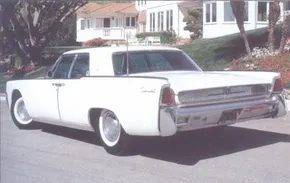
Solving the Transmission Hump Crisis
McNamara didn’t have time for fluff. His biweekly sit-downs with the Continental engineering team were brutal efficiency audits. The agenda was singular: fix the bleeding. Specifically, the perennial losses that had plagued the brand’s recent history.
The 1958 Lincoln was a case study in compromise. It started with a 126-inch wheelbase plan. That got scrapped. Why? They needed to shove the engine forward by five inches to flatten the transmission tunnel. The result was a 131-inch wheelbase. Clunky. Expensive.
For the 1961 Continental, the geometry had to flip. The car needed to shrink. But you can’t just shorten a body without moving the drivetrain. So, the engine and transmission had to migrate backward, pressing hard against the firewall.
This created a nightmare for the front passenger compartment. The transmission hump swelled into a massive intrusion. In any other brand’s booth, that bulge would have killed the back seat. Two rows of seats would have become one. Four passengers max.
Unacceptable for Lincoln. A Lincoln is a six-passenger car. Period.
Harold Johnson, chief engineer at the Continental Division, had to engineer his way out of this spatial trap. It wasn’t just about bending metal; it was about motion transfer. The Mark II had suffered from driveline vibration, a nasty harmonic shudder that plagued high-performance applications. Johnson didn’t accept that.
He went to the source. He asked Dana Corporation to build an inexpensive constant-velocity, double-cardan universal joint. It was a specific fix for a specific wobble. The Mark II never got it. But the 1961 Continental did.
This joint changed the geometry of the driveline. It allowed the propeller shaft and transmission to angle downward rather than staying rigidly horizontal. The result? The tunnel could be lowered. The hump disappeared. The 123-inch wheelbase remained tight, but the interior volume stayed open. Six seats. No compromise.
Warranty as Weapon
McNamara looked at the build quality and saw holes. He saw a brand losing its way. He didn’t just complain; he weaponized warranty terms.
With Harold MacDonald and Johnson pushing back, the team secured vendor cooperation. They implemented rigorous new testing protocols. The goal was to eliminate the excuses.
The outcome was radical for 1960. A 24,000-mile warranty became standard. Universal oil standards were enforced across the board. This wasn’t just good customer service; it was a statement of engineering confidence. If the car broke, it was on Ford, not the owner.
The market responded. Not with a flood, but with a steady, valuable stream.
The Bottom Line
Sales hit 25,164 units for the 1961 Continental. On paper, that’s a modest bump over the 1960 Lincoln and Continental combined. But context matters. The industry was weak. The economic climate was shrinking.
In that environment, that sales volume translated to a 60-percent gain in market share. That is huge.
But the real victory wasn’t in the unit count. It was in the ledger.
From 1961 to 1964, the new-style Continental generated $20 million in profit. That kind of margin doesn’t happen by accident. It happens when you solve the hard problems first. The design awards followed. The praise came. Sales climbed steadily over the next decade.
The 1961 Continental didn’t just save the model line. It assured Lincoln’s survival. The engineering fixes—the lowered tunnel, the Dana joints, the warranty guarantees—