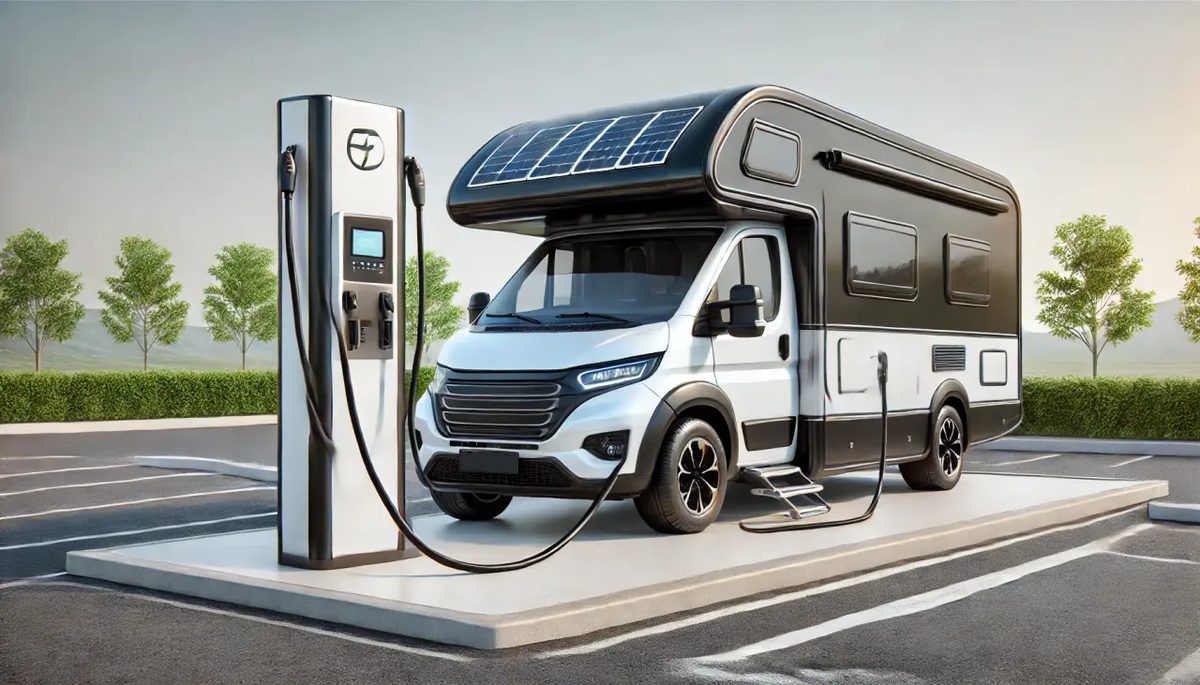
You can pick your poison. Or rather, you can pick your propulsion method. The Challenger ElectriX lets you drive purely on electricity or stick with the diesel engine. When you flip the switch to electric-only mode, that 37 kWh battery gives you 100 kilometers of range. The motor delivers serious torque. It makes the ride smooth. Powerful.
This isn’t your typical hybrid setup. The bi-mode design sets the ElectriX apart from standard hybrids. Unlike the all-electric Mercedes eSprinter or the plug-in hybrid Volkswagen Transporter, the propulsion systems here work independently. They don’t overlap. The front axle gets its power from the Fiat Ducato’s diesel engine. You have a choice between 140 or 180 horsepower. The rear axle? That’s driven by a 90 kW electric motor. It pushes out 1,400 Nm of torque. They never run at the same time.
Why this dual-drive setup matters for ZFE access
The system recovers energy during deceleration. Regenerative braking extends that electric range where it counts. There’s also a regulatory quirk that helps here. In Europe, the weight of the traction battery doesn’t count toward your payload. This is huge. Payload limits are already tight on these campers. Adding a massive battery usually kills your carrying capacity. Challenger sidesteps that penalty.
This design ensures the ElectriX is compliant with Low Emission Zones (ZFE). You can drive into restricted urban areas without worry. No more stressing about diesel bans. The interface is straightforward. A digital screen manages the electric motor functions. Even the rearview mirror displays key electric data. It’s intuitive. No guessing games.
Is the ElectriX worth the entry price?
The base model starts at €99,990. That includes high-end equipment. You get the dual-system flexibility. You get ZFE access. You get the torque advantage in the rear.
The question isn’t just about specs. It’s about how you live with the vehicle. Can you handle the weight distribution with power split? Does 100 km of electric range cover your city runs? The hardware is there. The engineering is distinct. But does the complexity justify the premium? That’s up to you.