



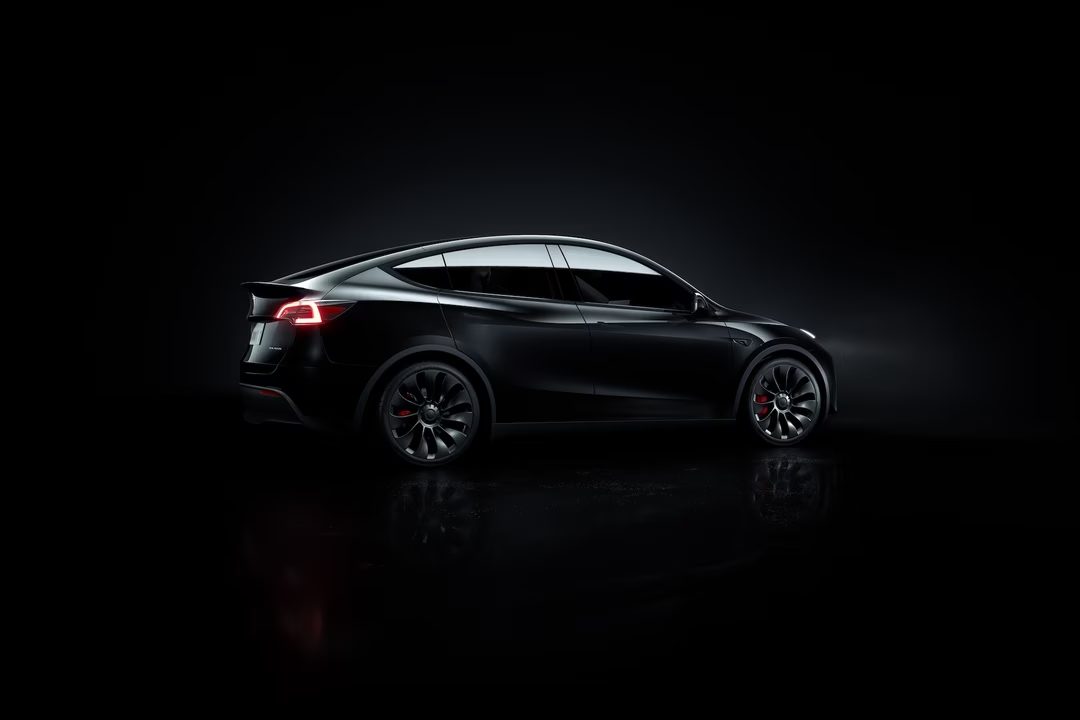
Tesla hasn’t officially released the “Model Y Commercial” yet, but the plan is already in front of us. Imagine a Model Y without a back seat. It has a flat floor, is well separated from the cabin and has a boot comparable to the back of a Peugeot e-208 or a Renault Clio.
This is not a joke. This is a serious proposition for fleet managers and independent contractors who need to transport equipment without compromising the electric range they pay for. The changes were handled by Gruau, a company that knows how to cut cars correctly. They go from five to two-seater workhorses.
Payment? The prices of the Grande Autonomie and Propulsion models start at around 1,200 euros without VAT. Not a fortune. But what you get in return is space. The cargo volume is an amazing 2,158 liters. It’s not just “enough space”. That’s a van’s worth of space in a crossover body.
There are also subtle performance benefits. Removing the rear seats reduces weight. If you’re not carrying heavy pallets or boxes, the lower weight can squeeze out a tiny bit more range. This is of course the limit. But in the EV game, every mile counts.
Why should I buy this? Because in some cases you need to move boxes instead of passengers. Tesla Model Y Commercial turns your family car into a tool. It retains the same luxurious interior, but also has the practicality of a van.
Separation is strict. You can smell the cargo, but you can’t see it. You also cannot carry passengers in the back seat. If you need five seats, use the standard model Y. Choose this if you want to move your gear efficiently.
The market is waiting. Tesla can sell thousands of cars just by adding a badge. Or you can leave it to a third-party converter like Gruau. In any case, there is demand. Professionals are ready to trade comfort for capacity.
Let’s see how this goes. The technology is ready. The need is there. The only question is whether Tesla will officially take advantage of it. Until then, Gruau has the key.

The financial benefits are not insignificant. If you convert your Model Y to a commercial vehicle, you are entitled to a VAT refund. For companies, it is not only administrative procedures, but also cash refunds.
The Propulsion version saves around 6,000 euros. If you choose the long-range version, this figure rises to around 7,100 euros. This calculation assumes that the cost of removing the rear seats is taken into account to create a two-seater configuration. This greatly offsets the sticker price.
But there’s a problem. It’s tough.
Green Bonus Trap
You might think that the 3,000 euro eco-bonus would be valid. This is not true.
Tesla classifies this modified vehicle as the “Deriv-VP.” Abbreviation of Dérivée de Véhicule Particulier. In plain English? It is a passenger car after all. The base platform is designed for people, not pallets.
French regulations are very strict about this distinction. To receive the bonus, commercial electric vehicles must be designed exclusively for freight on the factory floor. Think Mercedes e-Sprinter. It never had seats in the back. It was born for goods. Model Y is designed for families.
Which electric vehicles are really suitable?
If you want a grant of 3,000 euros, you have to look elsewhere. Bonuses are reserved for utility-focused builds.
- Mercedes e-Sprinter : Designed for cargo use. eligible.
–Volkswagen ID. Buzz Cargo : Specifically engineered as a van. eligible. - Tesla Model Y (Modified) : Passenger derivative. Not applicable.
This creates a strange market dynamic. You sacrifice the government’s upfront incentives for a long-term VAT refund and the superior driving dynamics of the Model Y platform.
Conclusion
This is a barter. You can exchange instant cashback for operational savings. If your business can handle the difference in cash flow, the VAT refund will make the converted Model Y price competitive with traditional electric vans.
But if the 3,000 euro bonus is the deciding factor in your budget, the road to Tesla is closed. You need a van that looks like a van from the start.
What is happening to you? You can choose between a platform built for convenience, which offers better VAT treatment, or a platform built for utility, which offers higher upfront subsidies. Both are fine. They just appeal to different balance sheets.


