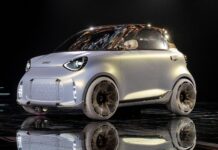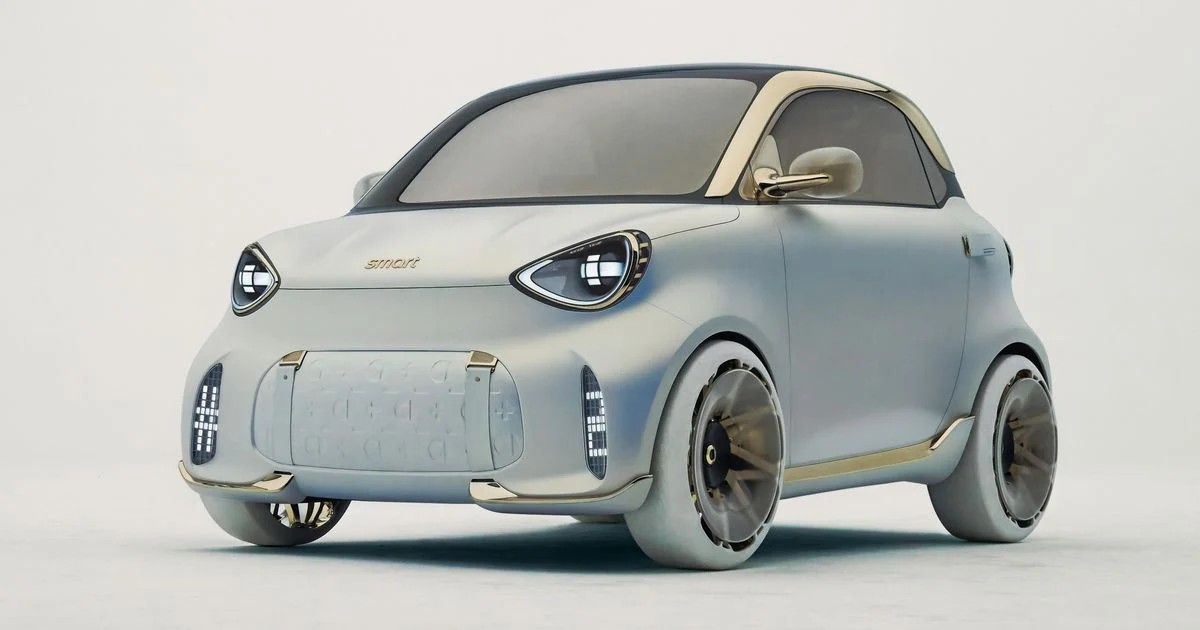
Smart is returning to the roots that made it a household name. After a recent period of expansion into larger SUVs and sedans, the brand has unveiled the Concept #2, a compact, two-seat electric vehicle designed to recapture the essence of the original city car.
The concept is set to make its public debut at the 2026 Beijing Motor Show this week, serving as a preview for the production model, which is expected to arrive at the Paris Motor Show in October.
Зміст
A Return to Small-Scale Urban Mobility
For decades, Smart was synonymous with ultra-compact urban transport. The brand’s legacy began in 1998 with the two-seat City-Coupe, later evolving into the iconic ForTwo. However, as Smart transitioned into its modern era under the joint venture between Mercedes-Benz and Geely, its lineup shifted toward much larger vehicles. Recent models like the #1, #3, #5, and #6 have all surpassed 4.2 meters in length—with the upcoming #6 sedan approaching the size of a Toyota Camry.
The Concept #2 represents a strategic pivot back to the “unconventional” small-car ethos. While it remains slightly larger than its predecessors—measuring 2,792mm compared to the 2,695mm of the previous generations—it is significantly more compact than the current growing fleet.
Technical Specifications and Capabilities
While full technical details remain under wraps, Smart has provided several key performance indicators for the upcoming production model:
- Range: An estimated 300km (WLTP), a substantial leap from the 145km range of the final third-generation ForTwo EQ.
- Charging Speed: The vehicle is expected to charge from 10% to 80% in under 20 minutes via DC fast charging.
- Agility: A tight turning circle of just 6.95 meters, optimized for dense urban environments.
- Utility: The inclusion of vehicle-to-load (V2L) technology, allowing the car to act as a mobile power source for external electronic appliances.
The #2 will be built on Smart’s new Electric Compact Architecture, a platform tailored specifically for smaller footprints, distinguishing it from the larger models that share architectures with other Geely-engineered vehicles.
Design and Manufacturing Context
The Concept #2 features several high-fashion, avant-garde design elements, such as gold trim, leather-strap door pulls, and a grille cover inspired by Louis Vuitton aesthetics. While these “fanciful” details are unlikely to survive the transition to mass production, they signal the brand’s intent to maintain a premium, stylish identity.
The production of this new era of Smart vehicles highlights the brand’s shifted global footprint:
– Ownership: Since 2020, Geely has held a 50% stake in Smart, handling engineering, while Mercedes-Benz retains control over design.
– Production: Manufacturing has moved entirely to China, following the sale of the original Hambach plant in France to Ineos.
Looking Ahead: The Missing Number
Interestingly, the current Smart numbering system jumps from #3 to #5, leaving a gap where a #4 might reside. This omission has led to industry speculation that Smart may eventually introduce a larger, four-door, four-seat variant, potentially reviving the legacy of the long-discontinued ForFour.
The Concept #2 marks a symbolic “re-centering” for Smart, attempting to balance its new premium, larger-scale identity with the compact, agile DNA that originally defined the brand.
Conclusion
By launching the Concept #2, Smart is attempting to bridge its history of micro-mobility with its future of premium electric performance. The success of this model will determine if the brand can successfully navigate the tension between being a provider of large lifestyle EVs and a specialist in urban city cars.