Not every car with a famous badge earned it. Dodge spent the late seventies proving that hard lesson. If you love American muscle you probably know the first-gen Challenger. You also likely know the third-generation model that ran until 2023 fifteen long years of V8 noise and pride.
Then there is the second generation.
You have probably never heard of it. Or seen it. Good reason. It was never a muscle car. In fact it wasn’t a Dodge. Not really.
The Sapporo Disguise
1978 arrived four years after Dodge killed the original formula. They brought the name back. They ditched the soul.
Instead of big American blocks they gave buyers a cheap uninteresting coupe built by Mitsubishi. The base was the Galant. In other parts of the world this same metal shell was sold as the Mitsubishi Sapporo. It was less powerful. Less exciting. Entirely foreign.
The initial model was the Dodge Colt Challenger. Strip off the badges and you had a stock Japanese sedan. No V8s here. The original six and eight cylinders vanished. This version came with a 2.6-liter inline-four. A smaller 1.6-liter 77-hp variant existed too briefly to matter much. Most of those built between 1970 and 1982 rotted in yards. Forgotten.
A Survivor in Raleigh
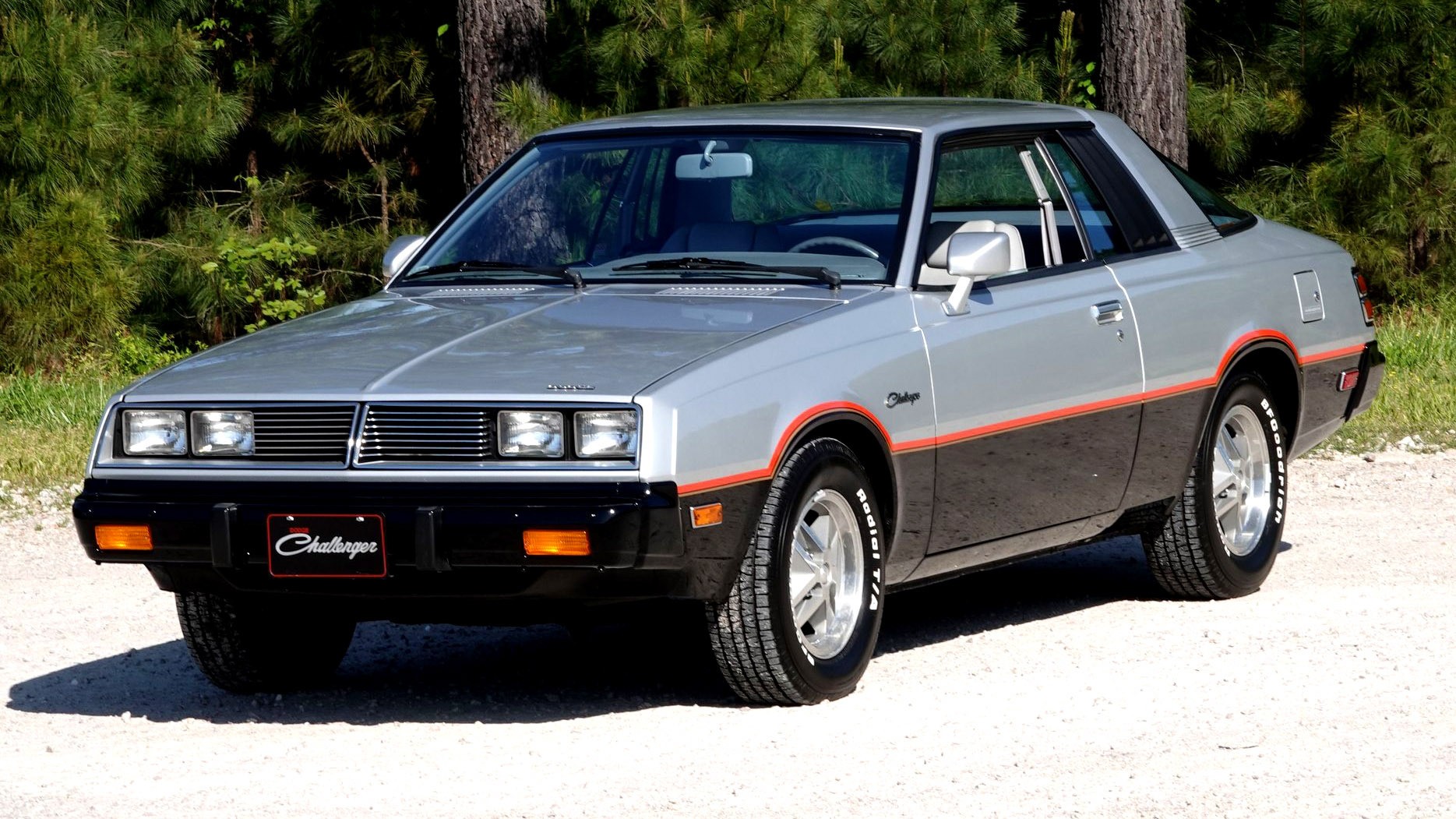
Raleigh Classic Car Auctions currently holds a ghost. Located in Zebulon North Carolina this 1980 Dodge Colt Challenger refuses to die. Only 37,30 miles on the odometer. Just over 60 thousand kilometers. That is barely breaking in a Japanese engineering miracle from four decades ago.
Believed to have only two owners since leaving the showroom floor it might be the cleanest example in the United States.
It looks okay. That counts for something.
The paint is a two-tone mess of black and silver. Yellow and red pin-stripes run along the flanks like neon scars. Original 14-inch wheels still hold up the suspension. Decades of care kept it from falling apart.
Inside is where it gets weird. Grey upholstery dominates. But look at the seats. The door panels feature a jarring plaid mix of red white and black. It clashes with the exterior but strangely works. Like a thrift store outfit that somehow pulls together.
It’s not exactly a thrill ride.
That 2.6-liter four cylinder produced 105 horsepower when it rolled off the line in 1980. Some of that juice has evaporated since then. Nature takes its toll even on efficient engines. But Japanese reliability tends to outlive American ego. The car may have abandoned muscle for mediocrity but that oddball charm persists.
Do you buy a car because of what is under the hood or who signs the invoice?
Maybe the badge is enough.