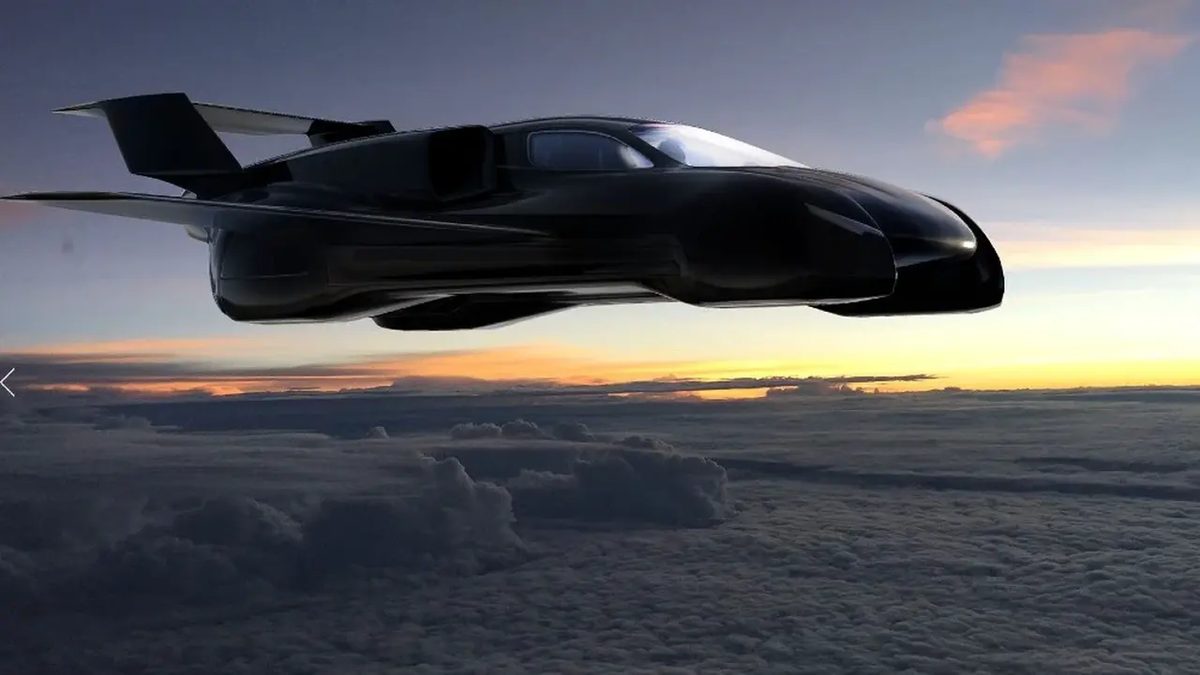
It sounds like science fiction. It feels like a fever dream. But the Fusion JC7 is very real—or at least, it exists as a serious concept on paper. Greg Brown, a California-based designer and former fighter pilot, sketched this beast into existence. He didn’t stop at drawing lines. He calculated thrust. He modeled aerodynamics. And he landed somewhere between a high-performance supercar and a light aircraft.
The result is a vehicle that demands attention. The silhouette screams Italian supercar heritage. Sharp angles. Aggressive stance. A massive rear wing that dominates the rear profile. But here is the trick. It doesn’t stay that way. When you hit the pavement for normal traffic, those vast wings retract into the flanks. The tailplane folds up. It disappears into the grid. It looks like just another aggressive electric GT.
Then the runway appears.
Зміст
Under the Metal: Dual Tesla Motors
Forget combustion engines. The Fusion JC7 is 100% electric on the ground. Brown didn’t skimp on the drivetrain. He placed two Tesla motors—one at the front, one at the back.
The combined output hits 1,000 horsepower.
That is a lot of torque. Theoretically, this setup launches the car from 0 to 100 km/h in under four seconds. That is hypercar territory. But there is a catch. The battery range on road mode is a modest 240 kilometers. You aren’t doing cross-country road trips in this thing. It is a track toy by day. A jet by night.
Into the Skies: Williams FJ-33 Reactors
Switch modes. The electric motors go silent. The wheels might even lock or retract (details are sparse). Now, the aviation hardware takes over.
Propulsion comes from two Williams FJ-33 jet engines. These aren’t small toys. They weigh about 140 kilograms each. If that sounds familiar, it should be. You find these exact same engines on the Cirrus Vision SF50. That is a legitimate, certified light jet. It carries up to six passengers. It flies safely. It flies fast.
Mounting them to a car chassis is where reality gets thin. But let’s look at the numbers Brown claims.
In flight mode, the Fusion JC7 aims for a cruise speed of over 830 km/h. The range extends to 1,200 kilometers. To carry that fuel load, the airframe needs more than 1,000 liters of kerosene.
The Weight Problem
Here is where the engineering gets tricky. Kerosene is heavy. Jet engines are heavy. Adding 140 kg engines to a 1,000 hp electric chassis changes the dynamics significantly.
Brown doesn’t explicitly state if the electric performance holds up once you are carrying that extra mass. Can a 1,000 hp electric motor handle the drag and weight of a jet fuselage structure? Probably not efficiently. The electric range will likely vanish when you factor in the structural weight of the aviation components.
“The car is designed to blend into street traffic until it hits the runway.”
This isn’t just a car with wings. It is a dual
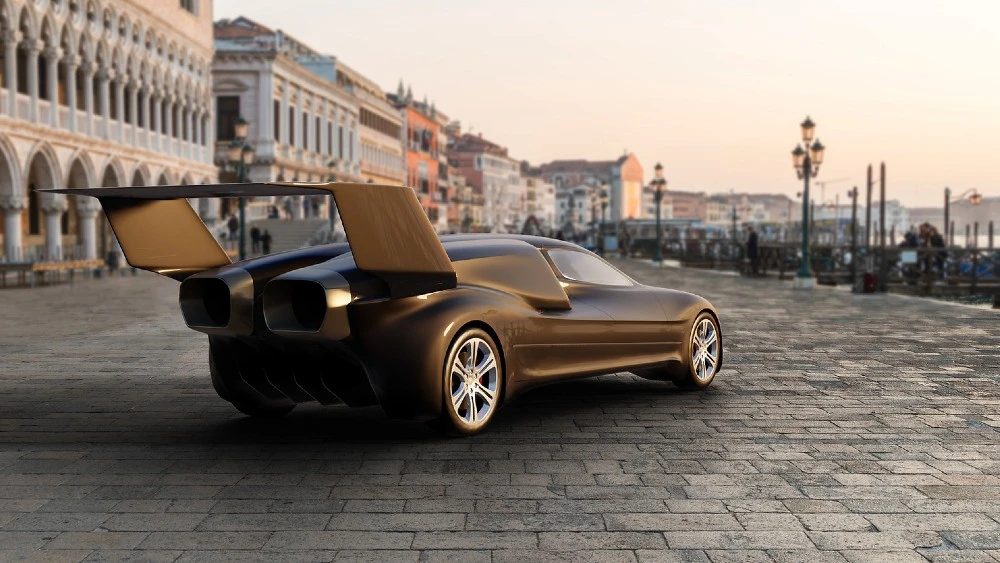
It looks like a toy. It costs $2.5 million. The Fusion JC7 is the kind of concept that makes you question your retirement plan before you even finish reading the specs. But designer Greg Brown isn’t just drawing pretty lines on a tablet. He’s building a case for a vehicle that blurs the line between supercar and light aircraft.
The biggest hurdle for any flying car? Landing.
Most enthusiasts worry about takeoff. Brown’s design solves the touchdown problem with a level of automation that feels almost lazy. You don’t need hundreds of hours in a cockpit to bring this thing down. The auto-braking system and high-capacity suspension soak up massive amounts of kinetic energy. The result? A stopping distance of less than 800 meters. That’s short. It means you can use the JC7 on most standard airfields, not just dedicated runways with mile-long strips.
Time is the Luxury Asset
Who buys this? Not the guy who needs a commuter vehicle. This is for someone with money to burn and, more importantly, time to waste.
The pitch is simple efficiency. You drive the road portion to the airport. No traffic jams, no taxiing waits. Then, you switch modes and fly. With a high cruise speed, you can cross significant distances in roughly 40 minutes. It’s not about the thrill of flight. It’s about getting there before your meeting starts.
From Drawing Board to Wind Tunnel
Concepts usually die in PowerPoint slides. The JC7 is fighting to survive. Brown is collaborating with Corvid Technologies to stress-test the aircraft mode. They aren’t just guessing at performance metrics. They are actively measuring drag coefficients and pitching constraints. This is rigorous engineering, not marketing fluff.
Stanford University scientists are also in the loop. The presentation caught their attention, which is a serious signal in aerospace circles. Academic validation adds weight to the project.
The Jet Connection
Greg Brown argues that the flying part isn’t even the hard part. The core components mirror those found in small business jets. If you understand how a light aircraft works, you understand the JC7’s airframe. The engineering challenge is integration, not invention.
So why hasn’t it happened yet?
Money.
Development costs sit around $20 million. That’s a tall order for any startup. But once the mold is open, the unit price drops to an “affordable” $2.5 million. For a fraction of the price of a Gulfstream, you get a car that can also fly.
The tech is there. The physics check out. The only thing missing is the capital to turn the prototype into a product. If the funding hits, the sky isn’t the limit. It’s just the next commute.