Gross vehicle weight rating isn’t just a number on a sticker. It’s a hard limit. If you ignore it, you’re playing with fire. Whether you’re hauling a trailer in a half-ton pickup or just commuting in a two-seater roadster, this rating dictates the absolute ceiling of what your car can physically handle.
Think of the GVWR as the manufacturer’s final say. It’s not a suggestion. It’s a safety boundary. This figure combines the base curb weight of the vehicle, any factory-installed options, and everything you add to it—cargo, passengers, gear. You can never exceed this number. Period.
Safety is the reason the GVWR exists. Overload causes failure. Brakes aren’t designed to stop a vehicle that weighs significantly more than its rating allows. They’ll fade. They’ll fail. The suspension components also have limits. Put too much strain on the shocks, struts, and bushings, and you risk structural damage or complete breakdown. Tires are especially vulnerable. They generate heat under load. Overload pushes that heat beyond design tolerances, leading to blowouts.
It’s easy to confuse gross vehicle weight with gross vehicle weight rating. They’re not the same thing. The GVWR is fixed. It never changes for a specific vehicle. The gross vehicle weight, or GVW, is dynamic. It shifts every time you get in or out.
Consider this. You have two passengers in a sedan. One exits. The GVW drops by that person’s weight. The GVWR stays exactly the same. You pick up a third passenger later. The GVW goes up. The GVWR remains constant. The rating is the ceiling. The weight is the current load.
The gross vehicle weight rating is a static safety limit. The gross vehicle weight fluctuates with every change in load.
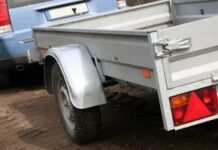
Towing adds another layer of complexity. The entire weight of your trailer does not count toward your tow vehicle’s GVW. Only the tongue weight does. This is the portion of the trailer’s weight that presses down on the hitch receiver. That specific load counts against your vehicle’s capacity. The rest of the trailer has its own independent GVWR. Don’t mix them up. Both ratings must be respected.
How do you find your vehicle’s specific limit? Look at the door jamb. There’s a label on the driver’s side frame, right where the door latches. It lists the GVWR in pounds. If you can’t find the label, check the manufacturer’s website. Most brands publish detailed specs online.
For those who need hard data, the following sections provide specific GVWR figures for popular makes and models. These numbers are for reference only. Always verify with your own vehicle’s placard or manual.
Зміст
Acura GVWR
| Year | Model | GVWR (lbs) |
|---|---|---|
| 2006 | MDX | 5798 |
| 2006 | RL | – |
| 2006 | RSX | – |
| 2006 | TL | – |
| 2006 | TSX | – |
| 2007 | MDX | 5952 |
| 2007 | RL | – |
| 2007 | RDX | 4894 |
| 2007 | TL | 4608 |
| 2007 | TSX | 4300 |
| 2008 | MDX | 5952 |
| 2008 | RL | – |
| 2008 | RSX | 4894 |
| 2008 | TL | 4608 |
| 2008 | TSX | 4300 |
| 2009 | MDX | 5952 |
| 2009 | RL | 4980 |
| 2009 | RSX | 4894 |
| 2009 | TL | – |
| 2009 | TSX | 4395 |
Related Specs: Acura GAWR, Acura GCWR, Acura Cargo Carrying Capacity, Acura Curb Weight, Acura Payload, Acura Towing Capacity
Audi GVWR
| Year | Model | GVWR (lbs) |
|---|---|---|
| 2006 | A3 | – |
| 2006 | A4 | – |
| 2006 | A6 | – |
| 2006 | A8 | 5501 |
| 2006 | S4 | – |
| 2006 | TT | 3770 |
| 2007 | A3 | – |
| 2007 | A4 | – |
| 2007 | A6 | – |
| 2007 | A8 | – |
| 2007 | Q7 | – |
| 2007 | RS4 | – |
| 2007 | S4 | – |
| 2007 | S6 | – |
| 2007 | S8 | 5799 |
| 2008 | A3 | – |
| 2008 | A4 | – |
| 2008 | A5 | – |
| 2008 | A6 | – |
| 2008 | A8 | – |
| 2008 | Q7 | 1279 |
| 2008 | R8 | – |
| 2008 | RS4 | – |
| 2008 | S4 | – |
| 2008 | S5 | – |
| 2008 | S6 | – |
| 2008 | S8 | – |
| 2008 | TT | – |
| 2009 | A3 | – |
| 2009 | A4 | – |
| 2009 | A5 | – |
| 2009 | A8 | – |
| 2009 | Q7 | 6570 |
| 2009 | R8 | – |
| 2009 | S4 | – |
| 2009 | S5 | – |
| 2009 | S8 | – |
| 2009 | TT | – |
Related Specs: Audi GAWR, Audi GCWR, Audi Cargo Carrying Capacity, Audi Curb Weight, Audi Payload, Audi Towing Capacity
BMW GVWR
| Year | Model | GVWR (lbs) |
|---|---|---|
| 2006 | 325 | 4343 |
| 2006 | 330 | 4475 |
| 2006 | 525 | 4575 |
| 2006 | 530 | 4575 |
| 2006 | 550 | 5004 |
| 2006 | 650 | 4652 |
| 2006 | 750 | 5434 |
| 2006 | 760 | – |
| 2006 | M3 | – |
| 2006 | M5 | 5071 |
| 2006 | M6 | 4850 |
| 2006 | X3 | 5049 |
| 2006 | X5 | 6008 |
| 2006 | Z4 | 3571 |
| 2006 | Z4M | 3814 |
| 2007 | 328 | 4277 |
| 2007 | 335 | 4652 |
| 2007 | 525 | 4575 |
| 2007 | 530 | 4575 |
| 2007 | 550 | 5004 |
| 2007 | 650 | 4652 |
| 2007 | 750 | 5434 |
| 2007 | 760 | 5930 |
| 2007 | Alpina B7 | 5534 |
| 2007 | M5 | 5071 |
| 2007 | M6 | 4850 |
| 2007 | X3 | 5049 |
| 20 |
GM Light-Duty and SUV Limits
The 2006 Chevrolet lineup tells a story of division. On one side, you have the Avalanche 1500 sitting at 6800 lbs. If you needed more muscle, the Avalanche 2500 bumped that number to 8600 lbs. The Colorado was capped at 5000 lbs. Equinox? 5070. The Express vans held steady at 7200. The HHR was surprisingly light on paper at 4240 lbs. Then there was the SSR. That weird hybrid coupe-truck thing? It had a GVWR of 6050.
Heavy duty trucks tell a different story. The Silverado 1500 started at 6900. But if you went for the Hybrid or the SS badge, that number dropped to 6200. The HD models climbed fast. 1500 HD was 8600. 2500 HD hit 9200. The 3500 HD maxed out at 11400. Suburbans and Tahoes hovered between 6500 and 7000 lbs. TrailBlazers sat at 5550, while the EXT version pushed to 6200. Uplander vans? 5622.
By 2007, the Silverado 1500 name got a slight tweak. The classic version stayed at 6900. The regular 1500 dipped to 6800. The 3500 dropped significantly to 9900, before the Classic version jumped back up to 11400. The Suburban 1500 increased to 7200. Tahoe moved to 7100. The HHR Panel and base HHR both settled at 4173 lbs.
2008 brought some weirdness. The HHR GVWR skyrocketed to 9137 lbs. Why? Maybe it was a specific trim or a data anomaly, but the HHR Panel stayed at 4173. The Tahoe Hybrid appeared, matching the gas version at 7100. The Silverado 3500 HD settled at 9900.
2009 split the Express vans. The 1500 went to 7300. The 2500 to 8600. The 3500 to 9600. The Traverse entered the chat with a GVWR of 6411. The Tahoe Hybrid remained at 7100. The Silverado 2500 HD held at 9200. The 3500 HD stayed at 9900.
Chrysler and Dodge Shifts
Chrysler in the mid-2000s was mostly about volume and space. The PT Cruiser started at 5700 lbs in 2006. The Pacifica? 4225. The Town & Country minivan was 5550.
By 2007, the Aspen SUV arrived with a GVWR of 6450. The Pacifica increased to 5770. The Town & Country followed suit at 5770. The PT Cruiser dropped slightly to 4225. The HHR Panel data carries over from GM, but for Chrysler, the PT Cruiser Panel isn’t listed separately in some datasets, sticking to the 4225 mark.
2008 saw the Town & Country drop back to 5700. The PT Cruiser moved back up to 5700. The Aspen stayed at 6450. The Pacifica dropped to 4225. It’s a messy year for consistency.
2009 introduced the Aspen Hybrid with a GVWR of 7050. The 300C got a specific rating of 5300. The Aspen remained at 6450. The PT Cruiser held at 4225. The Town & Country stayed at 5700.
Dodge’s heavy trucks were the backbone. The Ram 1500 started at 6700 in 2006. The Dakota was 6010. The Durango sat at 6400. The Grand Caravan was 5700. The Caravan minivan? 5400. The Sprinter vans were serious workhorses. The 2500 van was 8550. The 3500 van was also 8550. The 3500 wagon? 9990. The Viper had no listed GVWR, likely because it’s a sports car where payload is minimal.
2007 added the Caliber at 4435. The Nitro SUV appeared at 5600. The Sprinter 3500 wagon increased to 8550? No, the 3500 van went to 9990. The 2500 wagon dropped to 8550. It’s easy to get confused between the van and wagon configurations here. The Ram 3500 held steady at 11000.
2008 brought the Challenger back. GVWR of 5300. The Grand Caravan dropped to 5500. The Sprinter 3500 van held at 9990. The 2500 wagon stayed at 8550. The Viper still had no data.
2009 was a weird year for Ram. The 1500 dropped to 6025. The 2500 stayed at 8800. The 3500 dropped to 10100. The Durango Hybrid appeared at 7050. The Charger dropped to 4950. The Journey entered at 5005. The Caliber had no listed GVWR. The Sprinter vans remained static at 8550 and 9990.
Ford’s Heavy Haulers
Ford’s 2006 lineup was dominated by the F-Series and E-Series. The E 150 was 6700. The E 250 was 8600. The E 350 Super Duty hit 9500. The F 150 was 6700. The F 250 was 9200. The F 350 was 10100. The Escape was 4300. The Escape Hybrid was 4680. The Explorer was 6110. The Ranger was 4600. The Freestar minivan was 5780. The Freestyle SUV was 5379. Many cars like the Taurus, Fusion, and Mustang had no listed GVWR.
2007 saw the E 150 increase to 8520. The E 250 moved to 8900. The Edge SUV appeared at 5300. The Expedition hit 7400. The Expedition EL went to 7625. The Explorer Sport Trac was 6020. The Ranger increased slightly to 4620. The Freestar moved to 5890. The Five Hundred and Focus had no data. The Mustang and Fusion remained unlisted.
2008 added the F 450. That’s a 14500 GVWR. Massive. The Taurus X SUV appeared at 5379. The E 350 Super Duty held at 9500. The F 150 stayed at 6700. The F 250 at 9200. The F 350 at 10100. The Focus and Fusion still had no numbers.
2009 changed the F 150. It jumped to 920
GMC Truck and SUV Weight Limits
The GVWR numbers for GM’s heavy hitters didn’t shift much between 2006 and 2009, but the small tweaks matter if you’re towing. The GMC Sierra 1500 jumped from 6,100 lbs to 6,400 lbs in 2007. That’s a 300-pound gain in allowable weight. Sierra 2500 and 3500 models stayed mostly static, with the 3500 edging up to 9,700 lbs in 2007 and holding there. The Yukon lineup saw a solid increase, moving from 6,500 lbs in 2006 to 7,100 lbs by 2007. The Hybrid didn’t lose any capacity, sitting steady at 7,100 lbs alongside its gas counterpart. Savana vans remained the workhorses, with the 3500 model hitting 9,600 to 9,700 lbs depending on the year.
Honda GVWR and Crossover Specs
Honda’s numbers are tighter than GM’s. You won’t find GVWR data for sedans like the Accord or CR-V in these specific model years. The focus here is on the heavy lifters. The Honda Odyssey and Pilot are locked at 5,952 lbs from 2006 through 2009. No fluctuation. The Ridgeline holds steady at 6,050 lbs. Smaller trucks and crossovers like the Element sit at 4,450 lbs. The Civic got a slight bump to 4,560 lbs in 2007 and kept that figure. The Insight and S2000 have no listed GVWR in this dataset, likely due to their low-volume, specific use cases.
Hummer H2 and H3 Payload Capacity
Hummer’s GVWR is where you see the muscle. The H2 never budged from 8,600 lbs between 2006 and 2009. It’s a brick. The H3 started at 5,850 lbs in 2006. In 2008, it jumped to 6,001 lbs and stayed there. The H3T shared that same 6,001 lb limit in 2009. If you’re trying to figure out the Hummer H3 GVWR, look for 6,001 lbs for post-2007 models. The H1 Alpha is an outlier, sitting at a massive 10,300 lbs in 2006.
Hyundai SUV Weight Ratings
Hyundai’s lineup shifted models but kept ratings consistent within generations. The Hyundai Santa Fe held 5,085 lbs in 2006, then moved to 5,115 lbs in 2007 and 2008. The Tucson stayed flat at 4,431 lbs for three years. The Azera was stuck at 4,740 lbs until it was replaced by the Genesis in 2009, which came in at 4,850 lbs. The Elantra, Veracruz, and certain trims show no data here. The Entourage minivan sat at 5,898 lbs for 2007 and 2008.
Infiniti Luxury Curb Weight Limits
Infiniti’s ratings are specific to the chassis. The FX35 held 5,340 lbs from 2006 to 2008, then dropped slightly to 5,301 lbs in 2009. The FX45 stayed at 5,624 lbs until it became the FX50 in 2009, jumping to 5,766 lbs. The QX56 grew heavier over time, starting at 6,800 lbs and ending at 7,150 lbs in 2008 and 2009. New models like the EX35 (2008) and M-series sedans introduced in 2008 brought new GVWR figures, with the M45 hitting 5,000 lbs.
Isuzu Ascender and i-Series Specs
Isuzu was in its final years before the GMC partnership fully took over production vibes. The Ascender remained constant at 5,550 lbs from 2006 to 2008. The i-Series saw a drop. The i-280/i-290 sat at 5,000 lbs. The i-350 started at 5,300 lbs in 2006, dropped to 5,299 in 2007, and then fell to 5,000 lbs in 2008. If you’re looking for the Isuzu i-370 GVWR, it’s 5,299 lbs for 2007 and 5,000 lbs for 2008.
Jaguar X-Type and XKR Weight Limits
Jaguar’s data is sparse. Most sedans (S-Type, XJ8, XJR) have no GVWR listed. The X-Type is locked at 4,574 lbs from 2006 to 2008. The XK lineup started appearing in 2008. The base XK came in at 4,486 lbs. The XKR, with its supercharged engine, sat higher at 4,586 lbs. The 2009 XF has no data here. The XK Coupe in 2009 matched the 2008 XK sedan at 4,486 lbs.
Jeep Wrangler and Grand Cherokee GVWR
Jeep’s ratings are utilitarian. The Wrangler Unlimited (JK) hit 4,990 lbs in 2008 and 2009. The standard Wrangler stayed at 4,602 lbs from 2007 onward. The Grand Cherokee is a consistent 5,700 lbs across all years shown. The Commander sat at 6,200 lbs (down slightly from 6,201 in 2006). The Compass and Patriot share the 4,435 to 4,575 lbs range, with the Compass edging up to 4,575 lbs in 2008 and 2009.
Kia Sorento and Sedona Payload
Kia’s data is limited to their larger vehicles. The Sedona minivan held steady at 5,897 lbs from 2006 to 2008. The Sorento SUV sat at 5,467 lbs for those same years. The Sportage remained at 4,519 lbs. In 2009, the Borrego replaced the Sorento in this dataset, jumping to 6,063 lbs. The smaller cars like the Rio and Spectra have no GVWR data listed here, though the Rio 5 is noted at 3,638 lbs.
Land Rover LR3 and Range Rover Specs
Land Rover’s heavy SUVs didn’t change their GVWR much. The Range Rover sat at 6,834 lbs and the Range Rover Sport at 6,769 lbs from 2006 to 2009. The LR3 was consistently 7,121 lbs. The LR2 appeared in 2008 and 2009 at 5,520 lbs. No fluctuations. These numbers reflect the substantial curb weights of these vehicles, leaving less margin for cargo and passengers compared to their lighter American counterparts.
Gross Vehicle Weight Rating isn’t just a sticker on the door. It’s the hard ceiling. If you exceed it, you’re voiding warranties, risking suspension failure, and potentially breaking federal safety regulations. We are looking at the data for 2006 through 2009 across eight major brands. The numbers vary wildly. A MINI Cooper sits under 3,500 lbs. A Lincoln Navigator pushes past 7,300. Knowing where your vehicle sits matters when you’re loading up for a trip or modifying the drivetrain.
Lexus GVWR
Lexus built these platforms for comfort and durability. The GVWR tells you how much steel, glass, fluid, fuel, and people the chassis can legally support before the springs bottom out.
In 2006, the entry-level sedans like the ES 330 and GS 300 sat at 4,540 lbs. The heavy hitters were the SUVs. The GX 470 rated at 6,200 lbs. The LX 470, being a Land Cruiser derivative, carried a massive 6,860 lb GVWR. The RX 330 sat in the middle at 5,245 lbs. The RX 400h, with its hybrid battery pack adding weight, rated slightly higher at 5,520 lbs.
2007 brought the GS 450h hybrid. Its GVWR jumped to 5,200 lbs. The LS 460 replaced the 430, increasing its limit to 5,445 lbs. The RX 350 saw a slight bump to 5,265 lbs compared to its predecessor. The LX 470 held steady at 6,860 lbs.
2008 introduced the IS-F. That performance coupe rated at 4,658 lbs. The LS 600h hybrid pushed past 6,000 lbs, sitting at 6,075 lbs. The new LX 570 arrived with a 7,275 lb GVWR, a significant increase over the old LX 470. The GX 470 remained fixed at 6,200 lbs.
2009 saw minimal changes. The LX 570 and RX 350 kept their ratings. The RX 400h held at 5,520 lbs. Some models like the ES 350 and IS-F lost published GVWR data in this dataset, but the heavy SUVs remained consistent.
| Year | Model | GVWR (lbs) |
|---|---|---|
| 2006 | ES 330 | 4540 |
| 2006 | GS 300 | 4541 |
| 2006 | GS 430 | 4674 |
| 2006 | GX 470 | 6200 |
| 2006 | IS 250 | 4431 |
| 2006 | IS 350 | 4497 |
| 2006 | LS 430 | 5100 |
| 2006 | LX 470 | 6860 |
| 2006 | RX 330 | 5245 |
| 2006 | RX 400h | 5520 |
| 2006 | SC 430 | 4530 |
| 2007 | ES 350 | 4679 |
| 2007 | GS 350 | 4541 |
| 2007 | GS 430 | 4674 |
| 2007 | GS 450h | 5200 |
| 2007 | GX 470 | 6200 |
| 2007 | IS 250 | 4431 |
| 2007 | IS 350 | 4497 |
| 2007 | LS 460 | 5445 |
| 2007 | LX 470 | 6860 |
| 2007 | RX 350 | 5265 |
| 2007 | RX 400h | 5520 |
| 2007 | SC 430 | 4530 |
| 2008 | ES 350 | 4679 |
| 2008 | GS 350 | 4541 |
| 2008 | GS 450h | 5200 |
| 2008 | GS 460 | 4674 |
| 2008 | GX 470 | 6200 |
| 2008 | IS 250 | 4431 |
| 2008 | IS 350 | 4497 |
| 2008 | IS-F | 4658 |
| 2008 | LS 460 | 5445 |
| 2008 | LS 600h | 6075 |
| 2008 | LX 570 | 7275 |
| 2008 | RX 350 | 5265 |
| 2008 | RX 400h | 5520 |
| 2008 | SC 430 | 4530 |
| 2009 | GX 470 | 6200 |
| 2009 | LX 570 | 7275 |
| 2009 | RX 350 | 5265 |
| 2009 | RX 400h | 5520 |
| 2009 | SC 430 | 4530 |
Lincoln GVWR
Lincoln didn’t mess around with small cars in this era. The focus was on full-size luxury and towing capability.
The 2006 lineup was sparse in data, but the Mark LT pickup rated at 7,050 lbs. The Navigator sat at 7,300 lbs. The Town Car, a body-on-frame sedan, managed 5,534 lbs.
2007 added the MKX crossover. Its GVWR was 5,178 lbs. The Mark LT dropped slightly to 6,996 lbs. The Navigator jumped to 7,522 lbs.
2008 saw the MKX increase to 5,370 lbs. The Town Car dropped to 5,252 lbs, likely due to material changes or safety equipment. The Navigator held at 7,522 lbs. The Mark LT stayed at 6,996 lbs.
2009 introduced the MKS sedan at 5,250 lbs. The MKX stayed at 5,370 lbs. The Navigator remained at 7,522 lbs. The Town Car returned to 5,534 lbs.
| Year | Model | GVWR (lbs) |
|---|---|---|
| 2006 | Mark LT | 7050 |
| 2006 | Navigator | 7300 |
| 2006 | Town Car | 5534 |
| 2007 | MKX | 5178 |
| 2007 | Mark LT | 6996 |
| 2007 | Navigator | 7522 |
| 2007 | Town Car | 5534 |
| 2008 | MKX | 5370 |
| 2008 | Mark LT | 6996 |
| 2008 | Navigator | 7522 |
| 2008 | Town Car | 5252 |
| 2009 |
Pontiac’s final stretch and the GTO gap
By 2006, Pontiac was already on life support, but the specs tell a strange story of heavy engineering meeting a shrinking lineup. The 2006 Pontiac G6 GVWR sat at 6497 lbs. That is substantial for a mid-size sedan. It suggests the chassis was built to handle a heavy load, or perhaps it just carried the weight of expectations. The Montana SV6 came in much lighter at 5452 lbs. The Torrent was listed at 5128 lbs. The GTO? Nothing. No data for any year. That silence speaks louder than a number. The Solstice had no listed GVWR either. It seems Pontiac stopped caring about the fine print as quickly as they stopped building cars.
The 2007 Torrent saw a slight bump to 5225 lbs. Then came 2008. The G8 appeared, joining the party with no GVWR listed. The Torrent dropped to 5070 lbs. It stayed there for 2009. The G6, G5, G8, Solstice, and Vibe remained blank entries across those years. A ghost town of data.
Porsche: When the 911 finally got a number
Porsche didn’t bother listing GVWR for the early models. The 2006 Cayenne was 6493 lbs. The 2008 Cayenne matched that exactly. The 911, Boxster, and Cayman? Blank. It wasn’t until 2009 that the curtain lifted.
The 2009 Porsche 911 Carrera GVWR is 3990 lbs. That is surprisingly low for a sports car, hinting at how light the aluminum and carbon fiber components could be in the newer generations. The Boxster came in at 3549 lbs. The Cayman was slightly heavier at 3571 lbs. The Cayenne, however, grew. It moved from 6493 lbs in 2008 to 6625 lbs in 2009. SUVs keep getting heavier. The math is simple. The metal adds up.
Saab’s consistent engineering
Saab was weird. The numbers reflect that. The 2006 Saab 9-3 GVWR was 4450 lbs. The 9-5 was 4390 lbs. The 9-7X, built on GM’s GMT360 platform, sat at 5950 lbs. It shared bones with the TrailBlazer, so the weight makes sense.
In 2007, the 9-3 dropped to 4170 lbs. The 9-5 held steady at 4390 lbs. The 9-7X remained at 5950 lbs. 2008 repeated the exact same figures. Then 2009 came. The 9-3 jumped back up to 4380 lbs. The 9-5 stayed at 4390 lbs. The 9-7X held at 5950 lbs. Saab engineers liked consistency. They just changed their minds occasionally.
Saturn’s final years and the hybrid push
Saturn tried to reinvent itself. The 2006 Saturn VUE GVWR was 4538 lbs. The Relay, that minivan-looking thing, was 5622 lbs. The Ion had no listing.
2007 brought the Aura. It weighed in at 4537 lbs. The Hybrid version? No data. The Outlook, a rebadged Buick Enclave, was massive at 6400 lbs. The VUE Hybrid appeared with a GVWR of 4718 lbs. The Sky? Blank.
2008 saw the Astra join the fray with a GVWR of 3814 lbs. The VUE grew to 4825 lbs. The VUE Hybrid climbed to 4900 lbs. The Outlook stayed at 6400 lbs. The Aura Hybrid remained unlisted.
2009 brought minor tweaks. The Outlook hit 6411 lbs. The VUE sat at 4825 lbs. The VUE Hybrid at 4900 lbs. The Astra lost its GVWR listing. Saturn folded, taking its mysteries with it.
Scion: The youth market and missing specs
Scion was all about customization and youth. The 2006 Scion tC GVWR is missing. So is the xA and xB. It seems Toyota didn’t bother publishing these numbers for the entry-level brand. 2007 brought the xB back into existence, but again, no GVWR. 2008 added the xD. Still no numbers. 2009 followed suit.
This wasn’t negligence. It was strategy. Scion was about the lifestyle, not the payload capacity. The absence of data here is a feature, not a bug.
Smart’s singular focus
smart was niche. The 2008 smart fortwo GVWR was 2315 lbs. That’s it. One model. One year. One number. It’s light. It’s small. It’s not meant for hauling groceries or people. It’s meant for parking in spaces that don’t exist.
Subaru’s all-weather reliability
Subaru builds cars for people who live where snow is a lifestyle. The 2006 Subaru Outback GVWR is 4555 lbs. The Forester is 4150 lbs. The Impreza WRX Sti is 4145 lbs. The Baja, that wagon-truck hybrid, was 4555 lbs. The B9 Tribeca was heavy at 5715 lbs.
2007 kept most numbers steady. The Legacy Sedan dropped slightly to 4325 lbs. The Outback followed suit.
2008 saw the Tribeca drop to 5700 lbs. The Impreza WRX Sti climbed to 4475 lbs. The Outback rose to 4435 lbs.
2009 brought a significant bump for the Forester. It went from 4150 lbs in previous years to 4480 lbs. The Legacy and Outback held at 4325 and 4435 lbs respectively. The Tribeca stayed at 5700 lbs. Subaru’s cars get heavier with each generation. The AWD systems add weight. The safety cages get thicker. The numbers reflect that.
Suzuki’s quirky lineup
Suzuki was everywhere and nowhere. The 2006 Suzuki XL7 GVWR was 4806 lbs. The Grand Vitara was 4630 lbs. The Aerio and Forenza were both under 3700 lbs. The Verona had no listing.
2007 saw the XL7 jump to 5512 lbs. That’s a big jump. The Grand Vitara stayed at 4630 lbs. The SX4 appeared, but without a GVWR.
2008 added the SX4 with a GVWR of 3748 lbs. The XL7 held at 5512 lbs. The Reno dropped slightly to 3671 lbs.
2009 was the end. The Equator and XL7 lost their listings. The SX4 held at 3748 lbs. Grand Vitara vanished from the data. Suzuki left the US market, taking its heavier models with it.
Toyota’s dominance and the Land Cruiser bulk
Toyota rules the road. The 2006 Toyota Land Cruiser GVWR is 6925 lbs. It’s a tank. The Sequoia and Tundra were both 6600 lbs. The Sienna minivan was 5690 lbs. The Highlander Hybrid hit 5675 lbs.
2007 kept the Land Cruiser at 6925 lbs. The Highlander Hybrid dropped slightly to 5620 lbs. The Tundra dipped to 6400 lbs. The FJ Cruiser joined with 5330 lbs.
2008 saw the Land Cruiser jump to 7275 lbs. The Sequoia rose to 6960 lbs. The Highlander Hybrid climbed to 5935 lbs. The Tacoma grew to 5450 lbs. Toyota kept adding weight. Safety features. Comfort. Luxury. It all adds up.
2009 brought a strange shift. The Prius dropped to 2932 lbs. The Yaris was a mere 2340 lbs. The Camry and Camry Hybrid were listed at 3483 lbs. The Matrix disappeared. The Venza appeared with 4960 lbs. The Land Cruiser stayed at 7275 lbs. The Tundra held at 6400 lbs. Toyota’s range is vast. The numbers reflect a company that does everything.
Volkswagen’s weight class shifts
Volkswagen built German engineering for American roads. The 2006 Volkswagen Touareg GVWR was 6486 lbs. The Phaeton was 6196 lbs. The Jetta was 4324 lbs. The Golf and GTI were 3881 lbs.
2007 added the Eos at 4396 lbs. The GTI grew to 4068 lbs. The Rabbit lost a pound. The Touareg gained seven pounds to 6493 lbs. The Pass
Where to dig deeper
You want to understand the mechanical guts behind these numbers? Start with How Tires Work. It’s not just about rubber on road; it’s about how that contact patch supports the load. Then there’s How to Buy a Car. This isn’t fluff. It’s the checklist you use when staring at a sticker price wondering if the engine will last.
And for the heavy haulers? How do truck weigh stations work? That’s where the rubber meets the legal limit. Visit the HowStuffWorks Trucks Channel for the nitty-gritty on commercial fleets.
Brush up on the lingo
Before you call a dealer, check the Dictionary of Automotive Terms A-Z. You don’t want to be the guy who thinks GVWR means something else.
The sources matter
These aren’t random blog posts.
- About.com defined GVWR back in 2008. That’s old in internet time, but the physics haven’t changed.
- Carlist.com kept the Automotive Glossary archive alive.
- Ford Motor Company hosted their own Glossary on their help pages. If Ford says a truck can haul 7,000 lbs, that’s the baseline.
- Motor Era pulled Dictionary of Automotive Terms from their history archives.
It’s a trail of breadcrumbs. Follow it if you care about accuracy.