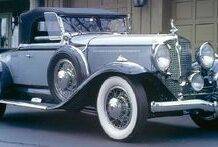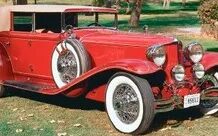
Packard wasn’t just a car company. It was a status symbol so potent that owning one stock was almost more common than owning the vehicle itself. In 1929, Packard boasted more shareholders than any manufacturer except General Motors. The average American couldn’t afford a Packard, but they certainly wanted to be seen owning one. It was the social Standard of America.
The story started in Warren, Ohio, in 1899. James Ward Packard was driving a Winton and decided it wasn’t good enough. He built his own single-cylinder model with automatic spark advance. James B. Joy took over in 1901, moving the operation to Detroit by 1903. That same year, the first four-cylinder Packard rolled out.
But real prestige arrived in 1912 with the 48-horsepower Six. Then came the coup de grâce in 1916. Packard introduced the V-12 “Twin Six,” leapfrogging Cadillac’s new V-8. It only ran until 1923, but the reputation stuck. A straight-eight followed in 1924. Packard dabbled with a Six in 1921, but dropped it before 1930. From then on, it was eight cylinders or nothing. This focus on high-end engineering defined the brand until its collapse in 1958.
Production numbers were staggering. Packard regularly outproduced Cadillac between 1925 and 1930. GM had LaSalle to help, yet Packard still won the volume war. They continued to out-build Cadillac/LaSalle until World War II, missing only the recession years of 1931, 1932, and 1934.
Зміст
The Depression Survival Strategy
Luxury brands usually die during downturns. Packard survived by going mid-market. The 1935 One Twenty, and its sibling the One Ten, allowed the company to pivot from low-volume exclusivity to mass-market survival. It worked. Too well, perhaps. Packard was too slow to abandon these medium-price products after WWII. Cadillac and Lincoln knew when to move upmarket. Packard didn’t. That hesitation sowed the seeds of its ultimate demise.
To keep track of the models, Packard started using “Series” numbers in 1923. Historians map these to model years for clarity. The Seventh Series, for instance, is the 1930 model year.
1930 Packard Models Breakdown
The hierarchy in 1930 was clear. At the bottom was the standard Eight. It had the shortest wheelbases: 127.5 and 134.5 inches. Power came from a 320-cubic-inch inline engine making 90 bhp. Bodies were simple.
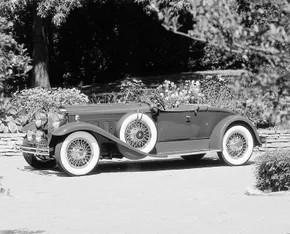
Above that sat the Speedster Eight. It was beautiful. Lithe boattails. Standard roadsters. Phaetons. Victorias. Sedans. All on a 134-inch chassis. The engine was a bigger 385-cid eight, producing 125 to 145 bhp.
Cost? You paid the price. $5,200 to $6,000. Only 150 were built before the series was killed after 1930.
In the middle were the Custom and DeLuxe Eights. Wheelbases stretched to 140.5 and 145.5 inches. The 385 engine here was tuned to 106 bhp. Most came with closed bodies, but you could order a phaeton, roadster, or convertible from Packard or custom coach-builders. Prices ranged from $3,200 to over $5,000. In 1930, that sum bought a very nice house.
1931 Eighth Series Updates
The 1931 Eighth Series kept the standard, Custom, and DeLuxe names. The standard line added “Individual Customs” on the 134.5-inch chassis. You could get a Dietrich convertible sedan, a victoria, Packard’s own cabriolet, town car, or landaulet. The standard engine got a 10 bhp bump. Custom and DeLuxe kept the 385 unit, now at 120 bhp.
Where did the extra power come from? Modified intake and exhaust passages, similar to the 1930 Speedsters. Other mechanical tweaks included a new automatic Bijur chassis-lubrication system. The four-speed gearbox got a quick-shift mechanism to reduce driver effort.
It was a solid lineup. Reliable. Powerful. Expensive. But the market was shifting. Consumers wanted lighter cars. Smaller engines. Packard was still building tanks with velvet seats.
Packard Ninth Series
The 1932 Packard Ninth Series didn’t reinvent the wheel. It just made the wheel spin smoother. A three-speed all-synchromesh transmission replaced the older gearboxes, and the styling got a trim. Lower, more streamlined lines replaced the upright 1930-31 look, though the basic silhouette remained familiar.
But the real story wasn’t in the transmission or the sheet metal. It was in the engine bays at the top and bottom of the lineup.
The Arrival of the Packard Twin Six Twelve
Leading the charge was a new Packard Twin Six, a name that vanished after 1932 to become simply the Packard Twelve. This wasn’t a reboot of the 1916-23 original. It was a fresh design, born from an aborted front-drive chassis project. The heart of the beast was a 445.5-cid V-12.
Gear ratios told the story of its intent. Most models came with 4.41:1 axle sets or higher. Even with a lower numerical ratio available, the goal wasn’t raw acceleration. It was silence.
The factory claimed sustained 100 mph capabilities. That number only held up in controlled test conditions. In stock tune, the 160-hp engine usually hit a wall around 90 mph. But at cruising speeds of 60 or 70 mph, the refinement was eerie. It was whisper quiet. Shift-free motoring was the prize, not speed.
These 1932-34 V-12s shared wheelbases and bodies with the upper Eight series. The Eight was called DeLuxe in ’32, then Super. The longer chassis was reserved for Individual Customs and a standard seven-passenger sedan and limousine.
Price-wise, the V-12s were a steal initially. They arrived at only $100-$200 above counterpart DeLuxes with factory bodywork. That gap widened quickly. Especially between custom-body models. Coachbuilders were expensive. The Twelve’s prestige carried a premium that grew every year.
The 1932 Packard Light Eight Disaster
Packard was an independent. No big parent company to absorb shocks during the Depression. So they tried a medium-priced car before Cadillac or Lincoln even thought about it.
Enter the 1932 Light Eight. It appeared two years before a smaller LaSalle and four years before Lincoln’s Zephyr.
It was a quality product. Built with the same meticulous care as the big Packards. It rode a lighter, trimmer 127.8-inch chassis. It mounted the standard Eight’s 320 engine, rated at 110 bhp that year. Paradoxically, the Light Eight was faster than its bigger, heavier sisters.
Body styles were simple. Four-door sedan. Five-passenger coupe-sedan. Rumble-seat roadster and coupe.
It looked chunkier than other 1932 Packards. Shorter overall. That was the problem.
Pricing was supposed to be the advantage. Around $2000. Instead, it was a liability.
The Light Eight cost almost as much to build as a corresponding standard Eight. Yet it sold for $500-$850 less. Packard broke even, if they were lucky. The line vanished after one year.
From Red Ink to Volume Production
Packard lost $7 million in 1932. Much of it on the Light Eight. President Alvan Macauley knew they needed help. They needed someone who understood volume production.
So Macauley looked at General Motors. He poached from the ranks of GM executives.
Ironically, the firm netted $500,000 with 1933 sales. Those sales represented 38 percent of the high-priced market. That was well above Cadillac’s share. The trouble? The high-priced market was virtually gone.
The search for a savior paid off. Two names changed everything.
Max Gilman. “That hardboiled guy in New York.” Started as a Brooklyn truck salesman in 1919. He replaced Macauley as president in 1938, when Macauley stepped to chairman. Gilman set the publicity stage.
George T. Christopher. A production whiz. Enticed out of retirement from GM. He modernized Packard’s plant end-to-end. Higher volume. Better efficiency. Christopher replaced Gilman as president in 1942.
The fruit of their combined labors arrived on January 6, 1935. The One Twenty.
Evolution and Endurance
The V-12 didn’t stay stagnant. In 1935, “senior” production consolidated to make room for the new high-volume One Twenty. The Twelve got a stroked 473-cid engine. Power jumped to 175 bhp. Wheelbases shifted to 139 and 144 inches.
Super Eights offered similar body styles on those same chassis. A trim 132-inch platform remained for those who wanted something smaller.
Custom bodies thinned out quickly. Coachbuilders went bankrupt. They were bought out. But a few were always listed through 1942.
The Light Eight was a mistake. The V-12 was a triumph of refinement, if not performance. And the shift to volume production saved the company. Or did it? The high-price segment had evaporated. The One Twenty was a gamble on a new middle ground. Whether that gamble would pay off remained to be seen. One thing was certain. Packard wasn’t the same company it was in 1931.
The Packard One Twenty arrived as a shock to the system. It wasn’t just a new model; it was a strategic retreat that turned into a victory lap. Priced at just $1000 to $1100, the One Twenty cost roughly half the price of the light Eight it replaced. That price point hit the sweet spot for buyers who wanted the Packard badge but couldn’t stomach the premium markup.
The styling retained the traditional “ox-yoke” radiator and those distinctive red hexagon hubcaps, but the bodywork was a fresh start. Designers went for rounded contours, what we’d call “potato-shape” windows, and bulbous fenders. The radiator was raked back at a 30-degree angle from vertical. It looked conservative, yes, but it also looked modern for the mid-1930s.
The Engineering Behind the One Twenty Eight
Under the hood sat an L-head eight designed by former GM engineers. The block was 257.2 cubic inches and pushed out 110 horsepower. It wasn’t a complex overhead cam beast. It was a straightforward, heavily ribbed block with individual exhaust ports and ample water jackets. Five main bearings and counterweighted overlapping journals made it smooth and granite-strong.
Fuel economy was good. Durability was better. After 1935, they stretched the stroke to 282 cubic inches, bumping output to 120 horsepower.
Could a 3500-pound prewar car hit 85 mph? Yes. Could it do 0-60 in under 20 seconds? Also yes. That was respectable performance for the era.
In 1936, the lineup expanded. A convertible sedan appeared with “Dietrich” plates on the door. Don’t let the name fool you. Ray Dietrich didn’t touch the design. The Murray Body Company had bought the rights to his name in the early 1930s.
The 1937 model year brought more variety: a station wagon, three DeLuxe closed models, and sedans and limousines on a longer 138-inch wheelbase. That same year, the One Twenty joined the Senior Packards in adopting independent front suspension, grease fittings (replacing the Bijur automatic lube system), and hydraulic brakes.
By 1938, the model name was simplified to just “Eight.” The standard wheelbase stretched to 127 inches. This was the only year it carried that bare name.
Cheap? Maybe. Successful? Absolutely.
Critics called the One Twenty “cheap.” They were wrong. It drove like a Packard. It looked like a Packard. The workmanship held up. Sales reflected the truth. It sold like nickel hot dogs.
Packard’s production numbers tell the story. In 1935, they jumped from 8,000 units to nearly 32,000, shooting up to 12th in industry ranking. Sales kept climbing. 1936 saw about 61,000 units. 1937 was a record year with 122,000. The recession hit in 1938, dropping volume to 56,000, but Packard recovered quickly. Production stayed healthy until the war started.
The One Ten Six: The Budget Brother
The 1937 record was partly fueled by an even cheaper line: the Six. It was called the One-Ten for the 1940-1942 run. It rode on a 115-inch wheelbase. The engine was basically a One Twenty eight with two cylinders chopped off.
That made it a 237-cubic-inch six producing 100 horsepower. Not bad. The wheelbase stretched to 122 inches for 1938 and 1939. Displacement bumped to 245 cubic inches, though horsepower stayed flat.
The body offerings mirrored the One Twenty. Prices averaged $150 less. The math was simple. The One Ten outsold the One Twenty by a ratio of 13 to 10 in 1937.
Was the six as smooth? No. Did it have the same punch? No. But it got excellent gas mileage and offered adequate performance for the price.
The Shift in Packard’s Identity
The One Ten and One Twenty completed Packard’s transformation. They went from a maker of virtually handmade luxury cars to one of Detroit’s top-10 producers.
But the brand didn’t abandon its roots entirely. They still sold regular Eights, Super Eights, and the opulent Twelves. But those volumes were tiny. Only about 6,000 of the high-end models moved annually.
The One Twenty became the breadwinner. It cost about $1200 less than the standard Eight. The success forced internal reshuffling. The Super Eight lost its 385 cubic inch engine after 1936, dropping down to the 320 unit used in the standard Eight. That standard Eight disappeared after 1937, though the name lingered in some forms.
The One Ten was small. It was dumpy. It wasn’t a traditional Packard in spirit. Some argued the firm got greedy. George Christopher pushed for higher production numbers, blinded by the numbers game.
By the end of the 1930s, Cadillac had taken the crown. They led in both sales and prestige for the high-dollar segment. People who previously wouldn’t have been caught dead in a Cadillac were buying them instead of big Packards. The low-cost One Ten and One Twenty looked almost identical up front. They upstaged the expensive models.
The brand had changed. The public noticed. The question was whether the soul of Packard could survive the volume.
For more on defunct American cars, see:
-
AMC
-
Duesenberg
-
Oldsmobile
-
Plymouth
-
Studebaker
-
Tucker
Packard Design Changes and the Darrin-Packards
While Cadillac was busy climbing the luxury ladder with Harley Earl’s sleek, modernist designs, Packard dug in its heels. The brand clung to a tall, formal aesthetic that felt increasingly stiff by 1939. The design language hadn’t shifted significantly since the major overhaul four years prior. It was a classic case of tradition battling relevance.
The 1939 lineup kept the economy Six in the mix, soon to be rebranded as the One Ten. Prices started at a modest $1000 for the business coupe. That put it in the same bracket as entry-level Fords and Chevys, which ranged from $600 to $900 that year.
The One Twenty nameplate returned for the entry-level eight-cylinder models. Buyers could choose between 127-inch and 148-inch wheelbases. Prices stretched from $1245 to $1700.
Super Eights used the same two chassis options but narrowed the model range. The price spread covered $1650 to $2300.
Then there was the Twelve. This magnificent machine offered a broad gamut of bodies and prices, ranging from $4155 to $8355. Custom styles by Rollston and Brunn added to the prestige. But 1939 was its final act. The Depression had turned the Twelve into an expensive anachronism. Only 5744 units were built during its eight-year reign, which included the 1932 Twin Sixes.
Engineering Quiet Power
Major styling updates arrived for 1940. Packard introduced a new 160-horsepower 356 cubic-inch engine. It anchored an expanded Super Eight line split into One Sixty and Custom One Eighty models.
These chassis spanned wheelbases of 127, 138, and 148 inches. Standard bodywork prices ranged from $1500 to $2900.
The new 356 engine was impressively quiet. It featured nine main bearings and a crankshaft weighing a hefty 105 pounds. The engineering was potent enough to push lighter models past 100 mph. This engine would power the Supers through 1947 and Customs through 1950.
Packard also pioneered a feature that would soon become standard: air conditioning. It was the first production car to offer it. The system was bulky and less effective than later iterations, but it was a first nonetheless.
The Darrin Effect
The low-priced Six remained the One Ten for 1940. Mechanically, neither the One Ten nor the One Twenty saw significant changes. Rumble seats were dropped, however. The One Twenty expanded its reach with four new DeLuxe-trim models: a sedan, club coupe and sedan, and a convertible coupe. Prices for these ranged from $1160 to $1300.
But the real story was a stunning exception to Packard’s competitive pricing structure. A new quartet of rakish custom-built Darrin models arrived. They were the work of renowned designer Howard A. “Dutch” Darrin.
These cars filled the glamour gap left by the departed Twelve. The lineup included a One Twenty convertible victoria, a Custom Super Eight One Eighty version on the short wheelbase, and long-chassis versions: a Custom Super convertible sedan and a closed Sport Sedan.
All boasted ground-hugging silhouettes. They lacked running boards entirely. Dutch detested them, and they were fast-fading anyway. The victorias were exquisite. Smooth, low, and ideally proportioned, they retained just the right amount of proper Packard dignity.
How Dutch Got Packard’s Attention
The Darrin-Packards evolved from specials Dutch built at his Hollywood works between 1938 and 1939. Celebrities like actor and crooner Dick Powell drove them. The response was strong.
Dutch convinced Packard to catalog these wares on a special-order basis. He executed a clever ploy to make it happen. He parked the Powell car at the Packard Proving Grounds during the summer of 1939. The dealers attending the annual sales meeting were roundly impressed.
Save for sectioned radiators and hoods, the Darrins wore unique body panels. The Sport Sedan was a handsome “gentleman’s” car. It featured a curved, blind-quarter roof, chrome-edged windows, and a sharp beltline. Some might have seen a semblance of Bill Mitchell’s 1938 Cadillac Sixty Special in its lines.
But the real eye-catcher was the sleek victoria. It had a cut-down windshield and an abrupt kickup to the rear flanks from a gradually sloped doorline. This became the famous “Darrin notch.”
The Packard Clipper
Sales of the Darrin-bodied Packards were, quite frankly, negligible. You don’t need to be an accountant to see why. The One Twenty Victoria started at $3,819. The Custom Super convertible sedan? $6,332. That put them firmly in the realm of “buy one if you have two” for the average American in the late 1930s. Production was deliberately throttled at the old Auburn plant in Connersville, Indiana, keeping the numbers artificially low. Just 50 Victorias rolled off the line in 1940. Only 12 convertible sedans were built. Nine survive today, likely tucked away in private collections where they don’t have to compete with the rest of the automotive universe for attention.
There was a Sport Sedan project, too. Announced as a “request car” for those seeking the absolute pinnacle of luxury, it never really materialized. Only two were completed at Dutch’s shop before it was shelved. Packard did build two other “Darrinized” sedans using stock 1940 front ends, but they looked like awkward compromises. They weren’t pretty. They offered no product direction. Today, all surviving Darrin-Packards are recognized as Classics by the Classic Car Club of America, but back then, they were just expensive curiosities.
Rollston offered some alternatives for 1940. An all-weather cabriolet and a town car were available for $4,473 and $4,599 respectively. Again, only a handful were made. The regular Packards weren’t exactly flooding the market either. Out of 98,000 Packards built that year, 5,662 were Super Eights and just 1,900 were Customs. The vast majority were the entry-level One Tens and One Twentys.
The 1941 Refinement
Packard rebodied its entire lineup for 1941, though the changes were subtle until you looked closer. The windows grew slightly larger. Headlamps were finally tucked inside the front fenders, a massive styling shift for the brand. Wheelbases stayed the same, but the floor was lowered. Suspension was tweaked. Motor mounts were beefed up. Engines got steel-backed rod bearings and an oil-bath air cleaner. These mechanical updates applied to the Darrins as well, but the Darrin lineup had shrunk to a single model: the Custom Super Eight One Eighty Victoria. It kept the 1940 silhouette, minus some trim, with a slightly different notch treatment and those new flush headlamps.
Production moved to Cincinnati. Sayers and Scoville, known for building ambulances and hearses, took over the coachwork. They built 35 ’41 models and another 15 for 1942, which were nearly identical. Overdrive remained optional, but for 1941, Packard introduced a gimmick worth noting. It paired with a new $37.50 “Electromatic” clutch. This system disengaged via manifold vacuum when you lifted off the accelerator, allowing “clutchless” driving in second gear. You could floor it for first, but for day-to-day driving, you didn’t need the pedal. It was an attempt to simplify life, whether drivers appreciated it or not.
The Clipper Revolution
The real news came mid-season. Packard unveiled the Clipper. Priced at $1,420, it sat squarely between the One Twenty and the One Sixty. It was built on the One Twenty chassis but looked like nothing Packard had ever made before. Smooth. Modern. Bold. It was an unexpected bid for design leadership.
The Clipper bore the unmistakable Darrin touch. The descending beltline. The tapered tail. The long, prow-like front with the slimmest radiator Packard had ever fitted. But it wasn’t just Dutch Darrin. It was a joint effort. Packard stylists under Werner Gubitz contributed. Several external consultants weighed in. Still, the design DNA was largely Darrin’s. He predicted postwar styling years early: nearly flush-sided “envelope” bodies, front fenders sweeping into the doors, and a width that exceeded height.
Dutch dashed off the initial design in just 10 days to meet Packard’s aggressive deadline. Did he get paid for it? A promised $10,000 fee never materialized. That was poor form on Packard’s part. The Clipper alone sold about 16,000 units. That accounted for 22% of Packard’s total 1941 volume, which had actually dropped by 25,000 units from the previous year. The car saved the model year.
Preparing for War
The success of the Clipper forced Packard’s hand. For 1942, “Clipper styling” went virtually linewide. There were exceptions. Commercial vehicles kept their utilitarian shapes. The One Sixty and One Eighty convertible coupes remained distinct. Custom bodies were excluded, including the Rollston styles, new LeBaron-built long sedans and limousines, and a beautifully formal Sport Brougham.
Then America entered World War II. Production was cut short, as it was for every American maker. Total output for 1942 ended just shy of 34,000 units. Mostly Clipper-styled 110/120 and One Sixty/One Eighty models. The era of bespoke coachbuilding was waning, replaced by standardized, efficient designs that would soon power a different kind of machine.
For more on defunct American cars, see:
-
AMC
-
Duesenberg
-
Oldsmobile
-
Plymouth
-
Studebaker
-
Tucker
Packard After World War II
Packard had a clean balance sheet when the war ended. They had built Merlin aero engines and military power units, emerging as the only independent manufacturer without debt. You would think that financial freedom would allow for bold, forward-thinking moves. Instead, the company made a strategic error that would slowly bleed them dry.
They refused to pivot back to pure luxury.
The postwar economy was frantic. Buyers wanted cars, and they wanted them now. Packard, however, kept pushing the medium-price Clipper in the spirit of the old 120-line. Those models had saved the company during the Depression. In 1946? They were a liability. They diluted the brand’s prestige without offering the exclusivity the market was craving.
But the crash wasn’t immediate.
In 1946, Packard did what everyone else did: they reprised their prewar line, albeit shortened. The low-priced Clipper Six sedan and coupe looked identical to the Clipper Eight DeLuxe models. Same 120-inch wheelbase. Same bones.
The bigger guns sat on a 127-inch chassis, with the seven-passenger Custom sedan and limousine stretching to a massive 148 inches. The powertrain choices were straightforward. Basic Eights used the tired 282 engine making 125 bhp. Supers and Customs kept the robust 165-bhp 356 from 1942. The Six stuck with its 105-bhp 245. Overdrive and the Electromatic clutch were optional upgrades. Customs got the treatment: plush broadcloth, leather, special carpeting, and that beautiful imitation wood paneling.
Packard moved 30,000 units in 1946. Sales jumped to over 50,000 in 1947. The cars were identical, just different serial numbers.
Then came the problem.
Most Detroit giants could stretch their prewar dies through 1948. They had the tooling. They had the cash. They could launch all-new, modern designs that made the Clipper look dated. Packard couldn’t. Despite being debt-free, they couldn’t afford to scrap molds that hadn’t been fully amortized over enough production runs.
So, the stylists got creative. Or desperate.
They slapped heavy chunks of sheetmetal onto the Clipper to fake a “flow-through-fender” look. It added 200 pounds of unnecessary curb weight. The result? The car looked fatter. A short, squat grille—eggcrate on Customs, bar-type on the rest—ruined the slim, elegant prow of the 1941-47 era.
Auto writer Tom McCahill didn’t hold back. He said the ’48 Packard looked like it belonged to “a dowager in a Queen Mary hat.”
Most people just called it a “pregnant elephant.”
Here is the irony: nobody cared.
The postwar market was a seller’s paradise. It didn’t matter if the car looked tubby or trimmed. It didn’t matter if it cost $2,500 or $4,500. Packard sold every single one it built. They moved some 92,000 units in 1948. Then about 116,000 in 1949. Two of their best years ever.
The mechanicals got a minor tweak for the 1948 model year. Customs kept their 160-bhp 356. Supers got a new 327 unit with five main bearings and 145 bhp. Standard Eights got a squarer 288 engine with 130 bhp. These engines lasted until May 1949 in the Twenty-Second Series.
The Twenty-Third Series followed. Horsepower bumped to 135 for standards and 150 for Supers.
Sedans and coupes remained the core. Standards, DeLuxes, and Supers stayed on 120-inch wheels. Customs on 127. A new 141-inch platform appeared for Super Eight long sedans and limos. Customs kept their 148-inch stretch. There were also a few long Custom commercial chassis and some six-cylinder 1948 platforms for taxis and export.
1948 brought new body styles. Custom and Super convertibles joined the lineup. And then there was the Station Sedan.
It was part of the standard Eight series. Priced at $3,425, it had a wagon-like body made almost entirely of steel. Structural wood was used at the tailgate, and decorative timber adorned the doors. It was unusual for Packard. It didn’t sell well. Only 3,864 were made through 1950.
The Custom Eight convertible was the priciest standard model. $4,295 for 1948-49. $4,520 thereafter.
Packard was selling out. But they were selling cars that the market was starting to outgrow. The styling was a compromise. The strategy was a holdover. The money was flowing in, but the foundation was cracking.
For more on defunct American cars, see:
- AMC
- Duesenberg
- Oldsmobile
- Plymouth
- Studebaker
- Tucker
Ultramatic debuted in the mid-1949 Packard Twenty-Third series, marking a distinct moment in automotive history. It was the only automatic transmission developed by an independent manufacturer without outside technical assistance. The system was a mechanical hybrid. A torque converter handled the initial launch from a standstill. By 15 miles per hour, the car engaged direct mechanical drive via multiple-disc and direct-drive clutches, supplemented by forward and reverse bands.
The result was smoother than General Motors’ Hydra-Matic. The trade-off was performance. Acceleration remained leisurely. Drivers who frequently used the Low range to force quicker starts often caused premature wear on the components.
A Styling Shift and Sales Plunge
The Twenty-Third series also brought a subtle facelift. Most models gained a new beltline spear. Packard introduced new Deluxe-trim Eight and Super Eight sedans and coupes. The Super versions used the 327-cid engine and shared the eggcrate grille of the corresponding Customs. Yet, they cost roughly $1,000 less. This pricing strategy crushed Custom sales. It hurt Packard as a whole.
The post-war seller’s market was collapsing. Production figures proved it. Output for the model year plunged to just under 42,400 units.
The 1951 Redesign
Packard finally executed a total redesign for 1951. Designer John Reinhart created a squarish, praiseworthy “high-pockets” notchback shape. It was a complete break from the bulky “elephant” styling of previous years. The new lineup rested on two platforms. A 122-inch chassis supported the “200” series. This included standard and DeLuxe two- and four-door sedans. It also featured a “250” convertible and a Mayfair hardtop coupe. The hardtop was a first for Packard.
A 127-inch platform carried the “300” and Patrician 400 sedans.
The 200s weren’t traditional Packards, despite sharing the 288 engine with the previous standard Eight. The line included a $2,302 business coupe. That was $529 less than the cheapest 1951 Cadillac. With the market shifted, the 200s couldn’t compete with established price rivals. They failed to sell.
The “real” Packards were the 250s, which sold reasonably well, and the regal 300 and Patrician lines. At just under $3,700, the Patrician effectively replaced the broad Custom Eight line. The Custom’s 356 engine was smooth and reliable. It was also too expensive to build for the expected sales volume. So, Packard’s largest engine for 1951 was the destroked 327. It had previously been the middle powerplant but retained nearly as much horsepower. Patricians and Ultramatic-equipped 250s and 300s produced 155 horsepower. Other models got 150.
Production Highs and Lows
The new 1951 package fared quite well. It was likely because it was new in a year when little else was. Model-year production ended at 101,000 units. That was more than twice the dismal 1950 total. Packard also built 401 “300” chassis that year for the professional car market and what remained of its once-thriving custom-body business.
1952 told a different story. Production slid substantially to just under 63,000 units. Changes were few. The 200 business coupe was dropped. Power brakes arrived as a postwar first-time option. Interiors received colorful new treatments in high-quality fabric and leather by fashion designer Dorothy Draper. Styling remained virtually untouched. The most obvious change was a different wing position for the traditional “pelican” hood ornament.
Executive Turmoil
A far more significant change occurred in the executive suite during 1952. In May, aging president Hugh Ferry stepped down. He had replaced George Christopher in 1949. James J. Nance took his place. Nance was a market-wise hotshot recruited from Hotpoint. He was brought in to turn Packard around. It was sorely needed.
By the time Nance arrived, Packard’s Detroit plant was operating at only 50 percent capacity. Several long-time executives felt that was good enough. Nance saw then what we all see now: at that pace, Packard was doomed. The question wasn’t if they would fail, but how quickly they could bleed out before the end.
James Nance didn’t just join Packard; he detonated there. He arrived with the force of a tornado, aggressively hunting military contracts while loudly declaring that the company’s obsession with medium-priced vehicles was “bleeding the Packard name white.” His diagnosis was blunt: the brand was losing its soul to the mass market.
His prescription? A hard pivot. He took the 200 and 250 series, rebranded them as Packard Clipper models for 1953, and executed stage one of his divorce plan. The cheaper cars were to be severed from the main line, both in name and in spirit. Henceforth, Packard would build nothing but luxury. Formal sedans and limousines, which had been neglected for years, were to become the sole focus.
Budget constraints and a lack of time made a complete overhaul impossible for the 1953 model year. Nance had to settle for targeted additions. He introduced an eight-place Executive Sedan and a “Corporation Limousine,” both riding on a massive 149-inch chassis. These beasts were priced around $7,000—a fortune at the time. He also contracted with the Derham Body Company to craft a few formal Patricians. These cars featured leather-covered tops, tiny rear windows, and a sticker price of $6,531.
The Caribbean and the Snob Appeal Strategy
At the top of the 1953 hierarchy, Nance pushed the Caribbean, a glamorous convertible built on the short wheelbase. The styling was handled by Richard A. Teague, who drew heavy inspiration from Richard Arbib’s 1952 Packard Pan American show car, which had been built by Henney.
The Caribbean was a statement piece. It carried a 180-bhp 327 cubic-inch engine, rakish circular cutouts around the rear wheels, a jaunty “Continental kit” spare tire mounted on the outside, and chrome wire wheels. It came with every optional amenity the dealership could offer. The price tag? A lofty $5,210.
Nance deliberately limited production to just 750 units. He knew that scarcity created desire. It was a move for pure snob appeal. The public responded with enthusiasm. The Caribbean was as well-received as Cadillac’s new 1953 Eldorado, proving that if Packard wanted to compete with the big three, it needed star cars like this.
The Clippers: Anchoring the Line
While the Caribbean was the flair, the Packard Clipper was the anchor. Nance kept the two- and four-door sedans in standard and DeLuxe trims, powered by the unchanged 288 and 327 engines.
Included in the standard group was the Sportster, a pillared two-door with a hardtop-style roof. It was attractively priced at $2,805, aiming to keep the entry-level customer interested. The 250-series was dead. The Mayfair and standard convertible returned to the fold. For the long-wheelbase segment, the Cavalier sedan replaced the 300, becoming the cheapest long-wheelbase ’53 Packard.
Nance had hoped to unveil all-new Packards for 1954. He didn’t get the budget or the time. Instead, he fielded a look-alike interim series. The only visible differences were rimmed headlamps and integrated backup lights. Under the hood, however, there was change. The 327 engine was enlarged to 359 cid, pumping out 212 bhp. This powerplant fed the Patrician, the Caribbean, standard convertibles, commercial chassis, and a new hardtop named the Pacific. Air conditioning also returned for the first time since the war.
1954: The Year Production Crashed
1954 was a disaster. Total production plummeted to just 31,000 cars. Of those, roughly 23,000 were Clippers. The lineup included Specials and DeLuxes as before, plus new Super sedans and a Super Panama hardtop coupe.
The engine spread remained familiar but tweaked:
* Specials used the 288 engine.
* DeLuxe models got a 327 bumped up by five bhp.
* Supers were also powered by the 327.
* The Cavalier sedan used a detuned 185-bhp version.
Chassis production hit a mere 335 units. The luxury push was bleeding money faster than it was bringing in prestige.
The Studebaker Poison Pill
The revolutionary new model Nance had envisioned for 1954 was postponed to 1955. The reason? The so-called Studebaker-Packard merger. In reality, it was a Packard buyout.
Nance didn’t know what he was signing when he put pen to paper. He didn’t realize that Studebaker was drowning in productivity problems. Their high-overhead plant in South Bend, Indiana, had a break-even point somewhere above 250,000 cars. Studebaker was sinking.
Contrary to many accounts, Packard was still a fairly healthy company at this
The 1955 model year arrived with a production nightmare that should have been avoidable. In 1940, Packard had outsourced body construction to Briggs Manufacturing. Then, in 1954, Chrysler bought Briggs. Suddenly, Packard had no supplier.
They were forced to build their own bodies again.
Naturally, management chose a cramped facility on Conner Avenue in Detroit. It was never large enough. The bottleneck caused massive production tie-ups and quality-control disasters. These issues hampered sales of the ’55 Packards and forced the immediate cancellation of the long-wheelbase models.
Packard still built roughly 55,000 cars in a prosperous 1955. But they would have done better assigning body production to their old, adequate main plant on Detroit’s East Grand Boulevard.
A Technological Marvel in a Bad Facility
Despite the factory woes, the 1955 Packard was a technological marvel. The crown jewel was Torsion-Level suspension.
This system used long torsion bars connecting the front and rear wheels on each side. A complex electrical system allowed the suspension to correct for load weight. It effectively interlinked all four wheels. The result was extraordinary ride and handling, despite the car’s two-ton bulk.
Then there was the powertrain. The old flathead straight-eights were finally ousted by powerful new short-stroke OHV V-8s.
The specs varied by trim:
* Clipper DeLuxes and Supers (now without two-door sedans) used a 320-cid version with 225 bhp.
* Clipper Customs (sedan and Constellation hardtop) got a bored-out 352 delivering 245 bhp.
* Caribbeans pushed that 352 to 275 bhp via twin four-barrel carbs.
* Patrician sedans and new “Four Hundred” hardtop coupes received the 352 at 260 bhp.
Ultramatic transmissions were suitably modified to handle the higher V-8 torque. Combined with the improved Ultramatic and Torsion-Level, the ’55 Packard chassis was fine. These were impressively fast and roadable cars. Real Packards in every sense.
Dick Teague’s clever facelift of the old ’51 body looked equally impressive. It introduced “cathedral” taillights, peaked front fenders, an ornate grille, and the ’55 must-have: a wrapped windshield. Clippers got their own special grille and retained 1954-style taillights.
The Conner plant problems were eventually licked. But not in time for ’56.
The Great Divorce: Packard and Clipper Split
By 1956, customers were scared away. They were running from Studebaker’s desperate struggle and the notorious quality and service problems of the ’55 Packards. Ironically, the ’56s were better built.
Nance’s “divorce action” reached fruition that year. He created an entirely separate Clipper line. He registered the name as a distinct make. He decreed separate Clipper and Packard dealer signs. He changed Packard Division to the Packard-Clipper Division of Studebaker-Packard Corporation.
As a final touch, “Packard” appeared nowhere on ’56 Clippers except for tiny decklid script. Some didn’t even have that.
Nevertheless, the line offered five models:
1. DeLuxe four-door sedan
2. Super four-door sedan
3. Custom four-door sedan
4. Super Constellation hardtop
5. Custom Constellation hardtop
The wheelbase was unchanged. Horsepower was lifted to 275 for Customs and 240 for other models. Torsion-Level was again featured, although a conventional suspension was available on the DeLuxe. Options included overdrive manual transmission ($110), Ultramatic ($199), power steering, power brakes, and air conditioning.
These Clippers were luxuriously trimmed and nicely styled. But sales weren’t sufficient to help floundering S-P. The DeLuxe sedan was the most popular, attracting 5,715 buyers. The least popular was the handsome Custom Constellation hardtop, garnering under 1,500 sales.
Though still obvious Packard relatives, the ’56 Clippers retained their own grille and taillamp designs. These were made even more different in line with Nance’s aims.
The Final Years: Executive and Patrician
The Packard line still listed Clipper-type models in the 1956 Executive. This was a sedan and hardtop coupe announced at midyear to bridge the price gap with Clipper.
Executives shared the Clipper’s chassis, 275-bhp 352 V-8, and pointy taillights. They wore “senior” ’56 front-end styling, plus higher prices in the $3,500-$3,600 range.
The longer 127-inch chassis returned for Patrician, Four Hundred, and two Caribbeans. These included the familiar convertible and a new hardtop. Both featured unique seat covers that could be reversed from fabric to leather.
All these models were upgraded to a bored-out 374 V-8. It packed a mighty 310 bhp in Caribbeans and 290 bhp elsewhere. But none of this helped.
Only 10,353 Packards were built for ’56. This included just 263 Caribbean hardtops and 276 convertibles.
For more on defunct American cars, see:
-
AMC
-
Duesenberg
-
Oldsmobile
-
Plymouth
-
Studebaker
-
Tucker
The Packardbaker and the End of Packard
The writing was on the wall, or rather, it was in the ledger. Packard wasn’t just sinking; it was being dragged into the depths by its merger partner, Studebaker. By 1956, total production for the combined entity—including the Clipper line—had plummeted to 28,835 units. That figure was barely more than half what the company had moved in ’55. The momentum was gone.
The Plan That Never Was
Before the collapse, there was a vision. Studebaker-Packard had mapped out an all-new 1957 corporate lineup. The plan called for a shared bodyshell but completely distinct styling cues for the Studebaker and Clipper brands. For the high-luxury Packards, they intended a separate, larger platform. The design language was inspired by Dick Teague’s stunning 1956 Packard Predictor show car.
It was a sensible direction. But sensible doesn’t pay the bills when you’re hemorrhaging cash.
With no financial backing forthcoming, executive Nance resigned in August 1956. He didn’t go far; he soon landed at Ford’s new Edsel Division, another venture that would famously fail to find its footing.
Curtiss-Wright Steps In
Salvation, if you could call it that, arrived in the form of the Curtiss-Wright Corporation. They picked up Studebaker-Packard as a financial dalliance and likely a tax write-off. Roy Hurley from Curtiss-Wright took the reins. His first move? Kill Packard production in Detroit.
Instead, they would build Studebaker-based models in South Bend. It was a desperate pivot.
The “Packardbaker” Emerges
This pivot gave us the 1957 Packard Clipper. Critics have since branded it the infamous “Packardbaker.” To be fair, it was a very good Studebaker. It was just not in the same league as the ’55-56 Packards.
The lineup was stark. Only two models existed:
* A four-door Town Sedan on Studebaker’s longer 120.5-inch chassis.
* A Country Sedan station wagon on the shorter 116.5-inch chassis.
Under the hood sat the supercharged Studebaker 289-cid V-8. It pushed 275 bhp, the same output found in the ’55 Caribbeans and ’56 Executives. But the soul of the Packard was stripped away. Ultramatic transmissions, Torsion-Level suspension, and other “real Packard” features were gone.
Styling tried to hold onto Packard themes, and prices were set higher than comparable Studebakers: $3,212 for the sedan and $3,384 for the wagon. Everyone knew it was a charade. Only about 5,000 of the ’57s were sold, mostly sedans. The market had spoken.
The 1958 Holdout
Was there still hope for a big-Packard revival? The ’58 models were planned with that theoretical possibility in mind, so S-P tried one last holding action.
This time, the “Packardbaker” lineup expanded to four models, with prices climbing as high as $3,995. Studebaker’s shorter 116.5-inch platform carried a two-door hardtop and a four-door wagon. The 120-inch chassis supported a sedan and the Packard Hawk.
The Hawk is perhaps the most famous of this series. It was essentially a more luxurious version of Studebaker’s Golden Hawk. All four models featured full-leather interiors and bizarre styling dominated by low, “fish-mouth” grilles.
Styling Wars and Fiberglass Noses
Defend stylist Duncan McRae all you want, but the Hawk exists only because of Roy Hurley. Hurley dictated the long, bolt-on fiberglass nose and the gaudy gold-mylar tailfins. McRae, however, gets the blame for the Hawk’s outside “armrests” and the garish finning on the other three models. Those hastily contrived four-headlight systems were just industry trend-chasing.
Mechanically, only the Hawk retained the supercharger. The other ’58 Packards used a stock 289 with a paltry 210 bhp. Production numbers were uniformly low:
* 159 wagons
* 588 Hawks
* 675 hardtops
* 1,200 sedans
Vanishing Act
With those sales figures, there was no point in going on. The once-proud Packard vanished from the scene. The name lingered in the corporate title until 1962, but the cars were dead. It was a great loss to the automotive landscape, though it did give Studebaker a new lease on life, however brief. That brand, too, would soon expire.
For more on defunct American cars, see:
-
AMC
-
Dues